EU-UK phytosanitary alignment raises concern for South African citrus exporters
Planned alignment of British and EU sanitary and phytosanitary rules could subject South African citrus entering Great Britain to EU-style controls. Exporters warn that certification, inspections and cold treatment would increase costs and spoilage risks.
Separate British access could narrow
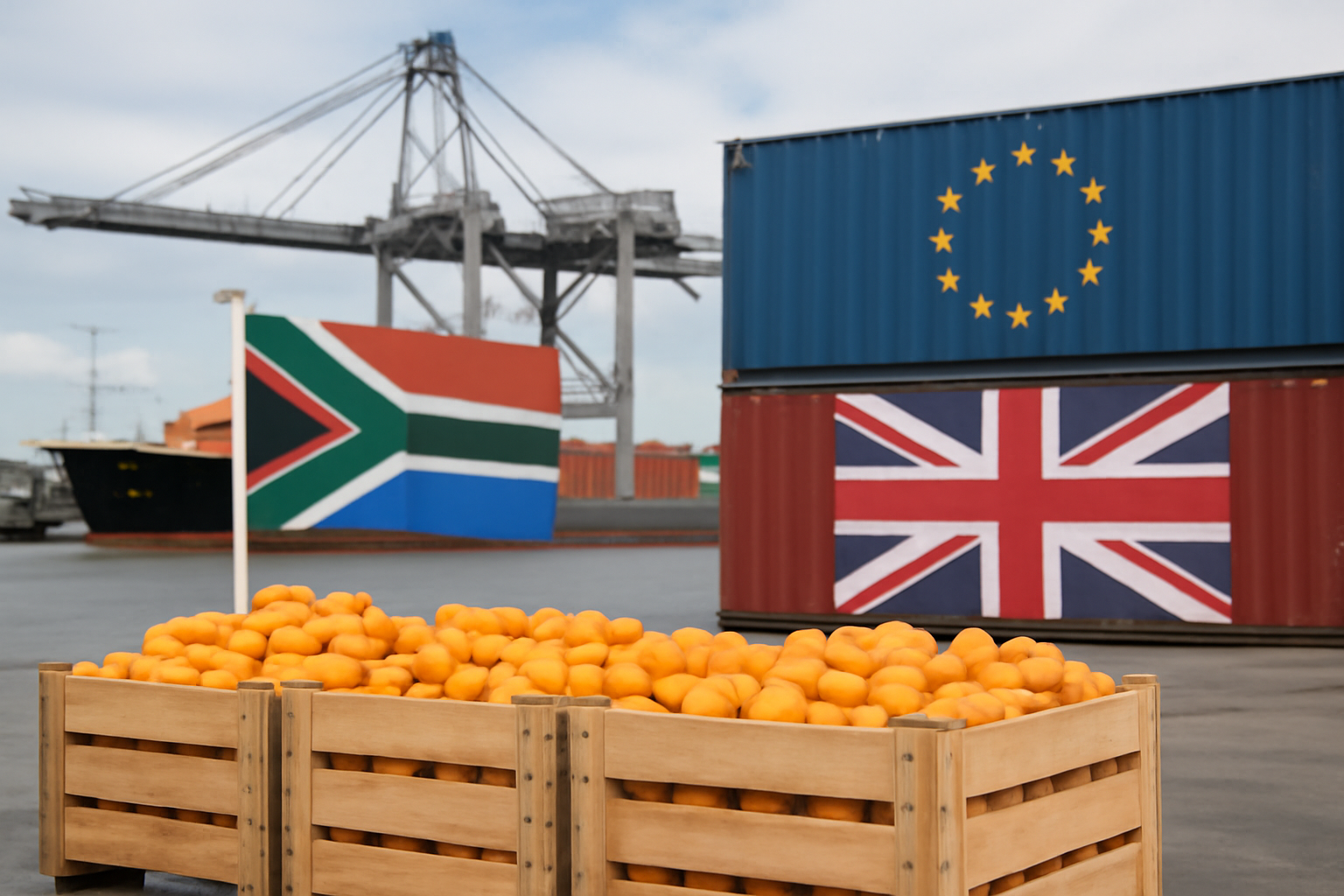
South African citrus exporters are concerned that closer alignment between the European Union and the United Kingdom on sanitary and phytosanitary rules could remove advantages gained after Brexit. Agence Ecofin describes citrus as South Africa’s largest source of agricultural export revenue, making the regulatory discussion significant for growers, packhouses, logistics companies and British importers.
FreshPlaza, citing reporting by Politico, said the United Kingdom’s departure from the EU allowed Britain to establish separate import conditions. Lemons, oranges and other citrus fruit from South Africa could enter without a plant-health certificate or inspection. Under the proposed UK-EU reset, Great Britain could instead apply the EU’s citrus import regime. The initiative remains under negotiation, and South African industry representatives have stressed that no final arrangement has been set.
EU controls bring treatment and certification costs
EU rules introduced in 2022 require specified cooling treatments for South African citrus to address false codling moth, together with phytosanitary certification and measures related to citrus black spot. Exporters argue that these requirements add costs and increase the danger of fruit deterioration, particularly for organic consignments. The EU maintains that its controls are scientifically justified and necessary to protect plant health.
South Africa has opened two dispute-settlement cases at the World Trade Organization over the EU measures, according to FreshPlaza. Pretoria argues that the requirements are unscientific, discriminatory and more restrictive than necessary. A National Agricultural Marketing Council brief estimated that compliance with citrus black spot and false codling moth rules already cost the South African industry R4 billion. It said Europe received about 36% of South African citrus exports in the 2023 season, while the United Kingdom accounted for 8%.
Exporters and British importers seek exemptions
A South African government representative told Politico that officials had engaged informally with the UK Department for Environment, Food and Rural Affairs, although formal discussions had not begun. One option under consideration was to label South African citrus consignments intended solely for Britain, preventing their re-export to the EU while preserving different British entry requirements.
Boitshoko Ntshabele, chief executive of the Citrus Growers’ Association of Southern Africa, said the process was at an early stage. He argued that applying restrictions based on citrus black spot and false codling moth would unnecessarily constrain trade and affect British consumers unless exemptions were secured. Nigel Jenney, chief executive of the UK Fresh Produce Consortium, also warned of additional border burdens and costs that could ultimately reach consumers. The UK-EU summit framework allows for a short list of exceptions to dynamic alignment, leaving a possible route for a citrus exemption. For South African suppliers, the final scope will determine whether Britain remains a distinct market or becomes an extension of the EU compliance system.