EU tariffs redirect Chinese electric-vehicle competition toward hybrids and local production
EU countervailing duties have raised the cost of importing battery-electric vehicles from China, but Chinese brands continue to gain ground in Italy through broader model ranges and multiple powertrains. Manufacturers are also shifting production and assembly to Europe, limiting the duties’ ability to contain competition.
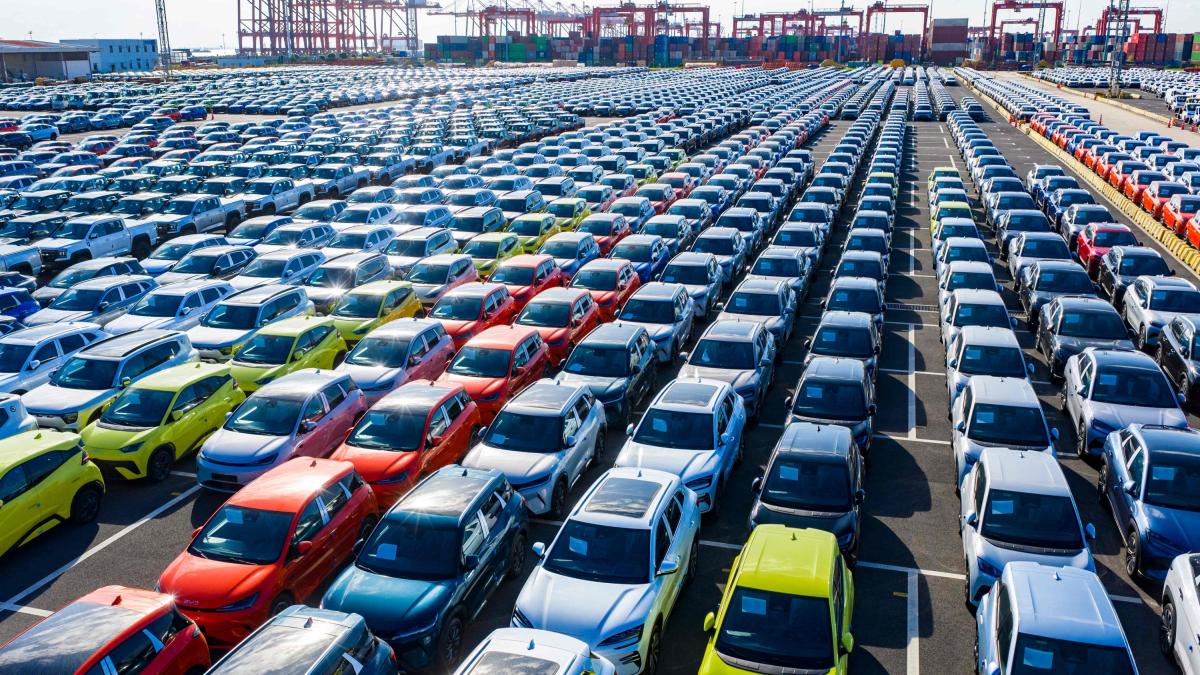
Duties target production origin, not brand ownership
The European Union’s countervailing duties on battery-electric vehicles produced in China took effect on 30 October 2024. The five-year measure was introduced after Brussels identified Chinese government subsidies and other state support as a source of unfair competition. The differentiated rates cited by Gazzetta range from 17% for BYD and 18.8% for Geely to 35.3% for SAIC and companies that did not cooperate with the investigation.
The measure has made Chinese-built electric cars more expensive to import, but it has not stopped Chinese manufacturers from expanding in Europe. Its scope is limited to battery-electric vehicles produced in China, leaving companies free to compete with hybrids, plug-in hybrids and combustion-engine vehicles or to change where their cars are manufactured.
EU policy has also continued to evolve. Gazzetta reports that Brussels removed duties from a Spanish electric SUV manufactured at Volkswagen Anhui’s Hefei plant, considered possible additional tariffs on plug-in hybrids and began reviewing the 2035 regulation. One option under discussion would set the reduction in tailpipe CO2 emissions at 90%, allowing manufacturers to continue selling some new petrol- and diesel-powered models.
Chinese brands expand faster than Italy’s EV segment
Chinese brands accounted for well below 10% of Italy’s market in 2024, before the duties were introduced. According to data from Italian automotive association UNRAE cited by Gazzetta, their share approached 15% in the first half of 2026 and stood at 13.7% in August. Battery-electric vehicles increased from around 5% of the market to 8.1% in the first seven months of 2026, despite gaps in charging infrastructure.
The two trends measure different developments, Tommaso Carboni, country director of automotive software company bee2link group Italia, told Gazzetta. The duties apply to electric vehicles built in China, whereas Chinese manufacturers are adding models, powertrains and commercial coverage. Their growth therefore extends beyond Italy’s relatively small battery-electric segment.
BYD registered 33,973 vehicles in Italy during the first seven months of 2026, compared with 11,528 in the same period of 2025. Omoda & Jaecoo increased registrations by 269%, from 6,691 to 24,692. Leapmotor moved from fewer than 2,000 vehicles to more than 25,000, while its T03 exceeded 20,000 sales in the first eight months of the year. MG registered more than 34,000 vehicles, up 5.49% from 2025, including over 19,000 units of the ZS.
Production moves inside the tariff boundary
Price remains important, but Carboni also points to integrated supply chains, rapid product development, advanced driver-assistance systems and digital features. Chinese manufacturers are competing in hybrids, which represented 49.5% of Italian registrations, and plug-in hybrids, with 9.2%, as well as in battery-electric vehicles. Their focus on crossovers, compact SUVs and B- and C-segment cars also places them in categories with broad European demand.
Manufacturing strategies are changing in parallel. BYD has opened a factory in Szeged, Hungary, and is considering France and Spain for a second European production centre after negotiations with Turkey failed. Geely is due to begin producing vehicles at Ford’s Valencia plant in 2028. Chery is reviving the Ebro brand in Barcelona, while Stellantis plans to make its Rennes facility in France available to Chinese partner Dongfeng.
These investments show that the duties can alter sourcing and production without necessarily reducing competitive pressure. European manufacturers are simultaneously facing weaker margins and US tariffs. Carboni cited Volkswagen’s estimate of a €2.9 billion cost from higher US duties in 2025, BMW’s estimate of a roughly 1.5-percentage-point reduction in its Automotive EBIT margin and a decline in Mercedes-Benz Cars’ adjusted return on sales from 8.1% in 2024 to 5.0% in 2025. For European producers, the policy may encourage local investment, but it does not remove competition on price, technology, distribution or after-sales service.