EU Produce Campaign Targets South Korea and Three Other Asian Markets
The EU-backed European Nature’s Vibe program is promoting European kiwifruit, pears, apples and processed tomato products in South Korea, Malaysia, Taiwan and Vietnam. The €1.8 million, three-year campaign coincides with rising Italian kiwifruit exports and Vietnam’s decision to permit imports of fresh Italian kiwifruit.
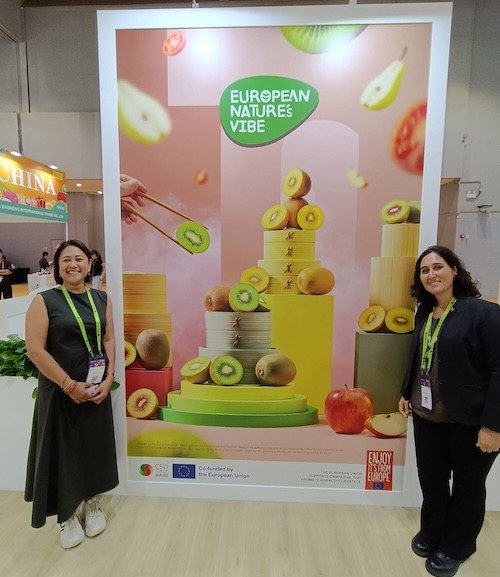
Three-year campaign makes international debut
An EU-backed program has begun a coordinated campaign to expand awareness and demand for European kiwifruit, pears, apples and processed tomato products in four Asian markets. The three-year European Nature’s Vibe initiative is being implemented by CSO Italy, with South Korea, Malaysia, Taiwan and Vietnam selected as its priority markets.
The Korean agricultural outlet Youngnong reported that the program made its international debut at the 19th Asia Fruit Logistica, held from September 2 to 4 at AsiaWorld-Expo in Hong Kong. The exhibition brought together more than 730 companies from 40 countries and regions, with 27 national and thematic pavilions. According to the campaign organizers, European kiwifruit attracted particularly strong attention from industry participants.
Campaign combines trade and consumer outreach
European Nature’s Vibe has a total budget of €1.8 million, co-financed by the European Union. Its planned promotional and communications work will address both trade professionals and consumers, presenting the quality, varieties, production methods and distribution characteristics of European agricultural products.
The product mix gives the campaign a presence in both fresh and processed categories. Kiwifruit, pears and apples are aimed at produce buyers and retail channels, while processed tomato products can reach a broader group of food manufacturers, distributors and food-service operators. The four target markets are at different stages of access for European fruit, so commercial opportunities will depend not only on promotion but also on phytosanitary requirements, importer relationships and the ability to maintain product quality over long supply chains.
Italian kiwifruit exports provide momentum
Italy, one of Europe’s principal kiwifruit producers, recorded higher exports during the first five months of 2026. From January through May, its kiwifruit shipments reached 152,179 tonnes, an increase of 14% from the same period a year earlier, according to Youngnong. Export value rose by 19% to €412.5 million. The faster growth in value than volume indicates a higher average export return, although the source did not provide market-by-market prices or volumes.
South Korea, Taiwan and Malaysia already permit European kiwifruit imports. Demand is not limited to green fruit: the campaign says buyers and consumers are also showing interest in yellow and red varieties. For European growers, packers and exporters, that varietal range may support market segmentation, but it also requires consistent sizing, ripeness management and cold-chain execution.
Vietnam opens to fresh Italian kiwifruit
Vietnam officially authorized imports of fresh Italian kiwifruit from July 1, 2026, after phytosanitary negotiations led by Italy’s Ministry of Agriculture, Food Sovereignty and Forestry with support from CSO Italy. The first commercial shipments are expected during the 2026–2027 season, making Vietnam the newest of the campaign’s four markets to open this channel.
The campaign’s launch at Asia Fruit Logistica placed it before a concentrated audience of importers, exporters, retailers and logistics companies. More than 14,000 industry professionals from over 70 countries attended the preceding edition of the exhibition. For European suppliers, the program now has to turn that visibility into importer listings, repeat orders and reliable distribution across four markets with distinct consumer preferences and market-access conditions.