EU packaging regulation applies from 12 August, reshaping the coffee capsule business
The EU Packaging and Packaging Waste Regulation (PPWR) becomes applicable on 12 August, replacing the 1994 packaging directive with a single rulebook for all 27 member states. Single-serve coffee capsules are among the most exposed products, because their mixed materials, small format and wet contents sit badly with recycling systems. The Spanish newspaper AS reported the date and what it means for capsule buyers in Spain.
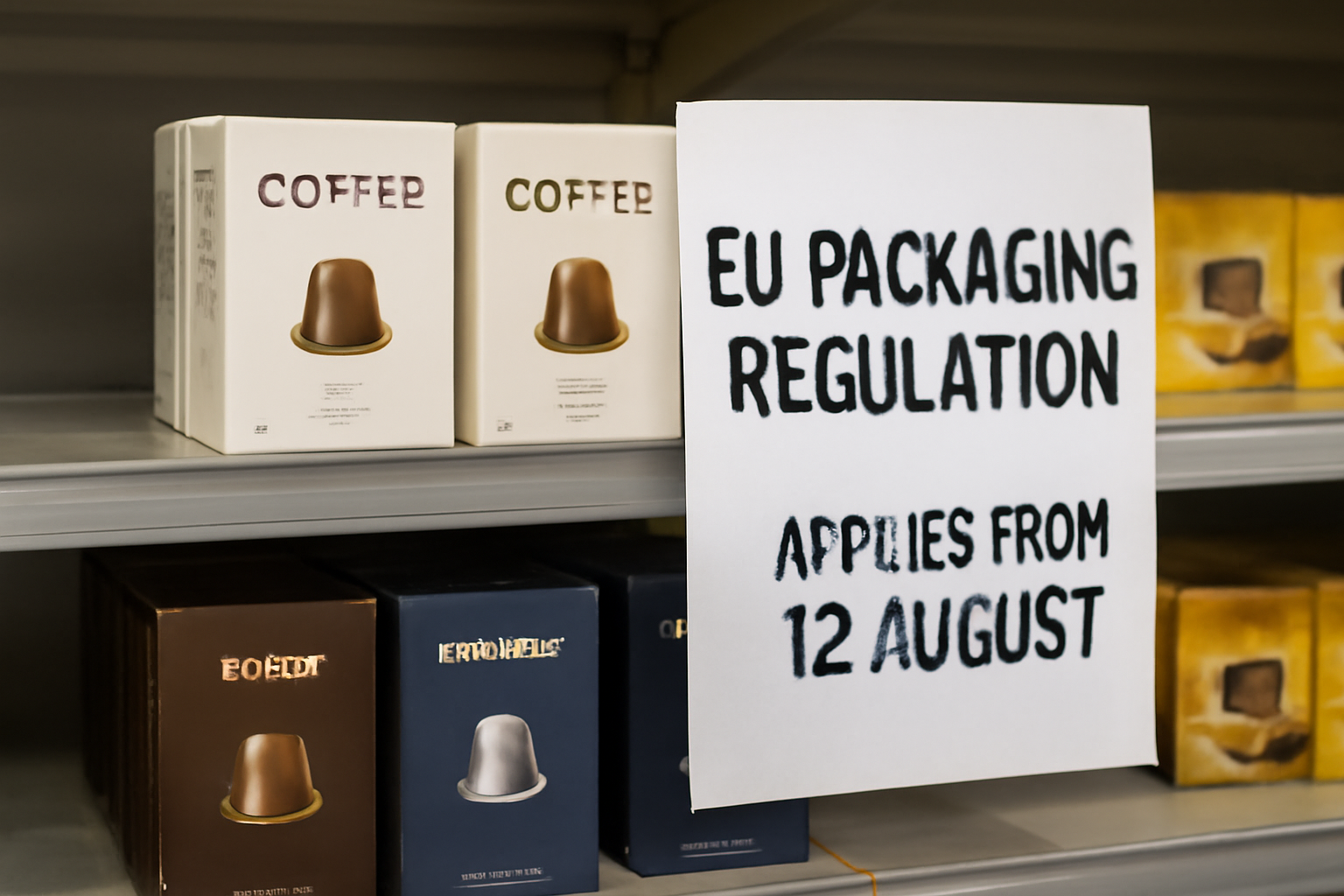
The European Union's Packaging and Packaging Waste Regulation, known by its acronym PPWR, becomes applicable on 12 August. Single-serve coffee capsules are among the consumer products most directly affected. The Spanish newspaper AS reported that the regulation enters into application on that date and that capsule buyers in Spain will see the consequences on the shelf.
From directive to regulation
The PPWR replaces the packaging and packaging waste directive that has framed the European market since 1994. The legal form is itself the change: a regulation applies directly and identically in all 27 member states, with no national transposition. Producers that until now worked around diverging national definitions of recyclability, separate deposit-return schemes and different on-pack labelling now operate from a single text. The obligations are phased in, with deadlines running to 2040.
Little of the substance lands on 12 August itself. The regulation sets binding packaging waste reduction targets of 5% by 2030, 10% by 2035 and 15% by 2040, measured per capita against 2018. From 2030, all packaging placed on the EU market must be recyclable under harmonised design-for-recycling criteria, plastic packaging must contain minimum shares of recycled content, and several single-use plastic formats are prohibited. Grouped, transport and e-commerce packaging is capped at an empty space ratio of 50%. Harmonised labelling that tells consumers which container the packaging belongs in is phased in after the application date.
Why capsules are exposed
Capsules are an awkward object for any recycling system. A single unit weighs a few grams and combines an aluminium or plastic body, a sealing lid, a filter and wet coffee grounds. Small, mixed-material, organically contaminated items are exactly what optical sorters at material recovery facilities miss, and much of the volume ends up in residual waste regardless of what the consumer intends.
Compostable capsules are the alternative route. Under the regulation, member states may require single-serve coffee and tea units to be compostable, an option that only functions where separate biowaste collection exists. The result is that a format sold across the single market may still face different end-of-life requirements from one country to another.
What changes along the supply chain
- Roasters and co-packers: capsule bodies, lids and barrier layers have to be requalified against design-for-recycling criteria, and filling lines are calibrated to a specific capsule geometry.
- Material suppliers: demand shifts toward mono-material aluminium and polymers, and toward certified compostable resins and fibres.
- Importers and exporters: the trigger is placing the product on the EU market, so roasters outside the bloc that ship capsules into it are bound by identical criteria.
- Retailers and private label: own-brand ranges are made by contract manufacturers on thin margins, and packaging redesign costs land there first.
- Waste operators and municipalities: separate biowaste collection decides whether compostable formats are a solution or a contaminant.
For the consumer the visible changes are gradual: clearer sorting instructions on the pack, and over time capsules built from a single material or certified for industrial composting. AS framed the shift for Spanish buyers as a change in what they will find on the shelf rather than an immediate ban on any product currently sold.
Deadlines ahead of the detail
Much of the technical detail still sits in secondary legislation the European Commission has yet to complete, including the design-for-recycling criteria that decide whether a given capsule counts as recyclable. Manufacturers are therefore committing capital to packaging platforms years before the standard they must meet is fully written. For an industry where a new capsule body means new tooling, new filling equipment and compatibility with machines already installed in millions of households, that sequencing is the central commercial risk.