EU Parliament Strips CBAM Safeguard Clause as Urea Jumps 56% in Italy's Puglia
The European Parliament's vote on the new structure of the Carbon Border Adjustment Mechanism removed a clause allowing temporary suspension of the scheme during severe market disruption. Coldiretti Puglia calls the deletion a betrayal of farmers, citing urea prices up almost 56% to €70 per 100 kg and phosphates above €100. Copper and sulphur costs have risen more than 30%, with further increases expected.
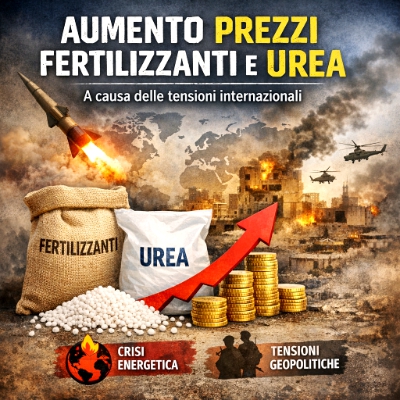
Parliament removes the CBAM safeguard clause
The European Parliament's vote on the new structure of the Carbon Border Adjustment Mechanism (CBAM) has opened a dispute with Italian farm representatives, who say the deletion of a safeguard clause leaves agricultural businesses exposed at a moment of steeply rising input costs. Coldiretti Puglia, the regional organisation of Italian farmers, called the cancellation an unacceptable betrayal of farmers and citizens, in a statement reported by puglialive.net.
The clause at issue would have allowed the temporary suspension of the mechanism in the event of serious and unforeseen market disruption. Its removal, Coldiretti Puglia argues, leaves farms without a safety net precisely when the cost of key inputs is moving fast. The organisation links the vote to a wider cost environment shaped by geopolitical tension and by wars that continue to feed volatility in energy and raw material markets, starting with fuel.
Urea up 56%, phosphates above 43%
The figures cited by Coldiretti Puglia describe a renewed surge in fertilizer and crop-protection input prices in the region:
- Urea: from €45 to €70 per 100 kg, an increase of almost 56%.
- Phosphate fertilizers and bio-ammonium phosphate: from around €70 to more than €100 per 100 kg, an increase of more than 43%, with prices still rising.
- Copper: more than 30% higher, with further increases expected.
- Sulphur: more than 30% higher, with further increases expected.
“It is a choice that worries us deeply because it comes exactly while in the Puglia countryside we are seeing a new run-up in fertilizer costs,” said Alfonso Cavallo, president of Coldiretti Puglia. “These are costs that go straight into the accounts of farm businesses and that farmers simply cannot transfer to the price of their own production. Removing a safeguard clause right now means leaving businesses without a safety net in the face of shocks that can become extremely heavy.”
Pressure spreads across Puglia's crop mix
The increase cuts across the region's main outputs, from durum wheat to fruit and vegetables, from table grapes to olive growing, and on to specialised crops that require treatments throughout the production cycle, according to Coldiretti Puglia. Copper and sulphur matter beyond fertilization: both are standard plant-protection inputs used repeatedly over a season in vineyards and olive groves, so the rise hits treatment budgets as well as nutrient budgets.
Coldiretti Puglia describes the region as the most agricultural in Italy, with diversified output spanning durum wheat, extra virgin olive oil, wine, table grapes and a wide range of fruit and vegetable production. That structure delivers economic value, employment and exports, but competes internationally against producers operating under different costs and different production rules. The new fertilizer surge adds to already elevated bills for energy, fuel, water, labour, irrigation, treatments and field operations.
Purchases come before revenue
The cost increase also complicates planning. Price lists change quickly, while fertilizer purchases have to be made well before the crop is sold, Coldiretti Puglia notes — an additional element of uncertainty on top of agricultural price volatility and the increasingly heavy effect of climate events on yields.
“We cannot build European food security by making it ever more difficult to produce in Europe,” said Pietro Piccioni, director of Coldiretti Puglia, adding that increases of more than 50% on some fertilizers, combined with higher costs on every other production input, seriously undermine the economic sustainability of farm businesses. The organisation frames the surge against a gap it considers still too wide between what farmers are paid for their production and what consumers pay for food, warning that the rise in production costs risks compressing farm income further.