EU opens infrastructure market test to support hydrogen corridors such as H2Med
The European Commission is inviting hydrogen network and transmission operators to propose pipelines and storage projects for a non-binding market test. The process could give corridors such as H2Med stronger demand evidence, but it does not provide funding or guarantee investment.
Commission shifts hydrogen mechanism toward infrastructure
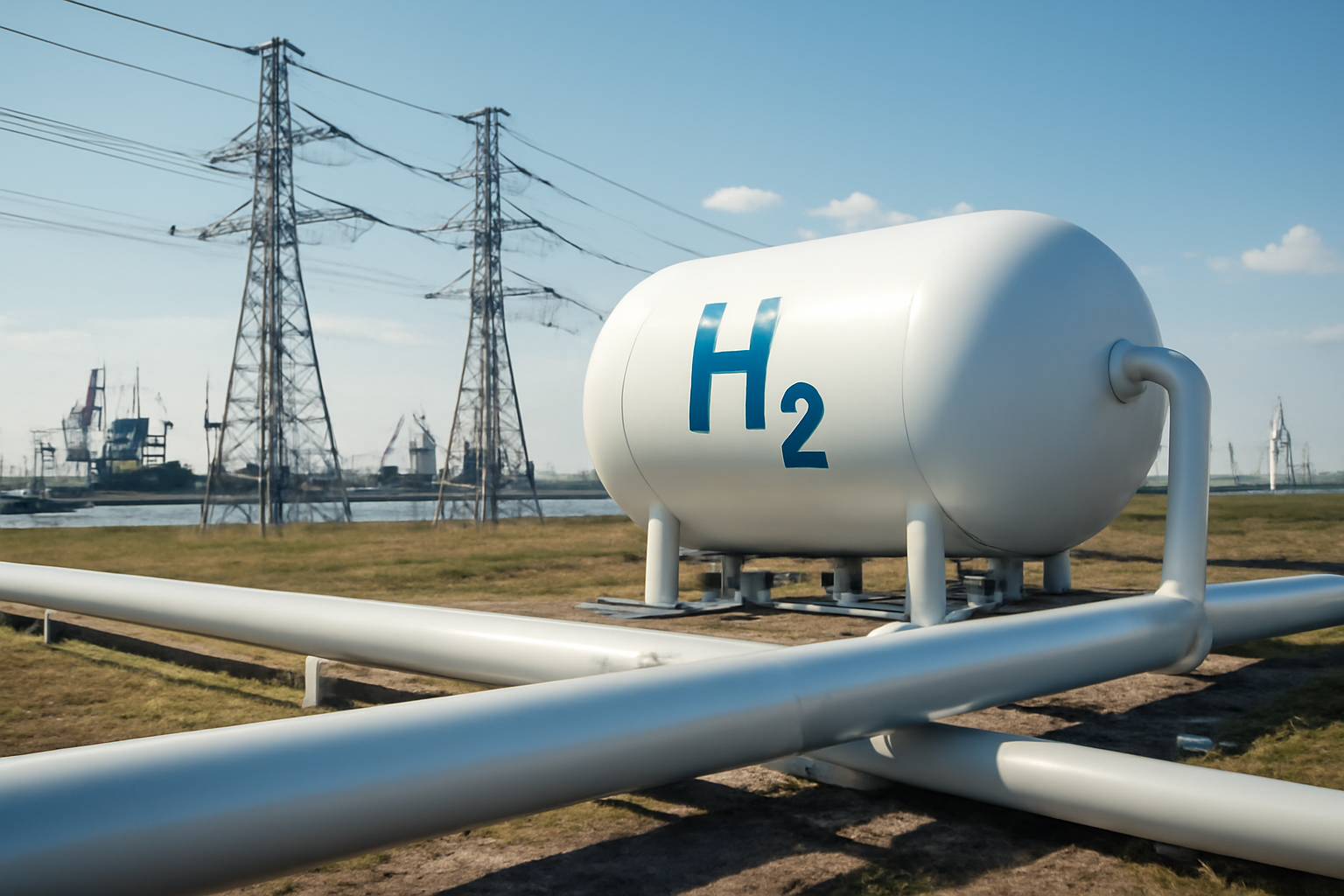
The European Commission has opened a call for transmission system operators, hydrogen network operators and other relevant organisations to participate in the next round of the EU Hydrogen Mechanism. The round, planned for later in 2026, will focus on planned energy infrastructure, including hydrogen pipelines and storage facilities.
The initiative could support the commercial assessment of cross-border corridors such as H2Med, which is intended to connect the hydrogen networks of Portugal and Spain with industrial centres in France and Germany. However, the Commission’s announcement does not allocate grants or approve construction. It creates a standardised, non-binding process through which infrastructure developers can measure market interest before making investment decisions.
Three-stage test will collect market data
According to the European Commission’s Directorate-General for Energy, the process has three stages. First, the Commission and interested transmission or hydrogen network operators will agree on the parameters of the infrastructure to be tested. The Commission will then invite registered market participants to express interest and will collect the resulting data. After the round closes, infrastructure developers will receive full access to the information gathered.
Organisations wishing to participate must contact the Commission by 7 September 2026. An initial expression of interest is not binding. The Commission said it will arrange demonstrations of the Hydrogen Mechanism for interested parties and discuss how individual market tests could be organised.
Earlier round showed broad interest but no binding deals
The infrastructure initiative follows the first matching round of the Hydrogen Mechanism, completed in April 2026. The Commission reported that 265 supply opportunities for renewable or low-carbon hydrogen and derivatives were presented to European buyers. Forty-five offtake projects were registered, while 87% of supply opportunities attracted interest from at least one potential buyer and 50% attracted interest from at least three.
The offers included 47 renewable or low-carbon ammonia projects, 37 methanol projects, 14 electro-sustainable aviation fuel projects and 18 e-methane projects. Participants on the supply side came from 33 countries, including 16 EU members, and proposed deliveries to 20 EU countries. Buyers requested deliveries in 10 EU markets: Belgium, Czechia, Finland, France, Germany, Hungary, Italy, the Netherlands, Poland and Spain. Only 54% of the opportunities included a price indication.
Demand evidence may help projects approach investment decisions
The European Commission says the mechanism addresses uncertainty over supply and demand, limited infrastructure and funding difficulties. Its role is to connect market participants and produce information that developers and financial institutions can use; negotiations and commercial agreements remain outside the platform. In the first round, buyers and suppliers had to contact each other directly after matching.
For pipeline and storage developers, aggregated expressions of interest can indicate where prospective volumes may justify capacity. That information is particularly relevant to multinational corridors, where investment depends on coordinated production, transport and industrial consumption across several jurisdictions. The new round may therefore strengthen the evidence available to H2Med and comparable projects, although non-binding interest alone does not secure financing, construction permits or long-term transport contracts.