EU electrification hits records in 2025 as EVs reach a quarter of global car sales
Global electric-car sales rose 20% in 2025 to over 20 million, a quarter of all new cars, with Chinese makers supplying 60%, per the IEA. EU sales climbed 31% to 2.89 million and solar generation set a record of 275 TWh. Hungary outperformed the EU average with BEV registrations up 28%.
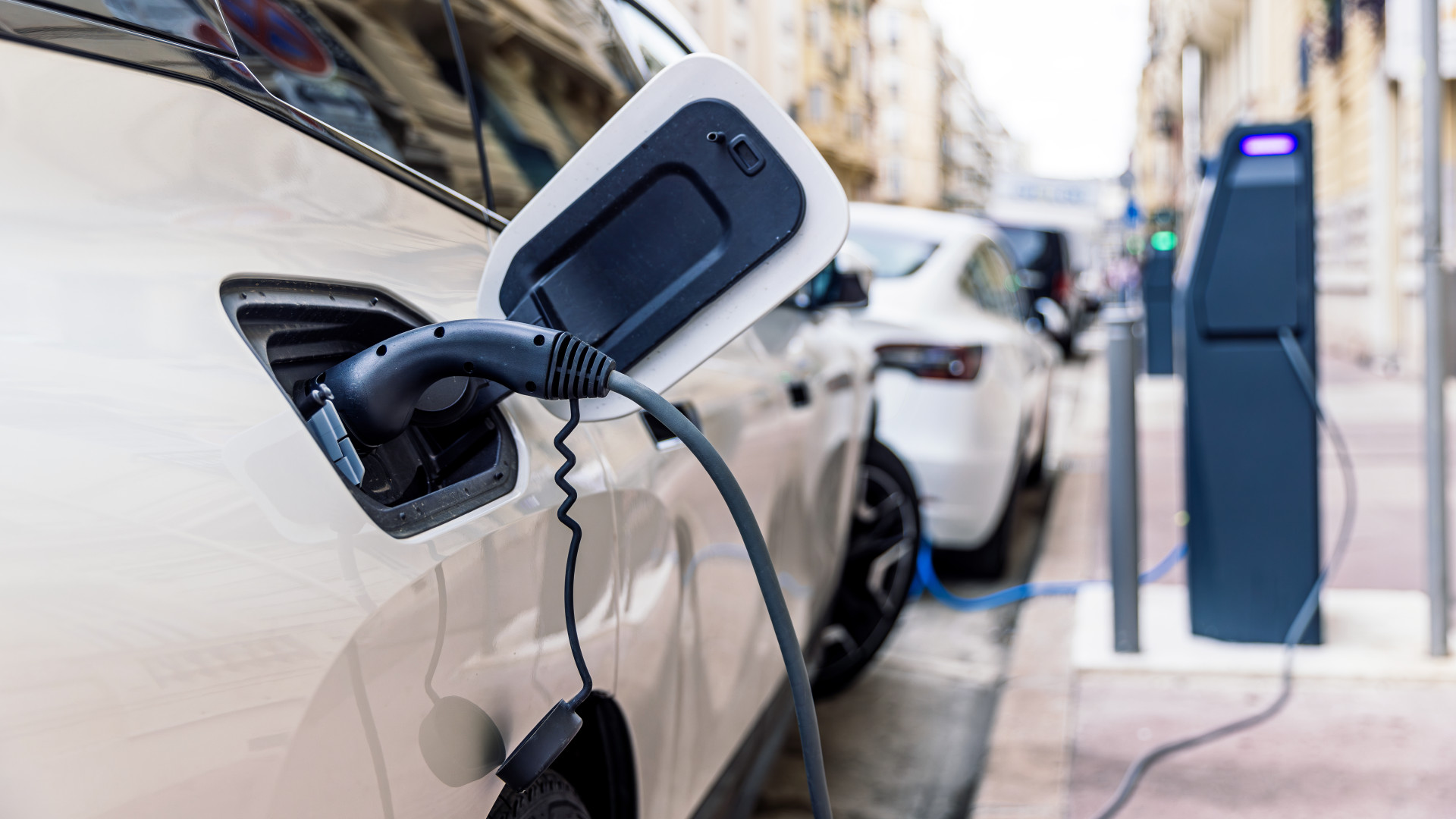
EVs reach a quarter of global car sales
Global electric-car sales rose 20% in 2025 to more than 20 million units, meaning one in four new cars sold worldwide was electric, according to an International Energy Agency (IEA) analysis published in May and cited by portfolio.hu. More than 100 countries recorded higher EV sales in 2025, and in about a third of them electric models accounted for at least 10% of total car sales.
Chinese manufacturers supplied 60% of global EV sales in 2025, while European and North American producers held roughly 15% each. China remained the largest production hub with close to a 75% share; nearly 22 million electric cars were built worldwide in 2025, up more than 25% year on year. Chinese EV exports doubled over the year as output outpaced domestic demand, and more than 35% of China's car exports were electric, up from 20% in 2024.
EU registrations and the solar record
The European Commission's Directorate-General for Energy reported 2.89 million new electric cars sold in the EU in 2025, a 31% increase on the previous year and a 177% rise since 2019, according to vg.hu. In the fourth quarter the EV market share reached 22% in the EU, against 7% in the United States. Renault, Tesla and Rivian expect demand to strengthen in 2026.
Manufacturer data from January to December show nearly 1.9 million new battery-electric cars (BEV) registered in the EU, a 17.4% share. The four largest markets — Germany (+43.2%), the Netherlands (+18.1%), Belgium (+12.6%) and France (+12.5%) — accounted for 62% of BEV registrations. Plug-in hybrids passed 1 million units, led by Spain (+111.7%), Italy (+86.6%) and Germany (+62.3%), lifting their share to 9.4% from 7.2%. Solar output rose 18% to a record 275 TWh, offshore wind added 3 TWh (+4%), and green capacity additions neared 70 GW. The European electricity reference price averaged 85 euros/MWh (+9%), and EU gas consumption reached 339 billion cubic metres (+2%).
Battery costs and mineral prices
Average battery prices fell 8% in 2025 on manufacturing efficiency and stronger competition. However, lithium and cobalt prices rose. By early 2026 lithium was more than twice as expensive as in the same period of 2025, though still about 70% below the 2022 peak, pressured by faster-than-expected demand and the suspension of a CATL lithium mine. Sustained increases could push up lithium-ion cell prices and lift demand for sodium-ion batteries.
Hungary above the EU average
Hungary registered 11,002 new battery-electric passenger cars in 2025, a 28% increase on the 8,565 units of 2024. New car registrations reached 129,440 (+6%), lifting the BEV market share from 7.0% to 8.5%. Since 2019 Hungarian EV registrations have grown by roughly 500%. Installed renewable capacity passed 9 GW, mostly solar; the solar fleet expanded by 822 MW (about 11%) and supplied 27.3% of total electricity generation. Hungary's wholesale power reference price averaged 101 euros/MWh, above the EU level, but regulated household tariffs stayed the lowest in the bloc at 96 euros/MWh against a 253 euros/MWh average across EU capitals. Household gas at 32 euros/MWh was also the lowest in the EU.