EU carbon border costs put Bosnia and Herzegovina’s metals and power exports under pressure
The EU Carbon Border Adjustment Mechanism now creates a direct financial cost for exposed exports from Bosnia and Herzegovina. Steel, aluminum, electricity and cement producers face the greatest pressure, with the IMF estimating that 10.7% of the country’s exports fall within the current scope.
Carbon cost becomes a competitiveness test
Bosnia and Herzegovina’s exporters are facing a new financial barrier in the European Union after the Carbon Border Adjustment Mechanism, or CBAM, moved beyond its transitional phase. N1 reported that the sectors most exposed are iron and steel, aluminum, electricity and cement, all of which are important to the country’s industrial base and foreign sales.
An International Monetary Fund analysis estimates that about 10.7% of Bosnia and Herzegovina’s total exports, equivalent to approximately 3.2% of gross domestic product, are covered by the mechanism in its current form. Iron, steel and aluminum together account for roughly 9% of total export value. The Foreign Trade Chamber of Bosnia and Herzegovina offers a narrower estimate: CBAM-covered product exports were worth 951 million convertible marks in 2025, or about 6% of total exports, with around 433 million marks shipped to the EU. The difference reflects variations in product coverage, destination markets and calculation methods.
Metals and electricity carry the highest exposure
The European Commission set CBAM certificate prices at €75.36 per tonne of CO2 for the first quarter of 2026 and €75.28 for the second. At the second-quarter price, 1,000 tonnes of embedded emissions would create a gross CBAM charge of about €75,280, or approximately 147,000 convertible marks, before any permitted deductions. EU importers must report embedded emissions and surrender the corresponding certificates, although a carbon price already paid in the country of production may be deducted.
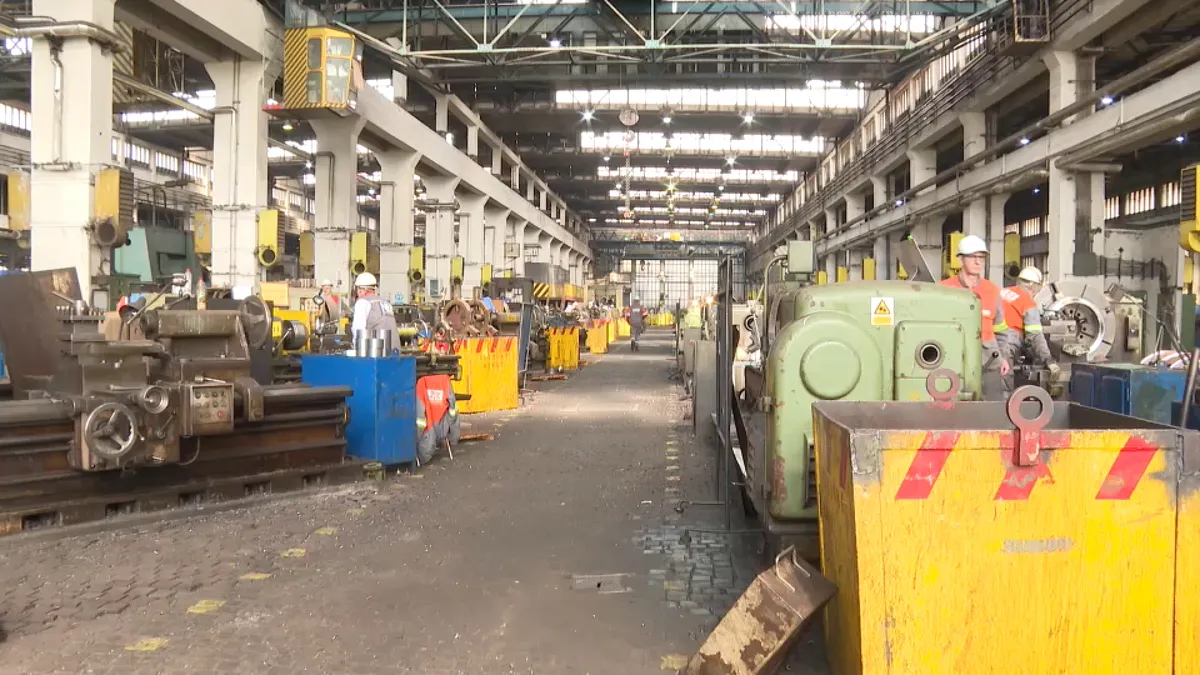
The pressure is particularly significant for Bosnia and Herzegovina’s metals industry, which represented almost 44% of the country’s export structure in 2025, according to the Foreign Trade Chamber. Major exporters include Nova Željezara Zenica, Aluminij Industries Mostar and FEAL Široki Brijeg. Nova Željezara Zenica recorded revenue of 668.4 million marks in 2025, while FEAL generated approximately 230.9 million marks and employed 584 people. Their actual liabilities will depend on the products sold to the EU, verified embedded emissions and available deductions, but steel and aluminum supply chains are the country’s most exposed industrial segments.
Power trade may shift away from the EU
The IMF calculated that the CBAM charge on electricity could reach €86.1 per MWh in one scenario. Estimated average supply costs for major Bosnian exporters have ranged from €50 to €70 per MWh in recent years, excluding transmission, while the average 2025 price on Hungary’s HUPX exchange was about €108 per MWh. Adding the modeled carbon charge could sharply reduce export margins or make them negative. Producers and traders told IMF experts that electricity flows had already begun shifting toward markets outside CBAM, particularly Serbia. Serbia and Montenegro are effectively the principal accessible non-EU markets for Bosnia and Herzegovina.
The adjustment comes as the domestic power sector is already under strain. Elektroprivreda BiH produced approximately 4,808.6 GWh in 2025 but increased market purchases because of coal shortages and unfavorable hydrological conditions. It ended the year with revenue of 1.46 billion marks and a loss of 52.38 million marks. Electricity exports rose 30% in 2025, while imports jumped 101% to 628.96 million marks, according to the Foreign Trade Chamber.
Lower emissions become a commercial asset
Cement producers face the same link between emissions and market access. Heidelberg Materials Cement BiH sold more than 815,000 tonnes of cement in 2025, while Heidelberg Materials and Lukavac Cement already use alternative fuels. In 2025, Heidelberg Materials was authorized to import up to 22,125 tonnes of RDF/SRF fuel and Lukavac Cement up to 80,000 tonnes. Reducing fossil-fuel dependence can now lower the direct cost of supplying EU customers.
The exposure could broaden. The IMF estimates that an extension to additional steel- and aluminum-intensive products could raise the affected share to 13.2% of total exports, based on the 2024 trade structure. If CBAM covers all sectors envisaged under the EU Emissions Trading System from 2030, about 14.3% of exports could be affected, representing goods worth approximately 4.3% of GDP. Producers will therefore need reliable emissions data, lower-carbon energy and production processes, while some traders may redirect sales where the EU premium no longer covers the carbon charge.