Ethiopia targets 25,000 hectares of date palms under 10-year export plan
Ethiopia plans to expand strategic date-palm cultivation from 6,000 to 25,000 hectares over 10 years. The program aims to replace imports, commercialize production in the country’s lowlands and eventually supply regional and global markets.
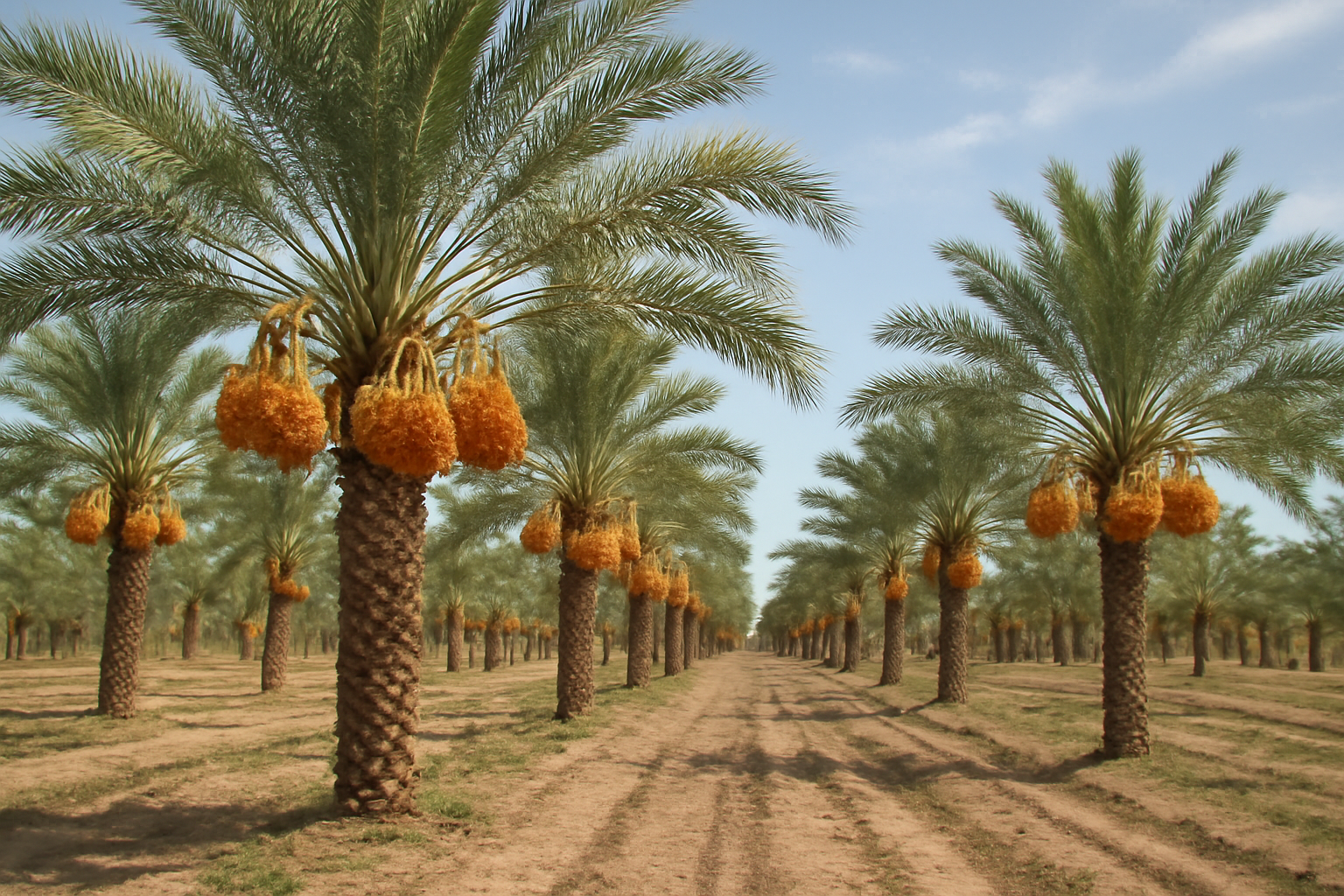
Ethiopia sets a 25,000-hectare target
Ethiopia has launched a 10-year research and development plan intended to turn date palms into a commercial crop for domestic and export markets. Capital Newspaper reports that the Ministry of Agriculture plans to expand land allocated to strategic date production from an initial 6,000 hectares to 25,000 hectares.
The program is part of a broader effort to diversify an export base led by coffee, oilseeds and flowers. According to Agence Ecofin, agricultural products account for about 70% of Ethiopia’s merchandise exports. Dates could add a crop suited to the hot, dry lowlands that cover a substantial part of the country but remain outside its main highland farming systems.
Estimates cited by the Ethiopian Broadcasting Corporation place the area highly suitable for date palms at between 500,000 and 700,000 hectares. The potentially productive zones include Afar, Somali, Dire Dawa, Benishangul-Gumuz and the Lower Omo Valley. These areas combine high temperatures with access to groundwater or rivers, conditions that could support irrigated commercial orchards.
Import substitution comes before exports
The immediate market is domestic. Ethiopian Business Review, citing Ministry of Agriculture figures, says the country’s legal date import bill fell from $9.8 million five years ago to $650,000 last year, a decline of more than 90%. Ali Mohammed, an adviser to the state minister of agriculture, cautioned that the figure excludes dates brought into Ethiopia informally, meaning actual import demand is higher than the official total.
The decline nevertheless indicates that local supply is beginning to replace registered imports. Officials envisage producing enough to cover domestic consumption before directing surpluses to neighboring countries and wider international markets. For pastoralists and agro-pastoralists, date cultivation could provide another source of income in areas where climatic conditions restrict the range of viable crops.
Published estimates differ on how much of Ethiopia’s potential has already been developed. Capital Newspaper says 1.2% of suitable land has historically been used, while Horn News Hub cites the Ministry of Agriculture as saying about 2.5% is under development. Separately, the Ethiopian Broadcasting Corporation reports that 453 hectares are actively cultivated in Afar. The figures may reflect different definitions of planted, allocated and actively farmed land.
Planting material and market access are key
Scaling from scattered cultivation to an export industry will require more than additional land. Capital Newspaper says the plan includes using domestic tissue-culture laboratories to multiply disease-free, high-yielding planting material. Research-backed varieties, grower training, irrigation, processing and organized market access are also central to the government’s approach.
The Ethiopian News Agency previously reported that traditional farming methods had limited both output and quality. That makes consistent varieties, orchard management and post-harvest handling important for suppliers seeking to meet commercial specifications. Ethiopia will also have to connect lowland production zones with packing, storage and transport systems capable of preserving quality.
Semera festival seeks investors and expertise
The strategy is being promoted at the second Ethiopia International Date Palm Festival, held in Semera, Afar, from September 20 to 22, 2026. The Ministry of Agriculture says the event brings together growers, investors, researchers, development partners and policymakers, with a focus on knowledge transfer, capacity building, investment and improved production practices.
The festival is jointly organized by the Afar regional government, the Ministry of Agriculture and the Khalifa International Award for Date Palm and Agricultural Innovation. It also forms part of agricultural cooperation between Ethiopia and the United Arab Emirates. For investors and processors, the commercial test will be whether the 10-year program can translate Ethiopia’s large theoretical land potential into reliable volumes, consistent quality and competitively delivered fruit.