Ethiopian exporters sign 33 contracts worth more than $340 million with Chinese buyers
Ethiopian exporters in agriculture, mining and textiles signed 33 contracts with Chinese importers expected to generate more than $340 million, according to the Addis Ababa newspaper The Reporter. The deals were concluded at a trade linkage forum organised by Ethiopia's Ministry of Trade and Regional Integration and the Chinese Embassy in Ethiopia. No breakdown by sector, company or delivery period was published.
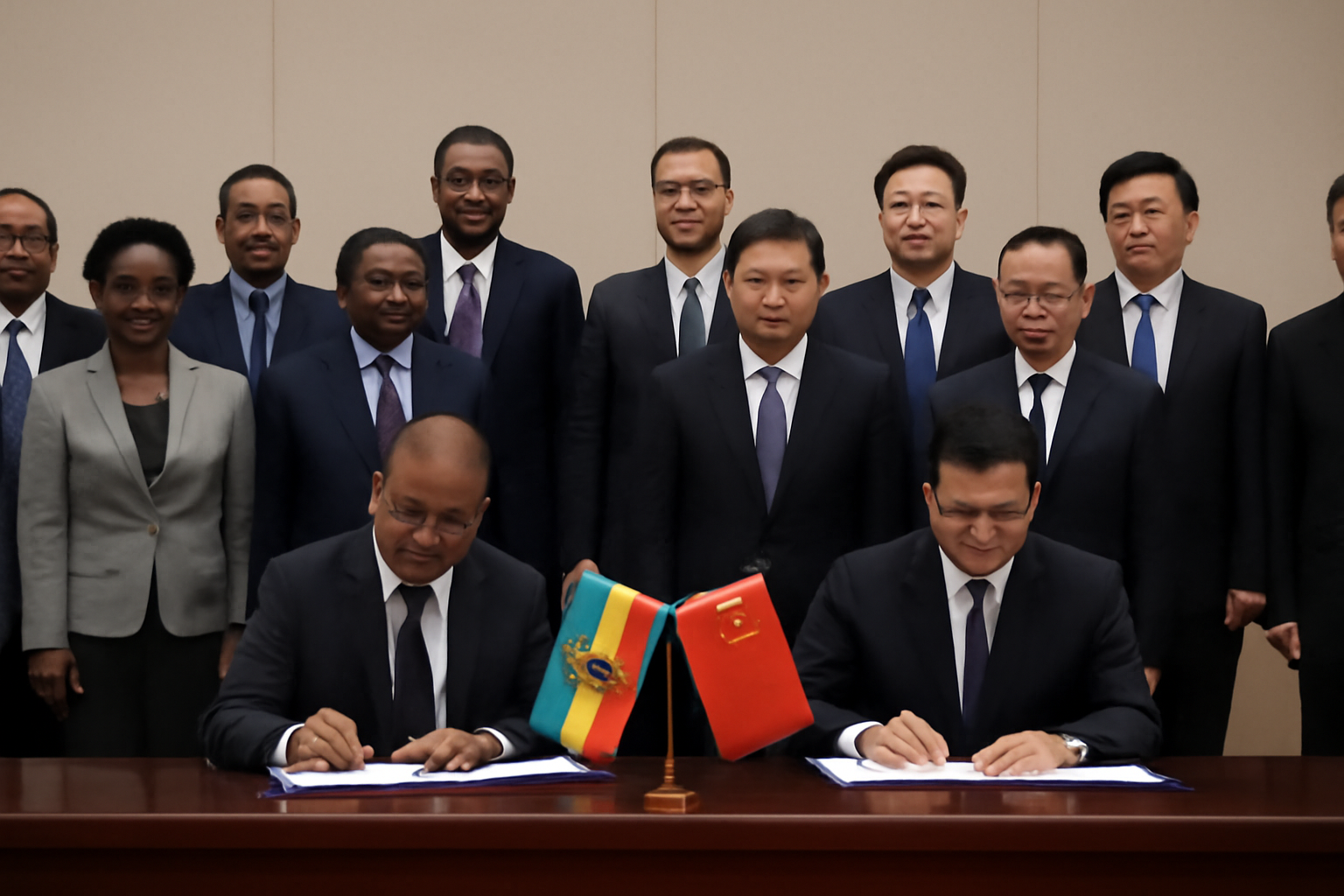
33 contracts signed at Addis Ababa trade forum
Ethiopian exporters active in agriculture, mining and textiles have signed 33 contracts with Chinese importers that are expected to generate more than $340 million in revenue, the Addis Ababa newspaper The Reporter reported. The contracts were concluded at a trade linkage forum organised by Ethiopia's Ministry of Trade and Regional Integration together with the Chinese Embassy in Ethiopia.
The forum was held on 13 Nehase 2018 in the Ethiopian calendar, which corresponds to 19 August 2026. The Reporter did not publish a breakdown of the contracts by sector, commodity, buyer or delivery period, so the headline figure covers the three sectors combined. Spread across 33 agreements, the reported total works out at an average of slightly more than $10 million per contract.
What was disclosed
- Number of contracts: 33
- Reported combined value: more than $340 million
- Sectors covered: agriculture, mining and textiles
- Organisers: Ethiopia's Ministry of Trade and Regional Integration and the Chinese Embassy in Ethiopia
- Date of the forum: 13 Nehase 2018 in the Ethiopian calendar (19 August 2026)
No individual company names, contract durations or pricing terms were disclosed in the report, and it is not stated whether the agreements are firm purchase contracts, framework agreements or declarations of intent. That distinction determines how much of the $340 million eventually appears in trade statistics.
From signature to shipment
Deals announced at government-brokered matchmaking events are a leading indicator of trade rather than a record of it. Values quoted at signing are usually indicative, based on volumes and reference prices agreed in principle, and the amount that clears customs depends on factors settled after the ceremony: shipping availability, letters of credit and payment terms, quality and phytosanitary compliance, and the exporters' ability to assemble the volumes they have committed to.
The three sectors named carry different execution risk. Agricultural exports are seasonal and tied to the harvest cycle, so delivery timing depends on when crops become available. Mining shipments depend on licensed output and on meeting buyer specifications. Textile contracts are the hardest to convert quickly, because they require production capacity, imported inputs and buyer-approved samples before the first container moves.
Scale is the other consideration. Spread across 33 contracts and three sectors, an average deal size of about $10 million points to mid-sized transactions rather than a small number of large tenders. That structure distributes execution risk across many suppliers: an individual failure to deliver does not sink the total, but the total also depends on a large number of firms each performing on schedule.
Why the format is being used
Pairing exporters directly with importers under ministry and embassy sponsorship shortens the chain between Ethiopian suppliers and Chinese buyers, which otherwise runs through intermediaries. The participation of the Chinese Embassy signals official backing on the buyer side, while the role of the Ministry of Trade and Regional Integration puts the Ethiopian government in the position of guarantor of follow-up.
For traders and importers watching Ethiopia-China flows, the practical test is what follows the announcement. The measures that matter are whether the ministry publishes a sector-level breakdown, whether the first shipments move within the current export season, and whether the Chinese buyers who attended place repeat orders. Until customs data shows movement, the $340 million remains a target rather than a completed trade flow.