Ethiopia seeks to connect cotton farms with textile and garment factories
Ethiopia is trying to build an integrated industry spanning cotton cultivation, ginning, spinning, textiles and garment manufacturing. Around three million hectares are suitable for cotton, but inconsistent local supply and fibre quality still force some manufacturers to import lint or yarn.
From cotton potential to industrial production
Ethiopia is seeking to connect cotton farming, research, processing and garment manufacturing in a domestic value chain designed to retain more value from the crop. AllAfrica reports that the strategy is intended to support industrialisation, employment and regional trade by moving cotton through local ginneries, spinning mills, textile plants and clothing factories rather than exporting it primarily as a raw material.
According to the Ethiopian Investment Commission, the country has around three million hectares suitable for cotton cultivation. Ethiopia also offers abundant labour, competitive energy costs and expanding industrial infrastructure. These advantages helped attract international textile manufacturers to industrial parks in Hawassa, Bole Lemi, Adama, Kombolcha and Mekelle, establishing the country as an emerging African apparel production base.
The agricultural foundation has not developed at the same pace. Research cited by AllAfrica from the Aid by Trade Foundation's Cotton made in Africa programme indicates that only a fraction of the suitable land is under cotton production. Farmers face restricted access to improved seed, irrigation, extension services and stable markets, limiting yields and fibre quality. Climate variability adds another production risk.
Factories still face shortages of local fibre
The gap between agricultural potential and industrial demand has produced a supply-chain contradiction. Textile manufacturers prefer Ethiopian cotton because it shortens procurement routes and supports domestic farmers, but local output does not consistently satisfy their volume and quality requirements. Some companies consequently import cotton lint or yarn to keep factories operating.
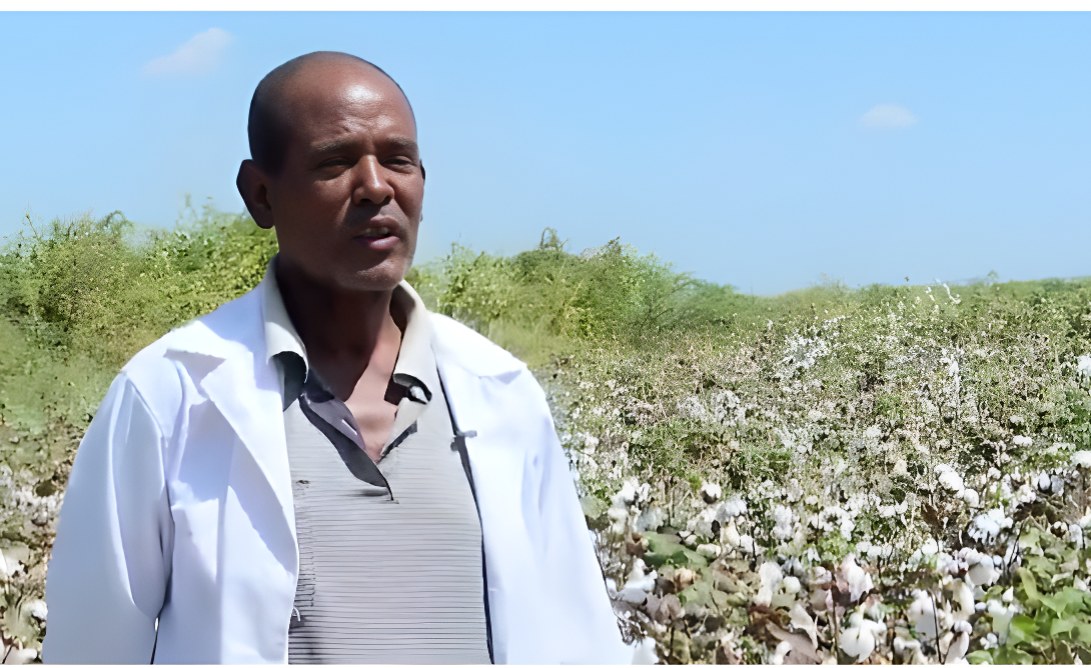
Manufacturers identify contamination during harvesting, inconsistent fibre characteristics, uneven grading standards and seasonal shortages as recurring problems. These constraints can interrupt production, increase costs and weaken the competitiveness of Ethiopian textiles in export markets. World Cotton Factory owner Yasin Geresu told AllAfrica that locally produced cotton remains inconsistent in quality while production costs are high.
The Werer Agricultural Research Center has developed cotton varieties intended to improve yields and fibre quality. Its Director General, Berhanu Megersa, said limited funding has slowed seed multiplication and prevented the varieties from reaching farmers at scale. The result is a bottleneck with effects throughout the chain: ginneries receive variable raw material, mills cannot rely on uniform inputs, and garment manufacturers face less predictable supplies of fabric.
Policy focuses on coordination and quality
Ethiopia's National Cotton Development Strategy seeks to connect farmers, processors, manufacturers and exporters more closely. Proposed industry measures include contract farming, clearer quality standards, transparent pricing, improved grading and stronger links between mills and growers. For farmers, these arrangements could provide more dependable buyers; for factories, they could improve visibility over future supply and specifications.
Samson Assefa, Executive Director for Cotton Development at the Ministry of Agriculture, said the priorities are to increase productivity, strengthen the value chain, satisfy domestic textile demand and expand exports through improved seed, better market links and closer stakeholder coordination. Industry Minister Melaku Alebel similarly identified research, quality control, extension services and collaboration between producers and industry as requirements for unlocking the country's production potential.
The central test is whether investment upstream can catch up with the industrial capacity already created. Industrial parks and factories provide markets for domestic fibre, but they cannot substitute for irrigation, seed multiplication, agricultural research or consistent grading. External shocks, including the COVID-19 pandemic, rising freight costs and domestic conflict, have also complicated the industry's development, according to the source report.
Implications for producers and manufacturers
For growers, higher and more reliable demand will depend on meeting the quality specifications of spinning and textile plants. Access to improved seed, irrigation and extension support will therefore be as important as the amount of land available. Stable purchasing arrangements could also reduce the market uncertainty described by farmers.
For manufacturers, increased local sourcing could shorten supply chains and reduce exposure to imported lint and yarn, but only if domestic cotton is available in sufficient, consistent volumes. Ethiopia has already built much of the processing and garment infrastructure. Its ability to establish a complete cotton-to-clothing chain now rests on closing the gap between farm productivity and factory requirements.