Eswatini's Sugar Industry Posts E8 Billion in Revenue for 2025/26
Eswatini's sugar sector generated E8 billion in revenue in the 2025/26 financial year, up from E7.7 billion, as higher sales volumes offset a sharp drop in global sugar prices. Rising SACU imports, weather disruptions and electricity costs remain key pressures on producers.
Revenue rises despite falling global prices
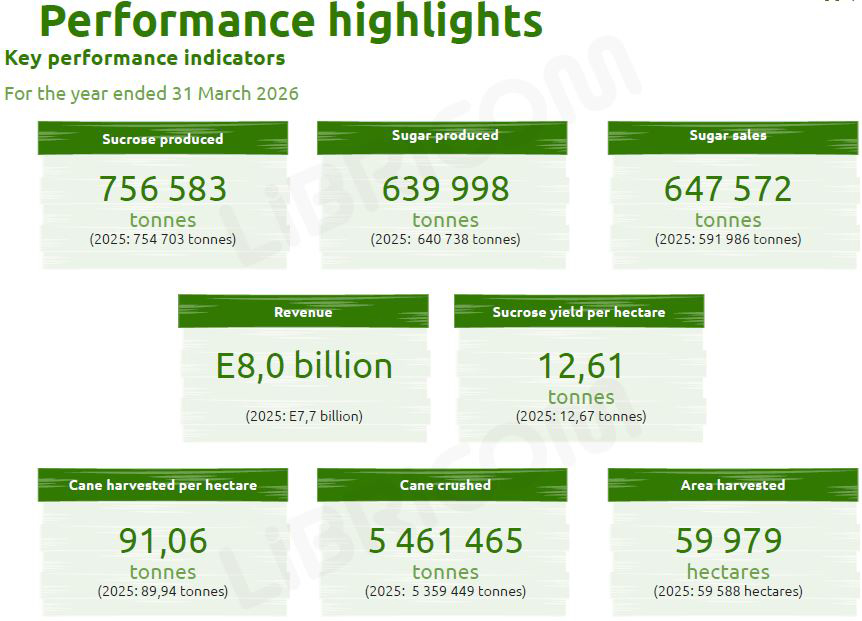
Eswatini's sugar industry generated E8 billion in revenue during the 2025/26 financial year, up from E7.7 billion the previous year, according to the Eswatini Sugar Integrated Annual Report. The increase came even as global sugar prices fell to their lowest levels in almost five years, adverse weather disrupted harvesting, production costs rose and cheap imports increasingly entered the Southern African Customs Union (SACU) market.
Sugar sales rose to 647,572 tonnes, up from 591,986 tonnes a year earlier, while sugar production held largely stable at 639,998 tonnes. Sugar cane crushed increased to 5.46 million tonnes from 5.36 million tonnes, and the harvested area expanded to almost 60,000 hectares. Chief Executive Officer Banele Nyamane said the year "revealed both the strength of the Eswatini sugar industry and the realities of operating in a volatile global market," adding that the industry has weathered similar cycles before and is "well positioned to navigate this period." He said the rise in production reflected industry-wide measures to address declining yields, and that customer complaints about sugar quality had declined significantly after quality issues in previous seasons were addressed.
Global oversupply and rising SACU imports pressure prices
Industry President Nick Jackson described the season as "a perfect storm," citing low global sugar prices, currency movements and adverse weather. International sugar prices fell from more than 25 US cents per pound two years ago to below 14 cents per pound. Global sugar production is estimated at 182 million tonnes for 2025/26, producing a projected 2.2-million-tonne surplus after a deficit the previous season, with higher output in India, Thailand and Pakistan adding downward pressure while Brazil remained the dominant exporter.
SACU remains Eswatini's most important market, accounting for about 72% of total sales, but imports into the bloc reached their highest levels in years, depressing regional prices. Jackson said a weakening US dollar had also reduced the effectiveness of the dollar-based reference price used to set import tariffs, meaning "when global prices fall, more sugar from major low-cost producing countries enters the SACU market, intensifying pressure on us as producers."
Weather and electricity costs weigh on operations
Prolonged rainfall late in the season disrupted harvesting and left about 200,000 tonnes of cane unharvested by the end of the milling season. Jackson said the area under cane has nonetheless expanded through investment and new grower schemes, including Phase II of the Lower Usuthu Smallholder Irrigation Project (LUSIP II), which has brought additional land into production. While cane yields have declined in recent years, the report notes early signs that productivity may be stabilising.
Chairman Meshack Kunene said rising electricity tariffs have become "a major concern for the industry," as growers depend heavily on grid power for irrigation pumping. With prices lower and margins under pressure, he said disciplined cost management and operational efficiency are increasingly important, though the industry's production costs remain competitive against other producers and it benefits from established regional and international market relationships and growing demand across Africa. Kunene said safeguarding access to key markets and investing in production efficiency and smallholder development would be critical to maintaining competitiveness.