Essar Biofuels Plans $75 Million Cashew Shell Processing Project in Côte d'Ivoire
Indian group Essar Biofuels signed a memorandum of understanding on September 11 with Côte d'Ivoire's CCAK and CEPICI for a cashew shell processing plant valued at more than $75 million. The facility would extract cashew nut shell liquid and convert it into cardanol. The project follows a near-doubling of local kernel processing, which reached about 660,000 tonnes in 2025.
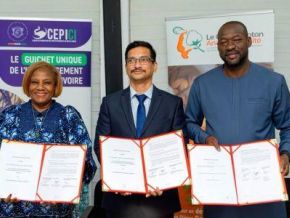
Indian industrial group Essar Biofuels Ltd has signed a memorandum of understanding with Côte d'Ivoire's Cotton, Cashew and Shea Council (CCAK) and the country's Investment Promotion Center (CEPICI) for an industrial cashew shell processing project valued at more than $75 million, Ecofin Agency reported. The agreement was signed on September 11.
The planned facility will extract cashew nut shell liquid, known as CNSL, and convert it into cardanol. The chemical is used in resins, coatings, paints, adhesives and certain industrial materials. The Essar commitment is the largest of three investments announced around cashew by-products in the country.
Three projects targeting the same residue
Singapore-based Valency International commissioned a plant at Attinguié in June to produce biochar from cashew shell residue. According to Ecofin Agency, it is considered Africa's first large-scale commercial facility producing biochar from cashew shells. The unit can process 20,000 tonnes of shells a year and yield close to 6,000 tonnes of biochar.
Before those two projects, Ivorian company Foods'Co secured 3 million euros in financing from Belgian investment company BIO in 2025 to build and operate a CNSL extraction plant in Béoumi. That project also plans to produce briquettes from cashew shells.
Taken together, the three announcements cover the main industrial routes currently available for cashew shells: liquid extraction with chemical conversion into cardanol, thermal conversion into biochar, and densification into fuel briquettes. Each targets a different set of buyers, from chemical formulators to soil amendment and solid fuel markets.
Local shelling is creating the feedstock
The investments follow a sharp increase in kernel processing inside Côte d'Ivoire. The country processed about 660,000 tonnes of cashews in 2025, or roughly 42% of its production, against 344,026 tonnes in 2024. That is close to a doubling of volumes in a single year.
Shells account for nearly 70% of the weight of raw cashew nuts. On that basis, the 2025 processing volume implies in the order of 460,000 tonnes of shells generated in one season. The government aims to process 50% of national cashew output locally by 2030, which would push residue volumes higher still.
A small but growing chemical market
Ivorian authorities are working to position the country in markets for cashew shell derivatives. In June 2025, the CCAK brought together industrial companies, project developers and technical and financial partners at a workshop in Abidjan to promote opportunities in CNSL, biochar and other industrial derivatives. The regulator's stated aim is to attract further investment into the emerging segment and strengthen the country's presence in the global CNSL market.
That market remains modest in value terms. Market Report World projects average annual growth of 5.43%, taking it from $446 million in 2026 to $718 million in 2035. The forecast mainly reflects rising demand for bio-based chemicals and broader use of CNSL in resins, coatings, adhesives and friction materials.
Turning a disposal cost into revenue
For processors, the by-product question is also one of cost control. In an analysis of the African market, French nonprofit Nitidæ notes that the limited use of cashew shell waste on the continent can leave processors with storage, transportation and disposal expenses. Converting the shells into marketable products would turn that industrial cost into a potential source of revenue.
The announced capacity remains small relative to the residue now being generated. Valency's Attinguié plant alone absorbs a fraction of annual shell volumes, leaving room for additional units if buyers for CNSL, cardanol, biochar and briquettes can be secured on stable terms.