Entre Ríos citrus industry pushes for access to US market
Entre Ríos Governor Rogelio Frigerio and regional citrus exporters discussed efforts to open the US market to the province’s sweet citrus. Labor rules, taxation and investment conditions were also central to the talks in Concordia.
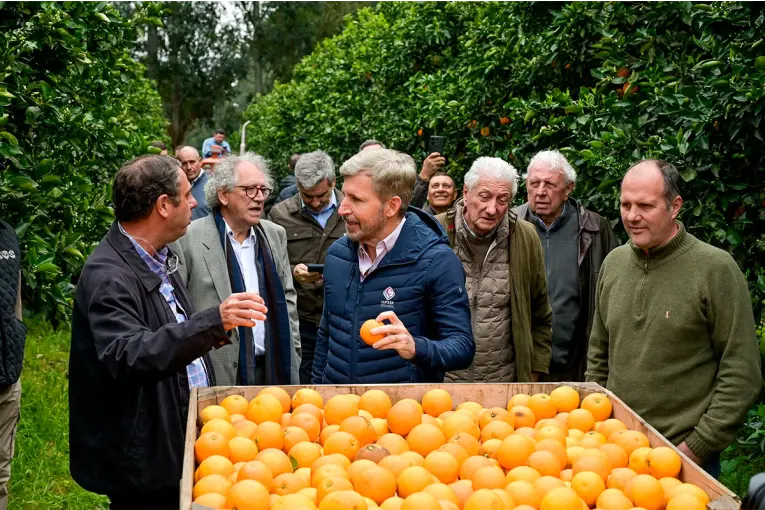
US access leads the citrus agenda
Argentina’s Entre Ríos province is stepping up efforts to secure access to the United States for its sweet citrus, as producers seek additional export destinations and better conditions for investment. Governor Rogelio Frigerio visited citrus plantations in Concordia on Friday and met representatives of the Chamber of Citrus Exporters of Northeastern Argentina to discuss the constraints facing the industry and its prospects for growth.
According to Elonce, Frigerio said the provincial government and the industry felt they were getting closer to resolving the restrictions that have limited the sector’s expansion. Opening the US market was identified as a central objective, alongside changes involving labor rules and aspects of taxation. No timetable for market access or details of the remaining regulatory process were provided.
Producers seek greater certainty for investment
The discussions linked export access with the conditions needed to expand production capacity. Frigerio said sweet citrus producers are important to both the provincial and national economies, while Agroempresario reported that progress on market access, labor regulation and taxation could support higher output, investment and exports. Concordia is located in one of Entre Ríos’ principal citrus-producing areas, where the industry supplies both domestic and foreign markets.
Enrique Yelín, president of the Chamber of Citrus Exporters of Northeastern Argentina, said gaining entry to the United States remained difficult but that the provincial government was supporting the effort. He argued that labor reform could provide producers with greater legal certainty and encourage continued investment. Tax-related costs were also discussed, although the reports did not identify specific taxes, proposed rates or legislative measures.
Imports are not viewed as a central threat
The meeting also addressed citrus imports into Argentina. Yelín played down their effect on domestic growers, saying imported volumes were small and generally entered during temporary shortages caused by weather. He said Argentina’s market was adequately supplied by domestic production and that imports were not presented to the governor as a significant competitive problem.
The industry’s immediate agenda therefore remains focused on obtaining new overseas outlets and improving the operating environment for growers and exporters. Access to the United States could give Entre Ríos producers another destination for sweet citrus, but the sources supplied no figures for provincial production, export volumes, prices or prospective US demand. The commercial effect will consequently depend on the terms of any eventual approval, including eligible products and the sanitary and phytosanitary requirements imposed on Argentine suppliers.