Enagás seeks approval for 38-kilometer hydrogen pipeline in Biscay
Enagás has requested authorization for a €67.995 million hydrogen pipeline connecting Muskiz, Arrigorriaga and the Port of Bilbao. The project would link Petronor’s planned 100 MW electrolyzer with Spain’s emerging hydrogen backbone and future European corridors.
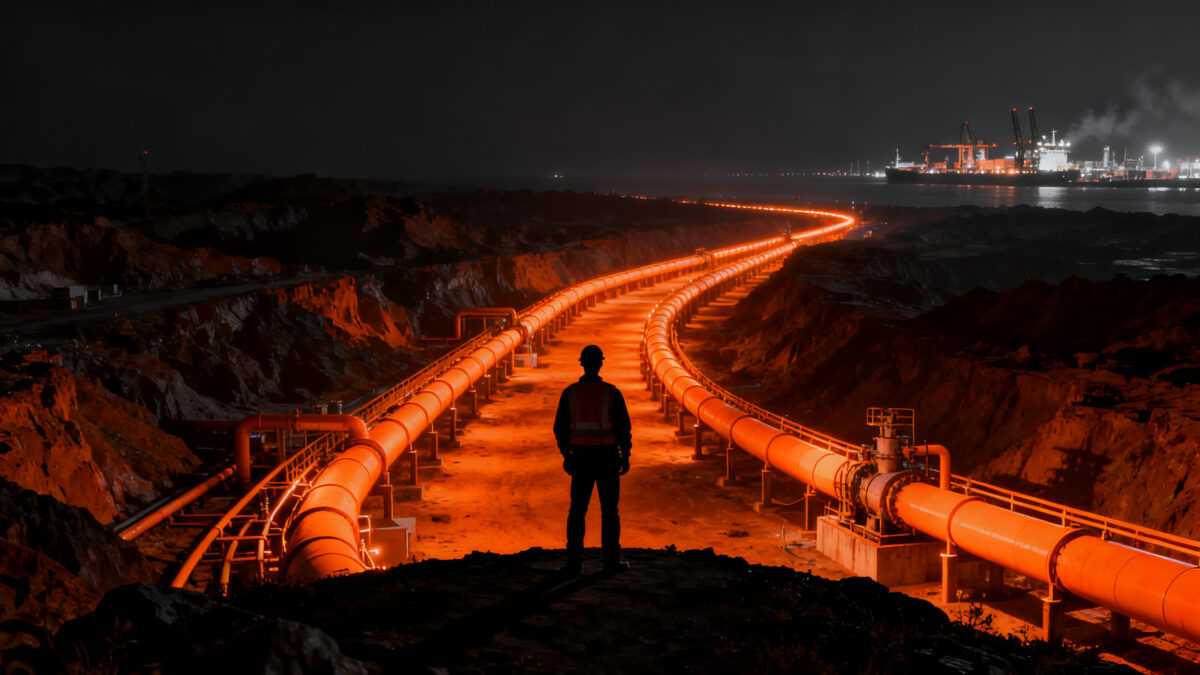
A €67.995 million link across Biscay
Enagás Infraestructuras de Hidrógeno has asked Spain’s Ministry for the Ecological Transition, MITECO, for authorization to build a 38,411-meter hydrogen pipeline between Muskiz and Arrigorriaga, including a branch to the Port of Bilbao. Ecosistema Startup reports, citing the notice published in Spain’s Official State Gazette and coverage by Xataka and BilbaoHiria, that planned investment totals €67,995,147. The application is being processed as urgent, cutting administrative deadlines in half, but the project has not yet received authorization.
The route crosses 11 municipalities in Biscay: Abanto Zierbena, Arrigorriaga, Barakaldo, Bilbao, Ugao-Miraballes, Trapagaran, Santurtzi, Ortuella, Alonsotegi, Zierbena and Muskiz. According to details attributed to BilbaoHiria, it affects 649 properties. Zierbena accounts for 245 and Muskiz for 134, making them the most exposed municipalities. Land requirements include rights of way and temporary occupation, while full ownership occupation is limited to four valve sites.
The infrastructure would use a 30-inch steel pipe with an internal epoxy coating and an operating pressure range of 45 to a maximum of 94 bar. Specifications cited from the official notice include valve sites at Muskiz, Zierbena, Barakaldo and Arrigorriaga, as well as fiber-optic cable, a SCADA control system and corrosion-protection stations. Construction is expected to take between eight months and one year depending on the section, according to ABC.
Connecting industrial production with export corridors
The pipeline’s immediate industrial anchor is Petronor’s planned 100 MW electrolyzer at its Muskiz refinery. ABC identifies it as one of 124 renewable-hydrogen projects awarded support by Spain’s government under the Recovery, Transformation and Resilience Plan. The Petronor project has received €160 million from the program, according to the publication.
Without a pipeline, hydrogen produced at the refinery would largely be restricted to nearby consumption. The proposed connection would allow it to move toward the Port of Bilbao and potentially into a corridor serving Amsterdam and the North Sea Canal area. The ports of Bilbao, Amsterdam and Duisburg, the Basque Energy Agency and other partners signed a memorandum of understanding in April 2024 to develop that corridor, according to Offshore Energy and the Port of Bilbao.
The Bilbao branch is also intended to connect eventually with H2Med, promoted by Enagás together with Portugal’s REN, France’s Teréga and NaTran, and Germany’s OGE. The BarMar submarine pipeline between Barcelona and Marseille entered front-end engineering design on July 16, according to Europa Press. It received €28 million from the EU’s Connecting Europe Facility in January 2025. BarMar and the CelZa link between Celorico da Beira and Zamora are scheduled to enter service in 2032, Energías Renovables reports.
Market demand and regulatory questions remain
BarMar is planned at about 400 kilometers with annual capacity of 2 million tonnes, while the roughly 270-kilometer CelZa connection is designed for 750,000 tonnes. Project promoters estimate that transporting hydrogen from Spain to the Franco-German border would cost between €0.60 and €1 per kilogram. A non-binding market consultation identified 528 projects from 168 companies, indicating broad interest but not firm contracted demand.
The Biscay line is one of three initial segments under review. The others are the 59-kilometer, €95.7 million Huelva-Aznalcázar section linked to Moeve’s Hydrogen Valley and the 75-kilometer, €98.6 million Caspe-Tivissa section associated with the Catalina project in Teruel. ABC reports that the three will require €389 million and are classified as European Projects of Common Interest.
Spain’s National Energy and Climate Plan targets nearly 12 GW of electrolyzer capacity by 2030, mainly for industrial use. The EU’s RED III directive requires renewable hydrogen to account for 42% of industrial hydrogen used for non-energy purposes by that year. Before construction can begin, owners of the 649 affected properties have 15 working days from publication in the Official State Gazette to submit objections. The project will initially operate with negotiated third-party access and without regulated remuneration from the gas system; its economic framework will later be adapted to Spain’s implementation of the EU package for renewable-gas and hydrogen markets.