Emilia-Romagna footwear exports reach €472 million in first half
Footwear exports from Emilia-Romagna reached about €472 million in the first half of 2026, an increase worth roughly €54 million, according to Assocalzaturifici data reported by ANSA. Provincial performance diverged sharply, with Piacenza up 39.3% and Forlì-Cesena still absorbing 82.7% of the region's authorised short-time work hours in the leather chain.
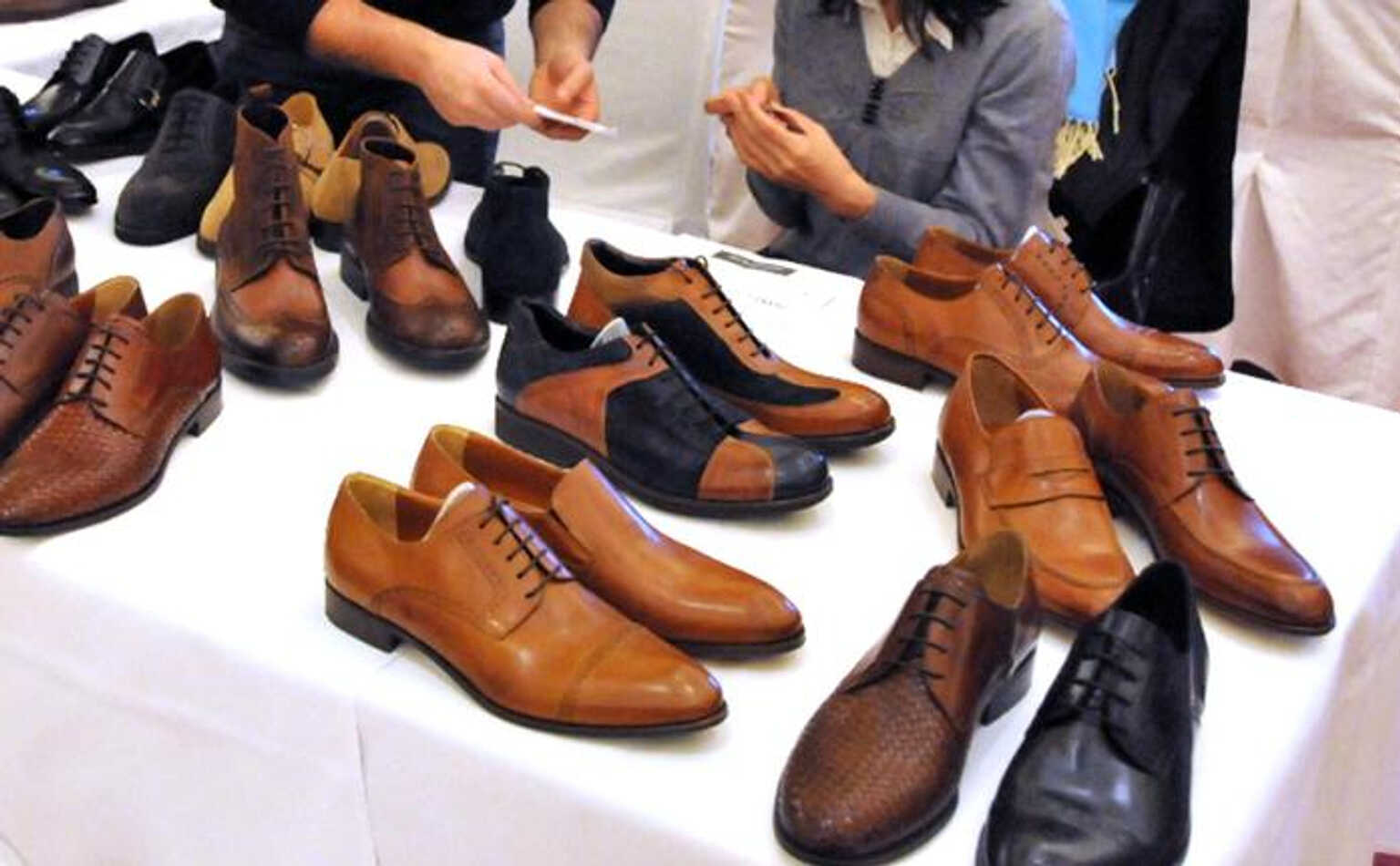
Footwear exports from Emilia-Romagna reached about €472 million in the first half of 2026, according to the half-year balance published by Assocalzaturifici and reported by ANSA. The regional gain is worth roughly €54 million, a figure derived from the rounded total and the rounded rate of change in the association's release.
The regional performance sits against a weaker national backdrop. Italian footwear turnover fell 2.3% over the same six months, and the sector continues to draw on public short-time work schemes, even though their use is contracting quickly.
Provinces moving at different speeds
The regional total conceals wide gaps between territories. Each percentage refers to exported value, measured against the same territory's base a year earlier.
- Piacenza: up 39.3%, the fastest pace among the provinces cited in the balance
- Reggio Emilia: up 21.9%
- Bologna: up 11.1%
Forlì-Cesena, the region's main shoemaking district, tells a different story. Across all sectors, the province's exports reached €2.4 billion in the first half, up 3.7%, as documented by the Camera di commercio della Romagna. Footwear weakness is therefore playing out inside a territory where other manufacturing lines are gaining ground abroad.
Germany leads, Spain accelerates, Russia contracts
- Germany: first destination, exported value up 16.9%
- Spain: up 41.4%, the sharpest acceleration among the large outlets
- Poland: up 14.4%
- France: up 11.3%
- United States: up 2.5%
Together these five markets absorb 56.6% of regional foreign sales, a concentration that makes continuity of relationships with buyers in those destinations unusually important. Outside the top group, the Middle East posted a marginal 0.7% rise, while exports to Russia fell 20.8%.
Short-time work falls but stays far above 2019
Across the wider leather chain, which also includes tanneries and leather goods makers, authorised short-time work hours in Emilia-Romagna fell to roughly 635,000, down 42.2% against January-June 2025. For factory workers, continuity of days actually worked remains the decisive variable.
The territorial detail points back to Romagna: 524,968 hours are concentrated in Forlì-Cesena, about 82.7% of the regional total. Authorisations in that province fell 45.8% year on year, yet remain more than four times the level recorded in the first half of 2019. INPS authorisations measure the coverage granted, not the time actually spent in the scheme; the hours effectively used are a separate statistic. Business and employment counts for the sector cover shoemakers together with components suppliers, both industrial and artisan, with estimates from the Centro Studi Confindustria Accessori Moda based on Infocamere-Movimprese data measuring the balance between entries and exits.
National turnover down, trade surplus wider
Nationally, foreign trade data stops at May: over those five months, exported value declined 2.4%. Counted in pairs, the fall is steeper. Pairs shipped abroad dropped 5.8%, while the average export price rose 3.7%, meaning the value change also reflects the mix of what is being sold. Reconstructing volumes for Emilia-Romagna specifically would require the corresponding regional figure in pairs.
Italy's footwear trade balance improved 9.6% to €2.16 billion, driven mainly by imports, down 10.5% in value. Domestic demand held up: Italian household purchases rose about 2% in the half in both value and quantity, women's shoes gained 4% on both measures, and sports shoes and sneakers grew 1.5% while absorbing more than 42% of total spending. Giovanna Ceolini, president of the association, called for measures to support investment and employment, pointing to cost pressure on companies and to payment terms as a decisive element in negotiations with buyers.
Full market analysis