Electric cars lead German fleet registrations as Chinese brands gain credibility
Electric vehicles accounted for 30% of new registrations in Germany’s fleet market in the first half of 2026, leading all powertrain types for the first time. While German brands still supply three quarters of fleet EVs, 73% of surveyed fleet managers rate newcomers such as BYD and Xpeng as equal to or better than German manufacturers.
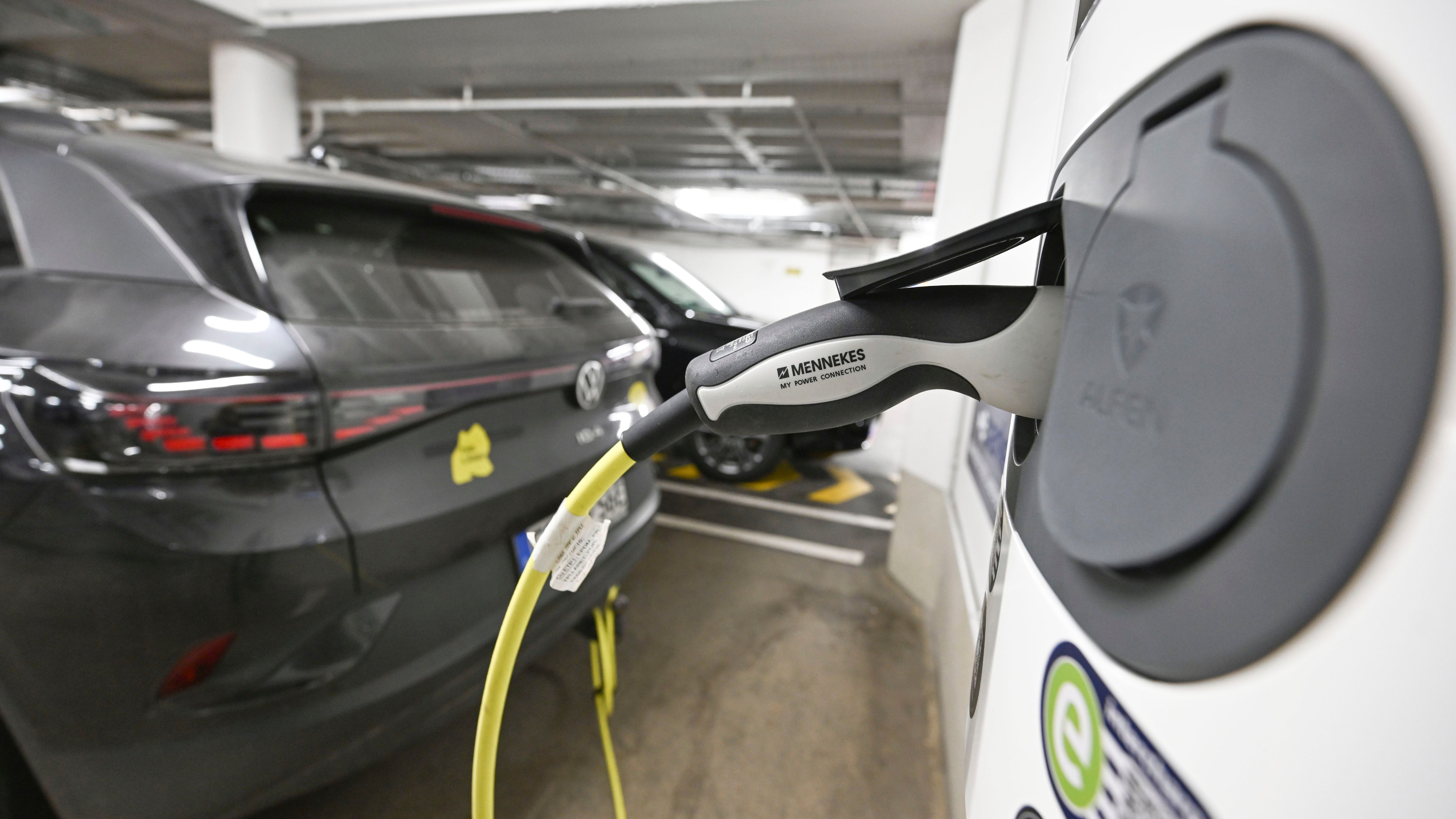
EVs take first place in new fleet registrations
Electric vehicles accounted for 30% of new registrations in Germany’s fleet market during the first half of 2026, putting them ahead of every other powertrain type for the first time. EVs had already overtaken petrol, diesel and plug-in hybrid vehicles in November 2025, and their lead has continued since then, according to a Dataforce study commissioned by the non-profit initiative Klimaneutrales Deutschland and obtained in advance by WirtschaftsWoche.
The study found that 94% of companies operating fleets of more than 50 vehicles already use at least one EV. Economic considerations were the most commonly cited reason for adopting electric cars, followed by companies’ own sustainability targets. However, 54% of respondents said they would electrify more slowly or not at all without subsidies and regulation.
Across the entire stock of company fleet vehicles, rather than new registrations alone, EVs have a national share of 24%. Schleswig-Holstein has the highest regional proportion at 28%, while Saxony-Anhalt has the lowest at 13%. Dataforce expects a broader model range and improved charging infrastructure to support further growth. The comparable EV share in Germany’s private new-car market was 33% in the same half-year, although that segment has previously shown greater volatility.
German manufacturers retain a strong position
German brands currently account for roughly three out of every four electric cars in German corporate fleets. VW alone supplies 20%, followed by Skoda with 15%, BMW with 12%, Audi with 11% and Mercedes with 7%. The Škoda Enyaq is the most popular model, ahead of the VW ID.7 and VW ID.3.
That position is increasingly being tested. Chinese groups currently hold only 6% of the company fleet market, with much of that presence coming from Volvo and Polestar, both part of Geely. Yet 73% of the 255 fleet managers surveyed consider new brands such as BYD or Xpeng equal to or better than German manufacturers. A further 44% said they could imagine adding Chinese vehicles to their fleets.
WirtschaftsWoche reported that fleet consultant Alexander Schuh is seeing strong corporate interest in Chinese manufacturers, although many companies have yet to make purchases. He identified relatively weak after-sales networks as the main barrier. Maintenance access is critical for fleet operators, and established German dealer networks remain substantially stronger. Larger companies are also weighing possible geopolitical risks.
Regulation and operating costs shape demand
The European Commission is planning binding electrification targets for large companies with more than 250 employees and €50 million in revenue. Under the proposal still being negotiated, 54% of their new vehicles would have to be emission-free from 2030, rising to 95% from 2035. Several member states and Germany’s automotive industry association oppose the targets, but almost two thirds of surveyed companies consider the 2035 requirement realistic.
Schuh argues that EVs are no longer more expensive than combustion-engine vehicles when total ownership costs are considered. Some fleet managers nevertheless ranked cost as the second most important objection to EVs, behind range. Schuh said companies often focus on leasing payments while overlooking operating costs, future increases in transport-related CO₂ prices and potential benefits for sustainability ratings and credit conditions.
Practical constraints remain. Some businesses are waiting for stronger grid connections before installing their own chargers, while others face management resistance. Fleet managers also cited the proliferation of charging applications and opaque pricing, including inconsistent rules for idle fees. Meanwhile, BYD, Xpeng and MG are rapidly expanding their sales locations. German groups’ share of private EV registrations fell from 54% in 2025 to 38% in the first half of 2026, indicating that competitive pressure is already more advanced outside the corporate segment.