El Niño Threatens Indonesian Coffee as Abundant Global Supply Pressures Prices
El Niño is threatening Indonesian coffee production while abundant global supply puts pressure on prices, according to Bisnis. The combination could reduce producer revenue and weaken the competitiveness of Indonesian coffee without necessarily lifting the wider market.
Weather risk meets a well-supplied market
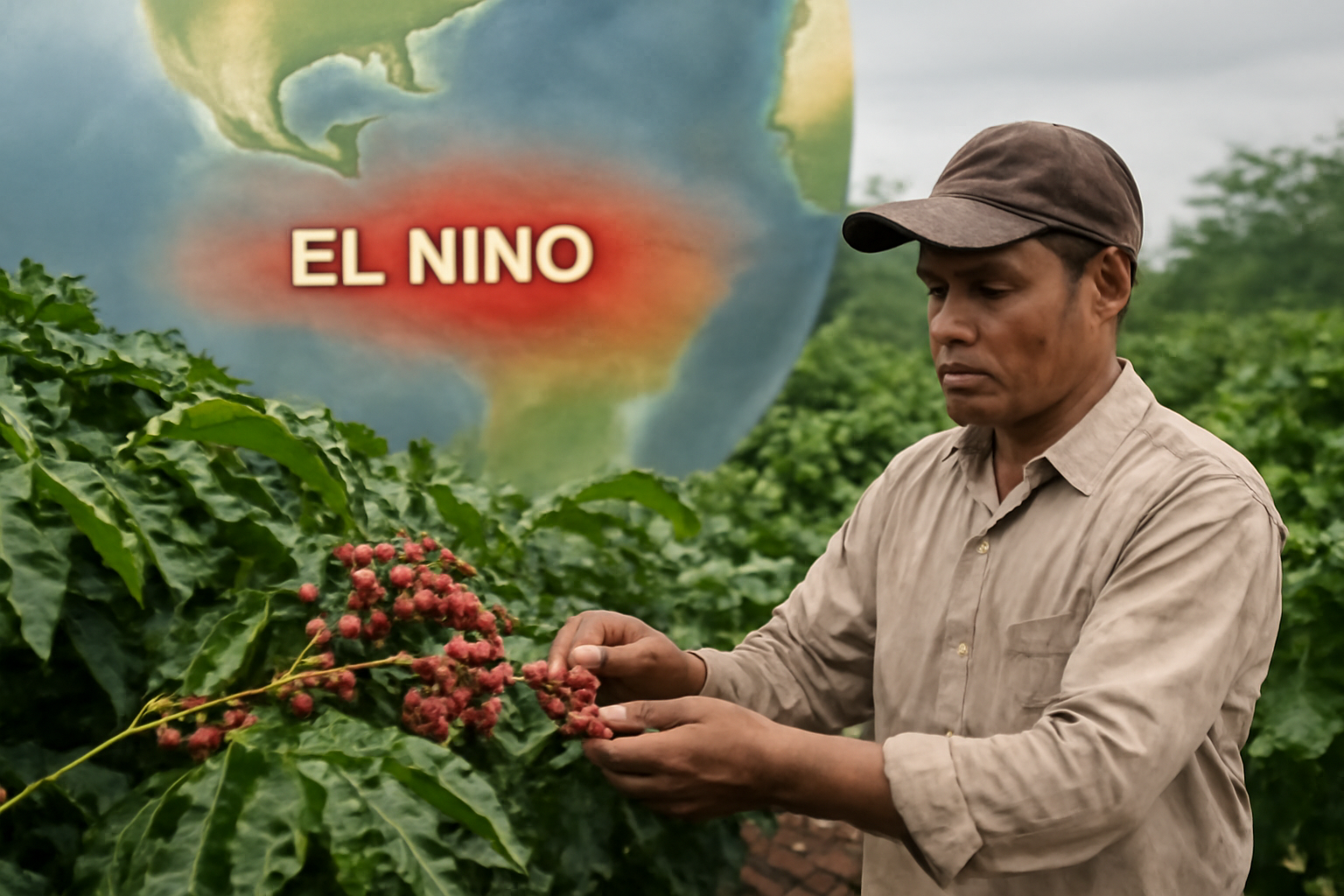
El Niño is threatening coffee production in Indonesia just as abundant global supply begins to put pressure on prices, Bisnis reported. The two forces are moving in opposite directions: adverse weather could restrict Indonesian output, while availability elsewhere limits the potential support for international prices.
This creates a difficult setting for Indonesian growers and processors. A smaller crop would leave less coffee to sell, but weak prices could prevent the remaining volume from generating enough additional revenue to compensate for the loss. The result may be pressure on earnings even if weather concerns periodically support market sentiment.
No estimate of the potential production decline was included in the available source material. There was also no forecast for the duration or geographical reach of the disruption. Buyers and sellers therefore face a risk rather than a confirmed supply deficit, making assessments of crop development especially important.
Producer revenue comes under pressure
The central commercial issue is the interaction between volume and price. Producers can sometimes absorb lower output when prices rise sharply, but abundant global supply weakens that mechanism. If Indonesian production falls while international prices remain under pressure, farms could face lower sales volumes and limited price compensation at the same time.
Processors would face a different exposure. Reduced domestic availability could make it harder to secure suitable beans, while subdued international prices may restrict how much higher raw-material costs can be passed through to customers. The impact would depend on the severity of any crop loss and on the availability of alternative supply.
For exporters, competitiveness will depend on whether Indonesian coffee becomes scarcer or more expensive relative to coffee from other origins. Ample global supply gives international buyers more room to compare offers and adjust procurement. That could limit the ability of Indonesian sellers to preserve margins through higher export prices.
Global supply limits the price response
The broader market balance matters because a production problem in one origin does not automatically create a global shortage. Bisnis described worldwide supply as abundant and prices as beginning to face pressure. In that environment, buyers may be able to replace at least part of any missing Indonesian volume with coffee available elsewhere.
Even so, the Indonesian crop remains relevant to traders and industrial users that require particular specifications or maintain established sourcing relationships. Substitution may be possible in aggregate, but individual buyers could still encounter tighter availability, changes in quality mix or more difficult procurement decisions.
The immediate focus is therefore split between Indonesian weather and the size of global availability. A clearer assessment of crop damage would determine whether El Niño represents a manageable local disruption or a more material constraint. Until then, plentiful worldwide supply is likely to restrain the market impact, while Indonesian producers carry most of the direct production and revenue risk.