El Niño, inflation and imports pressure Colombia’s dairy industry in 2026
Colombian dairy producers and processors face pressure from El Niño, inflation and imported milk in 2026. Stable consumption provides some support, but does not remove the strain on production costs and market competition.
Multiple pressures converge on the dairy chain
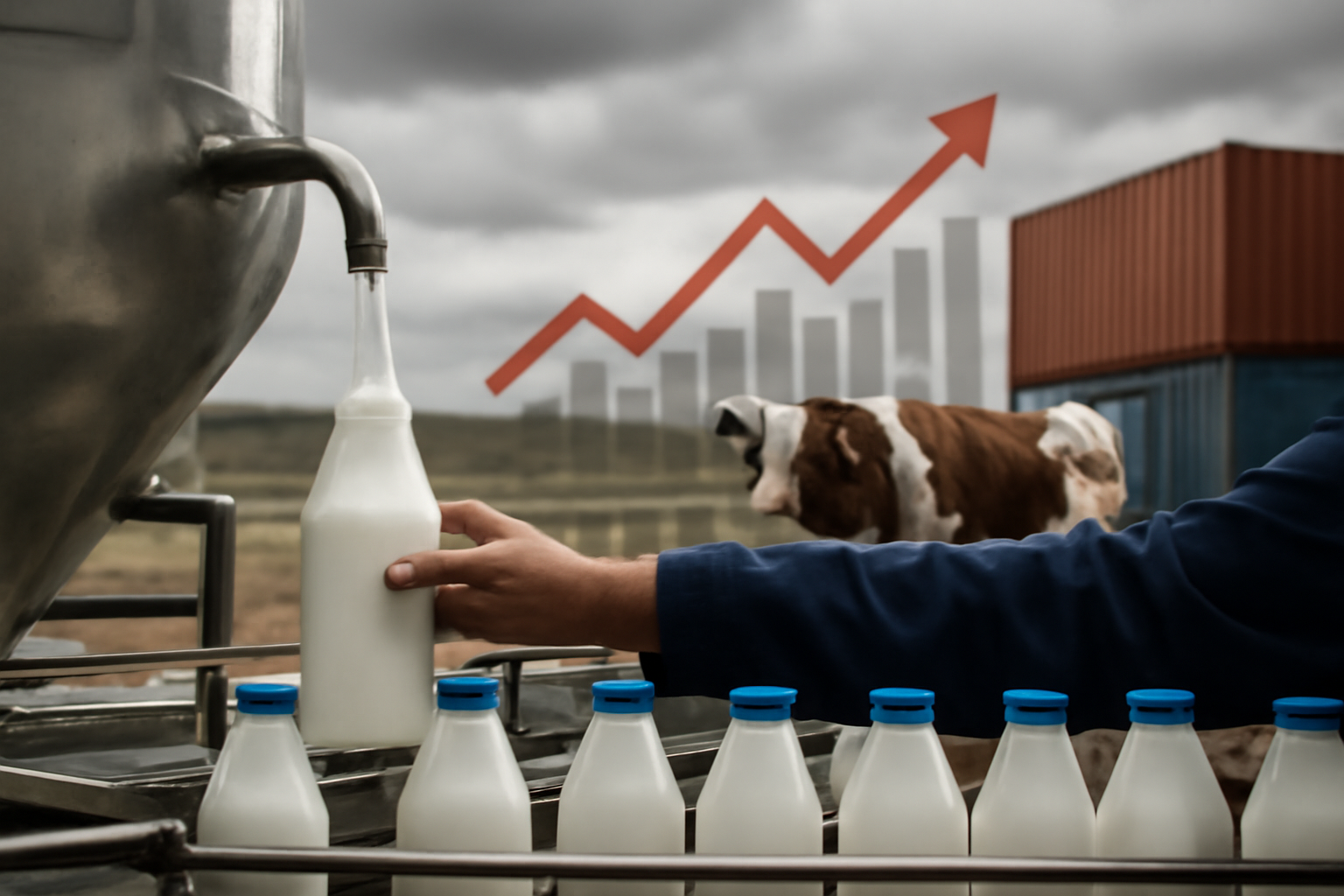
Colombia’s dairy industry is entering 2026 under pressure from three separate forces: El Niño, inflation and competition from imported milk. Together, they create a difficult operating environment for farmers and processors even as domestic dairy consumption remains stable.
The climate threat begins at farm level. El Niño can disrupt the conditions on which milk production depends, exposing producers to uncertainty over pasture availability, animal productivity and the continuity of raw milk supply. The effect is especially important for farmers whose ability to absorb additional costs is limited. A climate-related reduction in output or a more irregular supply pattern can also affect processors that require predictable volumes to keep plants operating efficiently.
Inflation adds a second layer of pressure. Higher operating costs can narrow producer margins and increase the cost of collecting, processing and distributing milk. Farmers and processors must decide how much of that pressure they can absorb and how much can be passed through the supply chain. Stable consumption may help preserve sales volumes, but it does not necessarily give companies room to raise prices without affecting demand.
Imported milk intensifies competition
Imported milk introduces an additional challenge for domestic suppliers. When foreign product enters the Colombian market, local producers and processors must compete not only on price but also on consistency, availability and commercial terms. The impact depends on the form in which milk is imported and how it is used by buyers, but greater availability can limit the pricing power of domestic suppliers.
For processors, imports can provide an alternative source of raw material or finished product when local supply is constrained. For farmers, however, imported milk can weaken demand for domestic output precisely when climate and inflation are raising production risks. This creates a tension within the dairy chain: supplies that help some industrial buyers manage costs may increase pressure on primary producers.
The competitive effect will also depend on purchasing decisions by dairies, food manufacturers, distributors and retailers. If buyers favor imported product because of price or availability, domestic suppliers may have to accept tighter margins. If local milk retains advantages in freshness, logistics or customer preference, producers may preserve part of their market despite the added competition.
Stable demand offers limited protection
Stable consumption is the main counterweight to these pressures. It indicates that Colombia’s dairy market continues to have a dependable base of buyers. That matters for processors planning production and for farmers seeking outlets for raw milk. Yet stable demand is not the same as expanding demand, and it may be insufficient to accommodate both domestic output and additional imported supply without stronger price competition.
Industry participants will therefore watch the balance between climate-driven production conditions, inflation and import availability. Producers face decisions about controlling costs and maintaining output, while processors must secure reliable supplies without losing competitiveness. Importers and distributors, meanwhile, must assess whether foreign milk can meet market requirements at commercially attractive terms.
The central issue for 2026 is not a collapse in consumption, but how the value generated by stable demand is distributed across the chain. If El Niño constrains domestic production while imports fill supply gaps, processors may gain flexibility. If imports expand while local milk remains available, competition could deepen the pressure on Colombian farms. The outcome will depend on how these forces interact during the year.