Egypt becomes France’s top frozen strawberry supplier with 20,000 tonnes
Egypt shipped about 20,000 tonnes of frozen strawberries to France in 2025, more than double its 2021 volume. The country now leads suppliers to a French market importing 65,000–68,000 tonnes annually.
Egyptian shipments more than double in four years
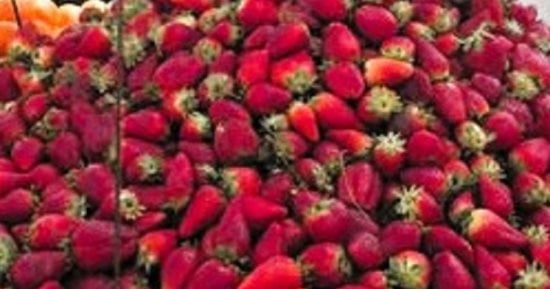
Egypt became the leading supplier of frozen strawberries to France after shipping about 20,000 tonnes to the country in 2025, according to Egypt’s Food Export Council. The result strengthens Egypt’s position in one of the European Union’s principal markets for processed fruit and gives Egyptian exporters a substantially larger share of French demand.
Egyptian frozen strawberry exports to France stood at about 9,000 tonnes in 2021. By 2025, they had risen to nearly 20,000 tonnes, meaning the volume more than doubled in four years. The expansion represents an increase of approximately 11,000 tonnes over the period, although the council did not disclose shipment values, average prices or the number of participating exporters.
France offers scale but also strong competition
France imports between 65,000 and 68,000 tonnes of frozen strawberries each year, the Food Export Council said. Egypt’s 2025 shipments were therefore equivalent to roughly three-tenths of that annual volume. The comparison indicates that Egypt has secured a significant position while leaving room for further growth, provided suppliers can defend their commercial and regulatory performance.
Egypt competes in France with several established producing and exporting countries, particularly Morocco, Poland and Spain. Their presence means that supplier rankings can depend not only on available crop volumes but also on quality, pricing, delivery reliability and buyers’ sourcing strategies. The council did not provide shipment figures for competing origins, so the size of Egypt’s lead cannot be determined from the available data.
European compliance will determine whether growth lasts
The Food Export Council identified quality, food safety, traceability and compliance with European technical requirements as priorities for Egyptian companies. These conditions are central to retaining customers in the EU, where frozen-fruit supply chains must document the product’s origin and handling. For processors and exporters, expanding volume without maintaining these controls could put the gains achieved in France at risk.
The French result also signals broader potential for Egypt’s frozen-fruit industry. A larger, dependable sales channel can support processors’ capacity use and give growers access to demand beyond the fresh market. Importers, meanwhile, gain another large-scale origin alongside Morocco, Poland and Spain. Future expansion will depend on whether Egyptian suppliers can preserve product consistency and meet European requirements as volumes rise. The council said the current position could also help companies pursue new markets, but it did not identify particular destinations or announce additional export targets.