Egypt veterinary agreement opens potential market for South African red meat
South Africa and Egypt have agreed veterinary conditions for red-meat exports, creating a potential new outlet for South African producers. Shipments cannot begin automatically: final signatures and exporter compliance are still required.
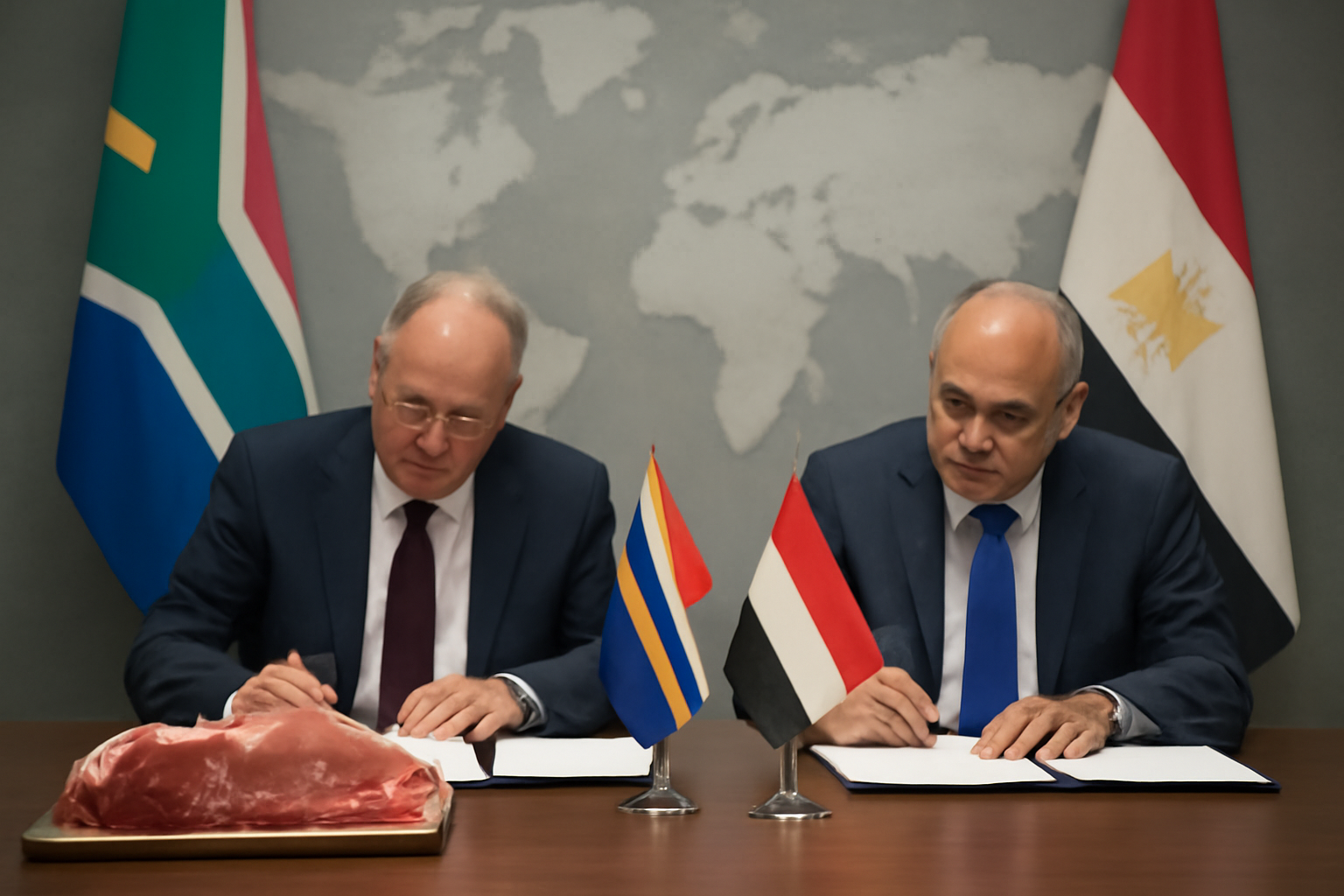
Veterinary terms establish a route to market
South Africa’s agreement with Egypt on veterinary conditions for red-meat exports has created a potential new destination for an industry under pressure from foot-and-mouth disease. The arrangement establishes the health requirements under which South African meat could enter the Egyptian market, although it does not mean that commercial shipments can begin immediately.
Final signatures are still required, according to the information released about the agreement. Exporters must also demonstrate that their products, facilities and procedures comply with the conditions accepted by the two countries. Market access therefore remains conditional on the completion of the formal approval process and the ability of individual suppliers to satisfy the agreed requirements.
Compliance will determine which suppliers benefit
The distinction between a government-level agreement and operational access is important for producers, processors and traders. Agreed veterinary terms remove a central negotiating obstacle, but they do not give every South African business automatic permission to sell into Egypt. Companies seeking access will have to complete the applicable approval steps before they can treat Egypt as an active commercial destination.
No shipment volumes, trade values, opening date or list of approved establishments were provided in the available material. There is consequently no basis yet for estimating how much South African red meat Egypt may buy, which suppliers will qualify or how quickly trade could develop. The immediate significance is the creation of a regulatory pathway rather than a confirmed flow of cargo.
For processors, readiness will depend on whether their operations can meet the agreed veterinary conditions consistently. For traders, the remaining approval work means that supply contracts and delivery plans must account for regulatory timing. Producers may gain from additional demand only after eligible exporters convert formal access into recurring orders.
Foot-and-mouth disease shapes the commercial context
The proposed opening comes while foot-and-mouth disease weighs on South Africa’s livestock sector. Animal-health problems can restrict market access and increase the importance of destinations willing to accept products under negotiated veterinary controls. Egypt could therefore become a useful outlet, but only if the final documentation is completed and exporters maintain the required standards.
The agreement may also broaden the set of markets available to South African suppliers. A wider customer base can reduce dependence on any single destination, but that benefit cannot be measured until approvals translate into shipments. The commercial outcome will depend on qualified supply, buyer demand and the practical implementation of the veterinary terms.
Next steps remain decisive
Industry participants will now be watching for the outstanding signatures, details of the compliance process and confirmation of which exporters or facilities may participate. Those steps will define the actual scope of access and the point at which companies can begin executing trade.
Until then, the Egypt agreement should be viewed as a market-access opportunity rather than a completed export opening. It gives South African red-meat businesses a route to pursue, but the value of that route will be established only when compliant suppliers receive approval and product begins moving to Egyptian buyers.