Egypt's Mostakbal Misr Industrial City to Process 3.4 Million Tons of Crops a Year
Mostakbal Misr Industrial City is designed to take in about 3.4 million tons of agricultural raw material a year and turn it into roughly 1.7 million tons of finished products, according to youlyou.com citing data from the Mostakbal Misr Authority for Sustainable Development. The site pairs New Delta crop output with processing lines for juice concentrates, par-fried potatoes, dried onion, feed, sugar and oils. Cold and freezing storage totals 90,000 tons across five facilities.
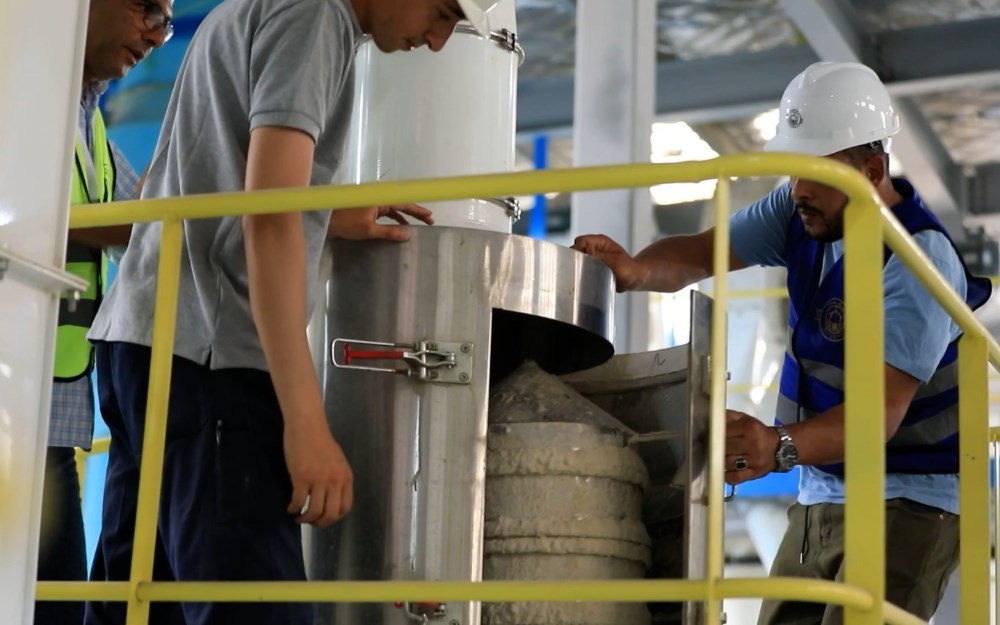
Egypt's New Delta land reclamation project is being extended beyond planted area into post-harvest processing, with Mostakbal Misr Industrial City positioned as the link between the fields and food manufacturing. According to youlyou.com, citing data from the Mostakbal Misr Authority for Sustainable Development, the city is designed to handle about 3.4 million tons of agricultural raw material a year and produce close to 1.7 million tons of finished goods.
The stated aim is to convert part of the harvest into processed products rather than market it entirely in raw form. The authority's model runs from crop production through preservation and manufacturing to placement in the domestic market or export channels.
Processing lines and product mix
The industrial activities listed for the city cover several distinct value chains rather than a single processing stream:
- vegetable and fruit processing
- orange and pomegranate concentrate production
- par-processed (semi-prepared) potato manufacturing
- onion dehydration and animal feed production
- sugar and edible oil projects
That spread allows the complex to absorb different crops and gives more than one route to monetise field output, youlyou.com reports. The underlying economics are straightforward: converting oranges into concentrate, or potatoes into semi-prepared products, moves the output from an agricultural commodity to a manufactured good carrying higher added value.
The declared objectives are reducing crop losses, raising utilisation of production, supporting domestic food industries, and supplying goods that can be directed either to the local market or to export markets depending on the specifications required.
Cold chain capacity of 90,000 tons
Processing capacity alone is of limited use without the ability to hold crops between harvest and the production line. The complex includes four chilled storage facilities with a capacity of 20,000 tons each, for a combined 80,000 tons, plus one freezing facility of 10,000 tons. Total storage capacity reaches 90,000 tons.
According to the report, that capacity extends the holding period for crops and reduces spoilage, while giving the plants more flexibility in scheduling operations instead of tying industrial output entirely to harvest timing. Siting processing and storage close to the production areas is described as a core element of the model: the shorter the distance between the field and the preservation and manufacturing centres, the faster perishable crops can be handled. The city also relies on a road and corridor network serving the movement of raw material and finished products between farms, plants and markets.
Private investment and open questions
The plan is not limited to projects executed by the Mostakbal Misr Authority itself. The city is offering partnership opportunities to the private sector in agricultural and food processing activities, including semi-prepared potatoes and complementary food industries, with investors able to draw on the proximity of production areas, the storage and chilling facilities, and the existing infrastructure.
Attracting private capital into these activities is presented as an important step toward raising manufacturing capacity. The report is explicit that the scale of the actual impact will remain tied to three variables: the volume of investment ultimately attracted, the real operating rates of the plants, and their ability to reach both domestic and export markets.
No timeline, capital cost figure or named private partner is given in the source material, and the 3.4 million ton intake and 1.7 million ton output figures are presented as design capacity rather than current throughput.
The core premise behind the industrial city, as described, is that agricultural expansion delivers a larger return when industry capable of absorbing the harvest sits alongside it. The target is therefore not only producing millions of tons of crops, but increasing the share that can be stored, processed and converted into higher-value products. On that basis the complex functions as the connecting link between the New Delta reclamation project and Egypt's food manufacturing base, with the stated goals of cutting losses, maximising the economic value of agricultural output and widening the space for investment and exports.