Egypt faces 900,000-tonne sugar gap as exports resume
Egypt is expected to consume 3.9 million tonnes of sugar in 2026/2027 against local production of about 3 million tonnes. Renewed exports may support domestic producers, but the 900,000-tonne deficit leaves the market dependent on imports and tight controls over exportable surpluses.
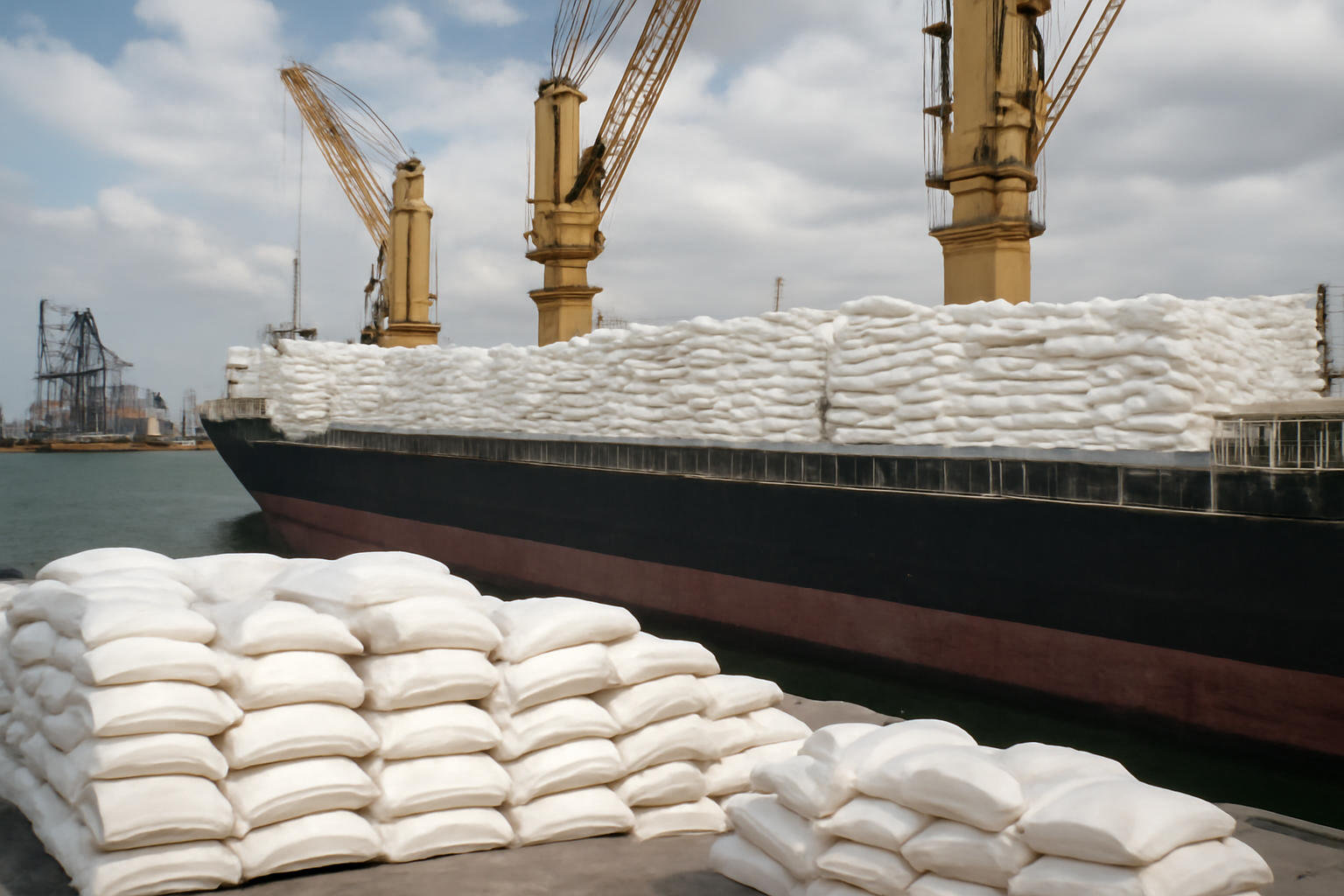
Consumption exceeds domestic production
Egypt’s sugar market faces an implied supply gap of about 900,000 tonnes in the 2026/2027 season, with consumption approaching 3.9 million tonnes and domestic production estimated at around 3 million tonnes. Hazem El-Menoufi, a member of the Foodstuffs Division, told Cairo 24 that the difference will continue to be covered through imports.
The deficit is central to the debate over Egypt’s decision to reopen sugar exports. The Ministry of Investment and Foreign Trade has allowed exports of all types of sugar until the end of 2026, but only for volumes classified as surplus to domestic requirements. The Ministry of Supply coordinates the determination of those quantities, and export operations remain subject to controls and approvals.
El-Menoufi said the policy is intended to balance three objectives: securing sugar for the domestic market, supporting local factories when excess stocks are available and maintaining price stability. With consumption exceeding output, however, the definition and timing of any surplus will be critical. Export approvals must account not only for stocks already in the system but also for the continuing requirement for imported sugar.
Prices return toward production costs
According to Cairo 24, sugar prices fell to about 21,000–22,000 Egyptian pounds per tonne during July and August, while Sugar Division estimates placed production costs near 26,000 Egyptian pounds per tonne. Current traded prices have since moved to approximately 25,000–26,000 Egyptian pounds per tonne, although levels vary between companies and regions.
El-Menoufi said the reopening of exports was one factor behind the recent increase because it restored a portion of external demand. He cautioned against treating exports as the only cause. Domestic supply and demand, movements in world prices, production and operating expenses, and earlier arrivals of lower-priced imported sugar have all contributed to market volatility.
The return to 25,000–26,000 Egyptian pounds per tonne can therefore be read both as a price increase and as a recovery toward estimated production costs. Prices that remain substantially below costs can hurt factories, farmers and supply chains. Unjustified increases, by contrast, pass additional costs to food manufacturers and ultimately consumers.
Export estimates require caution
Published estimates point to refined sugar exports of about 300,000 tonnes in 2026/2027, but El-Menoufi stressed that this is a forecast rather than a volume already shipped. That distinction matters in a market where the production-consumption balance already indicates a sizeable import requirement. Actual exports will depend on the officially determined surplus and the approvals issued under the regulatory framework.
Price movements will also affect confectionery, bakery products, chocolate, beverages, some dairy products and jam. The impact will differ according to sugar’s share of each product’s costs and manufacturers’ ability to absorb higher input prices. El-Menoufi said the immediate priority is to prevent shortages and speculation while preserving factories’ ability to operate. In the short term, the direction of prices will depend on domestic availability, exportable volumes, world prices and the cost of production and imports.