Egypt exports 80% of flax output and ranks third in raw flax exports
Egypt exports 80% of its flax production and accounts for 6% of global raw flax trade, according to the Agricultural Research Center. The country grows 50,000 feddans annually, with each feddan yielding half a tonne of seed and half a tonne of fibre.
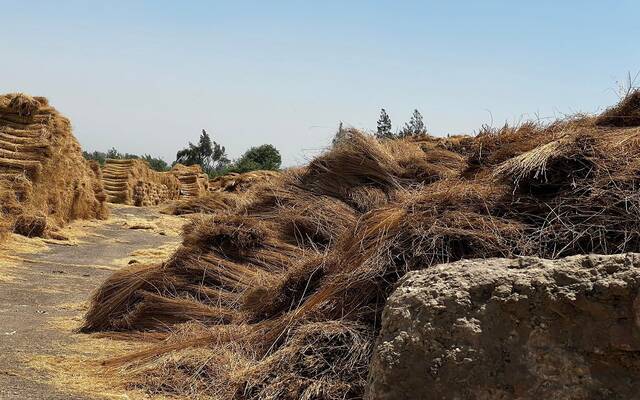
Egypt holds 6% of global raw flax trade
Egypt exports 80% of its flax production and ranks third worldwide among exporters of raw flax, according to Mostafa Attia Emara, spokesperson for the country’s Agricultural Research Center. The Egyptian share represents 6% of global trade in the commodity, Mubasher reported, citing remarks made by Emara during a telephone interview with Sada El Balad television.
The figures underline the export orientation of Egypt’s flax sector. With four-fifths of domestic output shipped abroad, access to foreign buyers is central to the crop’s commercial performance and to the revenues earned by growers and companies handling raw flax.
The Agricultural Research Center did not provide a breakdown of export destinations, shipment volumes, prices or the value of trade. It also did not specify the period used to calculate Egypt’s 6% share of global commerce. The available figures therefore establish the country’s reported market position but do not show how its trade has changed over time.
Annual area reaches 50,000 feddans
Egypt plants 50,000 feddans of flax each year, Emara said. One feddan produces half a tonne of seed and half a tonne of fibre, giving farmers two commercially useful outputs from the same cultivated area.
On the basis of the stated yield and planted area, the crop’s production profile combines seed and textile fibre in equal quantities per feddan. The source did not provide a national production total or explain whether the yields cited represent an average, a target or a typical result under current growing conditions.
Flax has a long-established place in Egyptian agriculture. Emara described it as an indigenous Egyptian crop cultivated for 7,000 years and said it had been present since the time of the pharaohs. Its continuing economic relevance now rests on both agricultural production and its role as an industrial raw material.
Government targets more domestic processing
Flax fibre is used in textile manufacturing, linking the crop directly to processors as well as farmers and raw-material traders. Seed provides a second output, although the Agricultural Research Center’s statement did not detail its end uses, domestic consumption or share of exports.
Emara said the state is pursuing a strategy to convert agricultural materials and raw inputs into nationally manufactured products, with flax among the priorities. The stated objective is to capture more value through domestic industry instead of relying solely on sales of unprocessed materials.
That policy creates a clear balance for the sector. Raw flax exports already place Egypt third globally and absorb 80% of production, while expanded processing would require more of the crop to move through domestic manufacturing chains. Emara said the coming period would bring greater integration and coordination, continuing efforts underway since 2014. No timetable, investment amount, processing-capacity target or named industrial project was disclosed.