Egyptian egg prices hold steady as annual output rises to 16 billion
Egyptian farm and wholesale egg prices remained stable on October 5, while consumer prices stood at 140 Egyptian pounds for white eggs and 145 pounds for red eggs. National table-egg production increased to 16 billion eggs from 14 billion a year earlier.
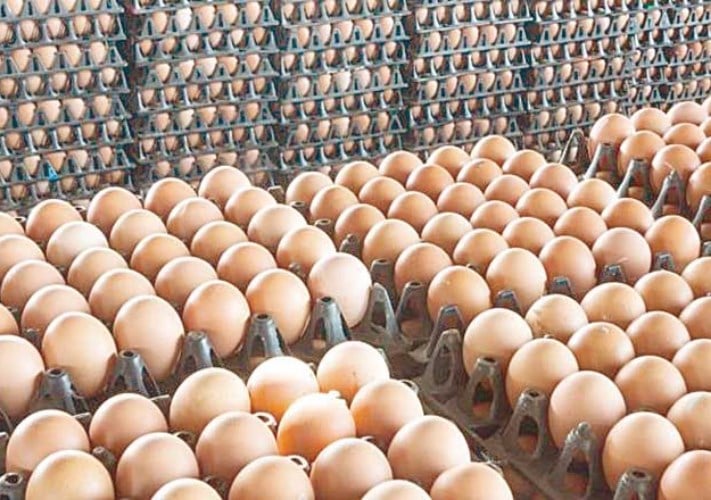
Egg prices remain stable in Egypt
Egyptian egg prices were stable in the domestic market on October 5, 2026, according to Al Mal. Abdel Aziz El Sayed, head of the Poultry Wealth Division at the Cairo Chamber of Commerce, put farm prices at 120 Egyptian pounds per tray of white eggs and 125 pounds per tray of red eggs.
Wholesale prices were also reported at 120 pounds for a tray of white eggs and 125 pounds for red eggs. At the consumer level, white eggs sold for 140 pounds per tray, while red eggs reached 145 pounds. The figures indicate a 20-pound gap between the reported farm or wholesale price and the consumer price for both categories.
Table-egg production reaches 16 billion
Egypt's table-egg production increased to 16 billion eggs from 14 billion in the previous year, Al Mal reported, citing Tarek Soliman, head of the Livestock and Poultry Development Sector. The additional supply comes from an industry that includes more than 27,000 farms, according to Agriculture Minister Alaa Farouk.
Those operations include table-egg farms, broiler farms and poultry breeder facilities, alongside companies producing parent and grandparent poultry stock. Average annual consumption of locally produced farm eggs stands at about 140 eggs per person, according to Farouk. The production increase therefore strengthens the domestic supply base for a staple source of animal protein.
Investment exceeds 200 billion pounds
Investment in Egypt's poultry sector has exceeded 200 billion Egyptian pounds after several years of production and investment growth, according to Soliman. The industry provides direct and indirect employment to about 3.5 million people, making egg and poultry production important not only to food supply but also to rural incomes and the wider economy.
Production of traditional local poultry reached about 360 million birds, an increase of more than 12%, Soliman said. That expansion accompanies the rise in table-egg output and points to broader growth across the country's poultry industry rather than an increase confined to one product segment.
Financing and export-market ambitions
The Agriculture Ministry is working with the National Bank of Egypt and the Agricultural Bank of Egypt to offer concessional financing to poultry producers. The funding is intended to support purchases of feed, chicks, medicines and veterinary vaccines, as well as upgrades that convert poultry houses from open to closed systems. These investments are designed to improve production efficiency and producers' economic returns.
Egypt is also seeking new export markets in Arab and African countries and other international destinations. The effort follows Egypt's recognition among countries applying the isolated poultry establishment system under World Organisation for Animal Health rules. While current price data are focused on the domestic market, higher output, upgraded facilities and disease-control compliance could give producers a stronger base from which to pursue external sales.