Egypt’s agricultural exports reach 6.8 million tonnes in 2026, onions rank fifth
Egyptian agricultural exports have reached 6.8 million tonnes since the beginning of 2026, according to the Cabinet’s Information and Decision Support Center. Onions ranked fifth among the country’s leading agricultural exports at about 155,000 tonnes, while potatoes and sweet potatoes were also highlighted as major products.
Export volume reaches 6.8 million tonnes
Egypt’s agricultural exports have reached 6.8 million tonnes since the beginning of 2026, according to figures highlighted by the Information and Decision Support Center of the Egyptian Cabinet. The official update points to continued high volumes for a sector that supplies international markets with a broad range of crops across different growing seasons.
The figures reported by Cairo 24 identify potatoes and sweet potatoes among the prominent products supporting the total. The available information does not provide separate volumes for those two crops, the value of overall shipments or a comparison with the corresponding period of 2025. The 6.8 million-tonne figure therefore measures physical trade volume rather than export earnings.
Onions hold fifth place
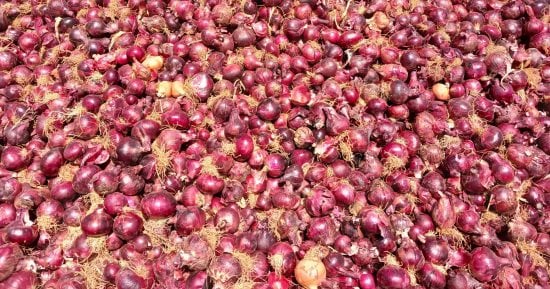
Fresh onions ranked fifth on the list of Egypt’s most important agricultural exports, with shipments of about 155,000 tonnes, Youm7 reported. The position keeps onions among the country’s core export crops and indicates sustained demand in overseas markets. No destination-level breakdown, price data or year-on-year comparison was included in the published figures.
Onion performance matters beyond the farm gate. Export-grade production requires coordinated harvesting, sorting, handling, packing and transport. Maintaining volumes also depends on meeting the quality and food-safety requirements imposed by destination markets. Youm7 said the authorities are working to expand agricultural exports and open new markets through controls covering the quality and safety of products intended for shipment abroad.
Quality controls shape further growth
Egypt’s competitiveness is supported by production quality, crop diversity and agricultural seasons extending across the year, according to Youm7. These characteristics allow exporters to offer different products over a longer commercial window. For producers and packing companies, however, larger volumes also increase the importance of efficient post-harvest handling, packaging and compliance systems.
The latest total establishes the scale of shipments but leaves several commercial questions unanswered. Exporters, importers and market analysts will need product-level data, destination flows, prices and export values to assess profitability and market concentration. For onions, the 155,000-tonne result confirms a significant place in Egypt’s export basket; the next test is whether suppliers can preserve quality and expand access without weakening returns for growers and traders.