Ecuador's rice exports to Colombia top 41,000 tonnes through August
Ecuadorian rice shipments to Colombia reached about 41,000 metric tonnes through August after the northern land border reopened, with 20,000 tonnes dispatched in August alone. Corpcom says the final volume could exceed 45,000 tonnes against an industry target above 50,000 tonnes for the rest of the year. Colombia is running a structural shortfall, with planted area down 90,000 hectares and a deficit of 500,000 tonnes reported by Fedearroz.
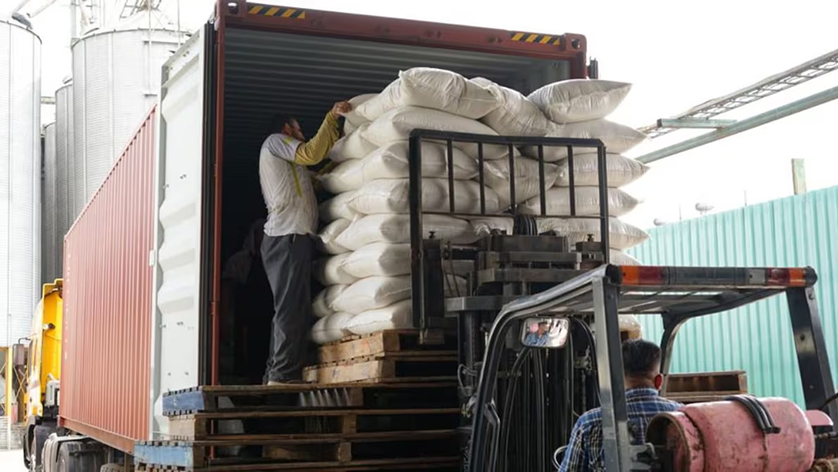
Ecuadorian rice shipments to Colombia reached about 41,000 metric tonnes through August, according to estimates by the Corporación de Industriales Arroceros del Ecuador (Corpcom) reported by Diario Correo. The acceleration followed the reopening of the land crossing on Ecuador's northern border.
The pace changed sharply at mid-year. Diario Correo reports that dispatches totalled 13,000 metric tonnes over the first six months, rose by a further 8,000 tonnes in July and reached 20,000 tonnes in August alone. August therefore accounted for roughly half of the cumulative total.
Corpcom president Juan Pablo Zúñiga said the final volume could exceed 45,000 tonnes, with the figure to be confirmed within days. The industry had set a target of more than 50,000 tonnes for the remainder of the year once the land route reopened. Zúñiga said it is not yet possible to determine the exact volume for the close of 2026, given that Colombia continues to run a supply deficit that has also led it to import from the United States.
Road corridor reopened in late July
The road channel was formally reopened at the end of July, after the restrictive measures imposed by the Colombian government under Decree 583 came to an end. The closure followed trade disputes at the start of the year and pushed exporters onto maritime shipping, which carried substantially higher logistics costs. Historically, 90% of Ecuadorian rice bound for Colombia moves by road.
The flow matters beyond the rice sector itself: rice is the second-largest product in Ecuador's export basket to Colombia, with an 11% share.
Zúñiga said the movement has supported farm economics at home. “The dynamism has been positive. Rice leaving for Colombia has helped improve the price situation in the local market, a direct benefit for the producer,” he said.
Colombia's structural supply gap
Colombian demand is not being met domestically. The National Mechanised Rice Survey (ENAM) run by the statistics agency DANE, together with the Federación Nacional de Arroceros (Fedearroz) and Colombia's Ministry of Agriculture, put average annual output at 3.18-3.2 million tonnes of green paddy rice, equivalent to 2.2-2.5 million tonnes of dry or milled rice.
First-half 2025 data published by DANE showed:
- 417,556 hectares planted
- 178,086 hectares harvested
- 998,837 tonnes produced
With yields of 4.5 to 5.5 tonnes per hectare, that supply falls short of consumption running at 41 to 46 kg per person per year. Colombia imports on average 9% to 10% of its total consumption, and that is the space Ecuadorian grain is filling.
Conditions have tightened further since. Fedearroz general manager Rafael Hernández told Colombian media that planted area has fallen by 90,000 hectares on the back of low prices and climate variability, generating a deficit of 500,000 tonnes.
El Niño cuts both ways
Ecuadorian millers are watching weather forecasts tied to El Niño. Zúñiga warned that a harsh winter usually creates logistical complications, a picture that could worsen with rain and flooding. Recalling the 1997 and 1998 event, he said there was “a significant deficit not only of rice, but of many agricultural products, especially from the Costa.” Mills are responding by absorbing the entire national harvest and preserving stocks, with the main strategy being to “keep inventories at the highest possible level, according to the storage capacity the country has.”
Zúñiga said that grain in warehouses, planted area and harvested volume together cover domestic consumption to the end of the year, but warned that the first quarter of 2027 will depend directly on the severity of the phenomenon.
In Colombia the same phenomenon shows up at the opposite extreme, as drought. To mitigate water shortages in key growing areas such as Huila and Tolima, Fedearroz has imposed strict planning that restricts plantings from September onwards, promotes heat-resistant varieties and enforces efficient water management as river flows drop sharply, according to Hernández.