Ecuador's Dairy Sales Rise 8% as Kefir, Greek Yogurt and Aged Cheese Lead Growth
Formal sales in Ecuador's industrial dairy sector grew 8% between January and April 2026 against the same period of 2025, with production up 5% and dairy wholesale and retail trade up 31%. Growth is concentrated in kefir, Greek yogurt and semi-mature and mature cheeses, while liquid milk loses ground. Processors are eyeing Peru, the United States and China, but raw milk supply is tightening after a 3% drop in output in 2025.
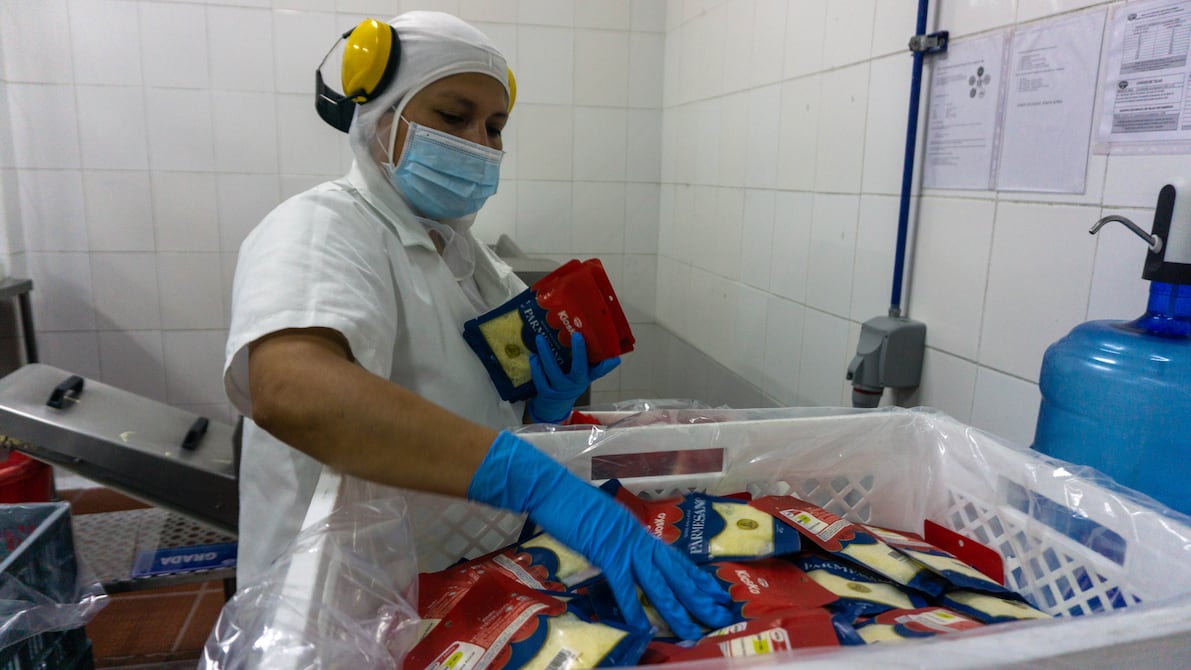
Ecuador's industrial dairy sector grew across sales, production and distribution in the first four months of 2026, with the expansion concentrated in higher-value categories, El Universo reported. Kefir, Greek yogurt and semi-mature and mature cheeses are leading a portfolio shift as processors respond to changing consumption habits.
Sales up 8%, distribution up 31%
Formal sales in the industrial dairy sector rose 8% between January and April 2026 compared with the same period of 2025, according to Banco Central del Ecuador figures cited by the Observatorio Lácteo del Ecuador. Production increased 5% over the same months. Wholesale and retail trade in dairy grew 31%, and related activities — supermarkets, shops and restaurants — rose 14%.
Andrés Rodríguez Estrada, director of the Observatorio Lácteo del Ecuador, links the performance to changing consumer preferences and a broader product offer. Monthly household spending on milk and dairy products stands at $12.15, the fourth-largest item in the food budget, after animal protein, cereals and flours, and tubers and vegetables. Rodríguez notes that the data point to a recovery against 2025.
Where the growth sits
“There used to be no kefir at all; now kefir is one of the very interesting products in the market,” Rodríguez said. New flavours such as pitahaya and peach have entered the yogurt aisle, alongside different formats and cheese snacks aimed at children. In cheese, overall consumption is falling while semi-mature and mature varieties grow. In yogurt, the Greek and kefir segments are advancing.
Verónica Chávez, executive director of the Centro de la Industria Láctea (CIL), which groups fifteen companies along the dairy chain, says the pattern mirrors an international trend: liquid milk consumption is declining, while value-added products are not. Global dairy production is growing at around 2%, according to Chávez. Companies once focused on standard milk have widened their portfolios into yogurt and other categories, while firms already positioned there are chasing narrower niches. A CIL study found dairy retains a favourable image among consumers but identified a gap in how products are communicated; liquid milk remains tied mainly to breakfast and to a nostalgic perception. Private label is also gaining shelf space in basics such as liquid milk, powdered milk, fresh cheese and plain yogurt.
Export plans: Peru, the United States and China
Exports remain a small part of sector activity. Ecuador currently ships yogurts, oat drinks and flavoured milks, plus UHT milk in pouches to Peru, which Chávez identifies as an opportunity because of proximity and market characteristics. In the United States, a niche exists among migrant consumers familiar with Ecuadorian brands, but beyond that segment local products compete against other origins. Ecuador and China signed the inspection, quarantine and sanitary requirements protocol for dairy exports in April 2025; Agrocalidad states that interested companies must register and meet the established requirements to begin habilitation with the Chinese authority. The CIL sees opportunities there for products with a shelf life of four to six months. A2A2 milk, differentiated by its beta-casein variant, is another identified option, but Ecuador has only two suppliers with that certification, so raising available volumes would require work in the primary sector.
Raw milk is the bottleneck
Of the slightly more than five million litres of milk produced daily, 48% meets the standard, according to Chávez, and milk used as raw material for export must come from farms with good agricultural practices. Primary production is under pressure: Rodríguez points to a shrinking number of cattle destined for milk and a 3% fall in milk production during 2025, although productivity improved. Cattle are also contested between milk and beef, with beef prices more attractive for some producers, and climate events such as El Niño pose a potential risk to livestock areas. For 2026, the domestic outlook stays tied to formal sales. The industry's strategy is to widen consumption occasions and formats, develop products for specific segments and consolidate categories that are already growing, before taking some of them to international markets.