ECOLOG Pushes Into Liquid Hydrogen Imports and CO2 Export Shipping in Europe
ECOLOG, controlled by Greek shipowner Peter Livanos, is seeking permits for a large energy hub in the Netherlands designed to handle liquid hydrogen imports and CO2 exports. According to topontiki.gr, the Amsterdam project is meant to plug into Europe's emerging carbon transport and storage chain, with permitting — not technology or capital — identified as the main obstacle.
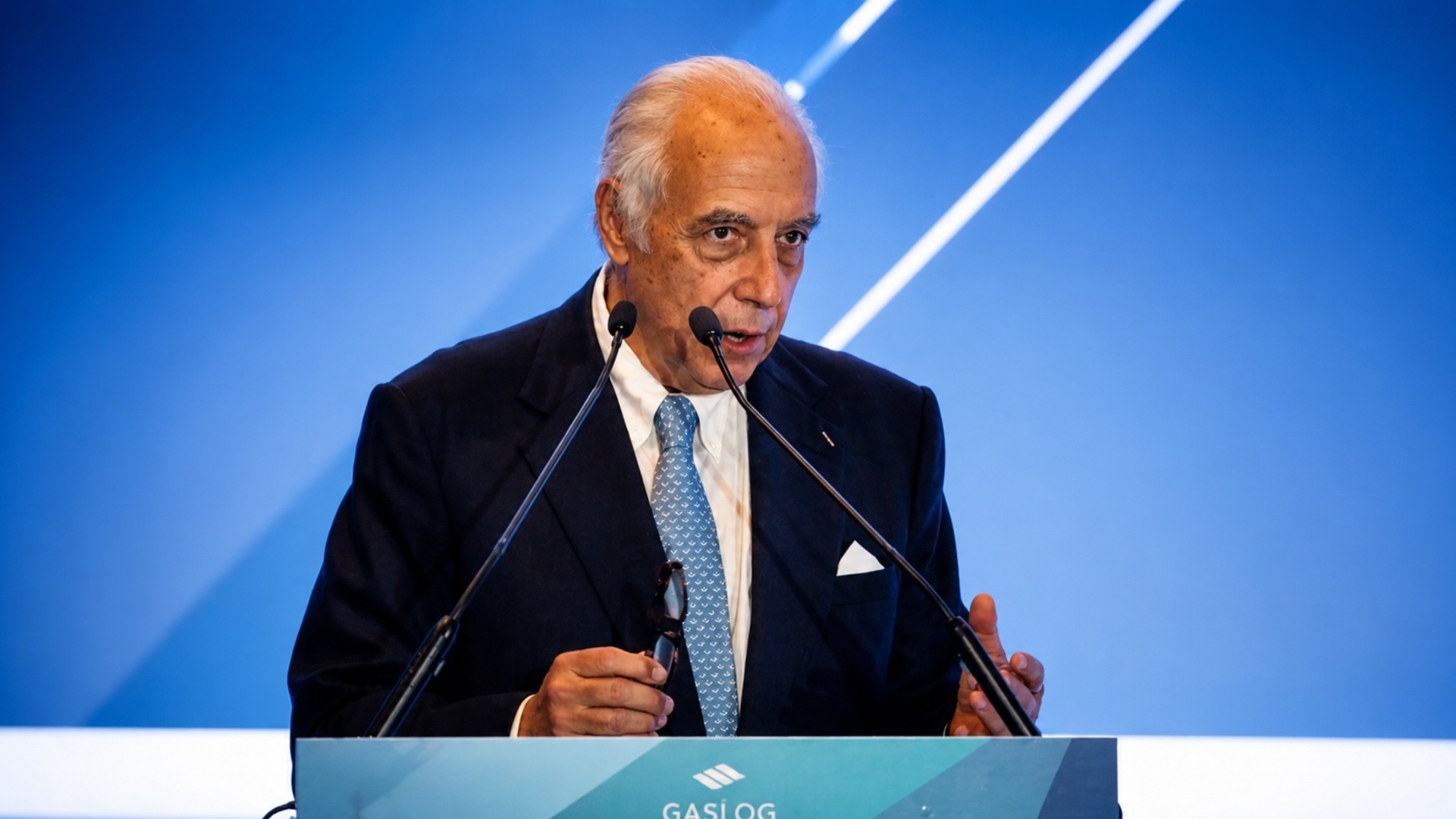
ECOLOG, the group controlled by Greek shipowner Peter Livanos, is positioning itself in the markets created by the energy transition, with liquefied hydrogen and carbon dioxide transport at the centre of the strategy, the Greek outlet topontiki.gr reported.
An Amsterdam hub designed for two opposite flows
According to topontiki.gr, the company has spent the past few years working on the permitting of a large energy hub in the Netherlands. The facility is designed to support imports of liquid hydrogen and exports of CO2 — two cargo streams moving in opposite directions through the same site. The Amsterdam project is intended to become part of the carbon transport and storage chain that is beginning to take shape in the European market.
The report does not disclose the hub's capacity, the size of the investment, a construction timeline or the names of partners and offtakers. It also does not identify the storage sites that would receive the exported CO2. What it does establish is the commercial architecture: a coastal node where an imported energy carrier is landed and a captured industrial gas is loaded out.
That dual function is what distinguishes the concept from a conventional import terminal. Hydrogen arrives as a fuel and feedstock for European industry; CO2 leaves as a waste stream that emitters cannot abate on site and must move to permanent storage. Both require cryogenic handling, dedicated tankage and specialised vessels.
An early-stage market drawing capital
Both activities remain at a relatively early stage in Europe, topontiki.gr notes, but they are attracting significant investment interest as new infrastructure for the decarbonisation of industry is developed. That combination — immature operations alongside strong capital appetite — is characteristic of the current phase of the European build-out, in which terminals, pipelines, storage sites and ships are planned in parallel and each element depends on the others reaching a final investment decision.
The sequencing problem is real for every participant. Liquefied CO2 carriers and liquid hydrogen vessels are purpose-built assets with long lead times, while import and export terminals require permits, land and safety approvals. Neither side can commit far ahead of the other without carrying the risk that its counterpart arrives late or not at all.
Permitting is the obstacle, not technology or money
For ECOLOG the main hurdle is neither the technology nor raising capital, according to the report. The critical issue is permitting: competent authorities are being asked to assess installations and technologies for which, in a number of cases, there is no precedent — no comparable facility already approved and no established body of case files to draw on. Approval timelines are therefore difficult to forecast, which feeds directly into vessel ordering, offtake contracts and the financing that depends on them.
The company takes part in the VOIS programme under the Safety Deal, topontiki.gr reported, placing particular weight on shaping common rules between businesses and public authorities for the safety of such installations. The emphasis is on process as much as on any single project: agreed standards would let regulators evaluate liquid hydrogen and CO2 facilities against a shared framework rather than assess each application from scratch.
Why a shipowner is building energy infrastructure
For the Livanos interests, the appeal of this market is that it connects shipping to the new energy infrastructure, the report says. The transport of liquid CO2 and hydrogen could create a new specialised segment of seaborne trade — but only if the large European projects move from the planning stage into commercial operation.
That conditionality is the core of the story. A shipowner investing upstream in a terminal is acquiring more than a logistics asset; it is taking a position in the chain that decides whether the ships have cargo at all. If European carbon capture and hydrogen projects convert into signed commercial volumes, operators holding permitted terminals and the vessels to serve them will start from an established position. If the projects stall, the exposure sits with whoever committed capital first.