Earthquake Damage Disrupts Water Supplies in Japan’s Leading Tomato-Growing Area
Damaged irrigation channels are making it difficult for Kumamoto tomato growers to secure water as planting begins for the autumn harvest. The disruption is affecting Japan’s largest tomato-producing prefecture, while a wholesale market in Yatsushiro reports an 80% year-on-year fall in pear handling volume.
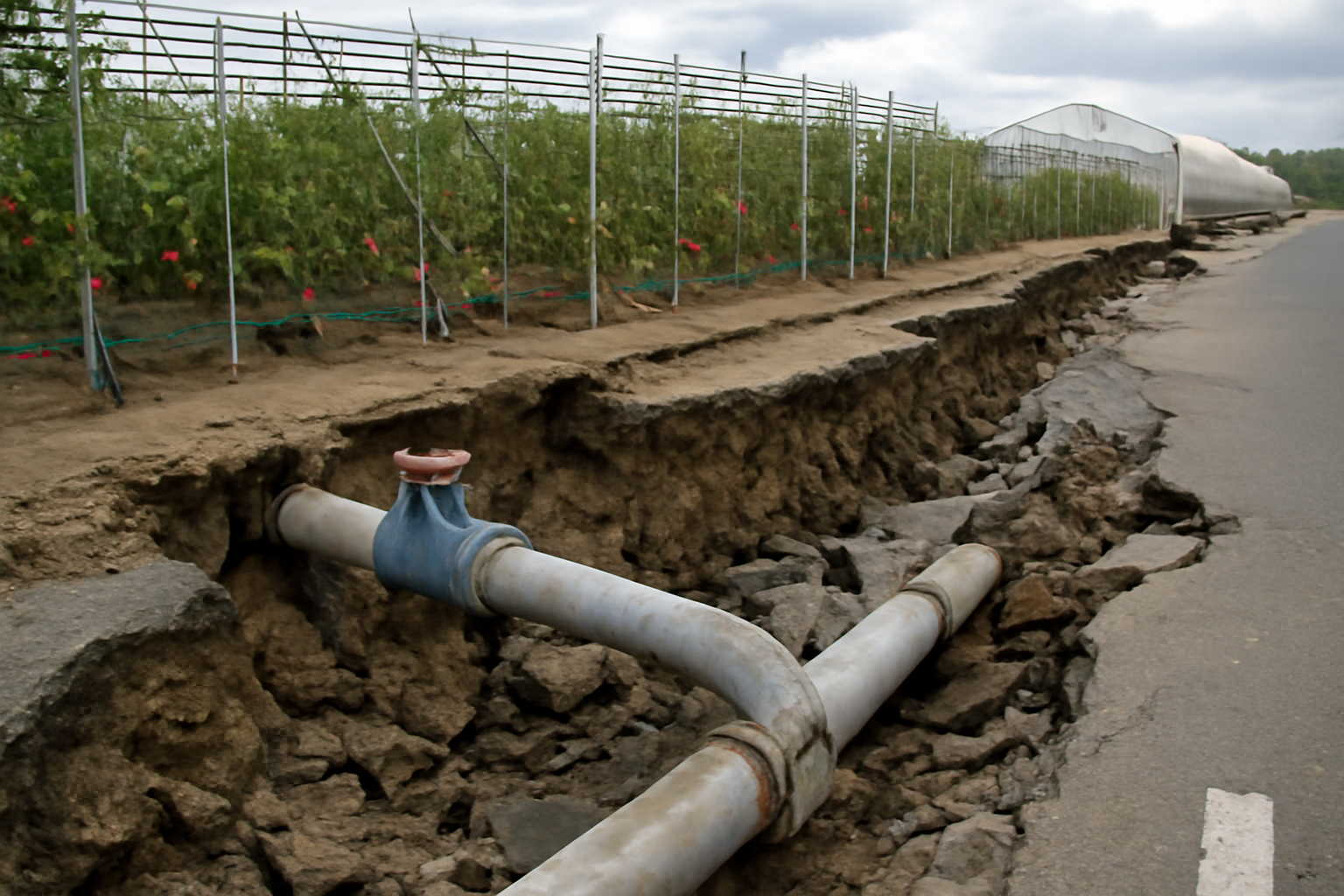
Damaged channels restrict access to water
Earthquake damage to irrigation infrastructure is creating a water shortage for farmers in Kumamoto Prefecture, Japan’s largest tomato-producing area. Growers are entering the planting period for crops intended for harvesting from autumn, but damage to water channels has made it difficult to secure a reliable supply.
The earthquake caused serious damage across Kumamoto’s agriculture, forestry and fisheries sectors. For tomato producers, the immediate challenge is operational: newly planted crops require dependable access to water, while damaged channels interrupt the system used to deliver it to farms.
The supplied reports do not specify the affected tomato acreage, the volume of production at risk or a timetable for restoring the channels. They also provide no estimate of the financial damage. That leaves growers preparing for the autumn season without clarity over how quickly normal irrigation can resume.
Planting decisions carry consequences for autumn supply
The timing of the disruption is significant because tomato farmers are already at the planting stage. If water cannot be secured when required, producers may have to adjust planting schedules or manage available supplies more tightly. The eventual effect on harvested volumes will depend on the duration and geographic reach of the irrigation problems.
Kumamoto’s position as Japan’s leading tomato-producing prefecture gives the disruption relevance beyond the farms directly affected. Any material reduction in output could reach wholesalers and buyers that depend on the prefecture’s autumn crop. However, the available source material does not provide enough information to quantify a possible supply shortfall or price effect.
Farmers are working to restart production after the disaster, with access to water at the center of recovery efforts. Restoration of damaged channels will therefore influence both the immediate planting campaign and growers’ ability to maintain normal production later in the season.
Pear volumes show wider market impact
Pressure is also visible in the fruit trade. At a wholesale market handling vegetables and fruit in Yatsushiro, Kumamoto Prefecture, pear handling volume has fallen by 80% compared with the previous year. The scale of the decline indicates that the disruption facing the prefecture’s farm sector is not limited to tomatoes or irrigation-dependent planting.
The reports do not provide the market’s pear tonnage, the value of the lost volume or a breakdown of the reasons behind the decline. Even so, an 80% year-on-year reduction means substantially less fruit is passing through this local distribution point, affecting growers, market operators and buyers.
The next critical issue for the tomato sector is whether water access can be restored in time to protect the autumn production cycle. Until repair schedules, affected acreage and expected yields become clearer, producers and wholesale buyers will have limited visibility over Kumamoto’s coming tomato supply.