Rainfall Deficits Threaten Sorghum Supplies Across Sudan’s Main Farming Regions
Rainfall was 20% below the long-term average in Sennar and 30% below it in Gedaref between June and mid-August 2026, according to the FAO. Severe dryness, war-related disruption and rising input costs threaten Sudan’s sorghum and millet supplies as grain prices are already elevated.
Dry conditions spread across Sudan’s grain belt
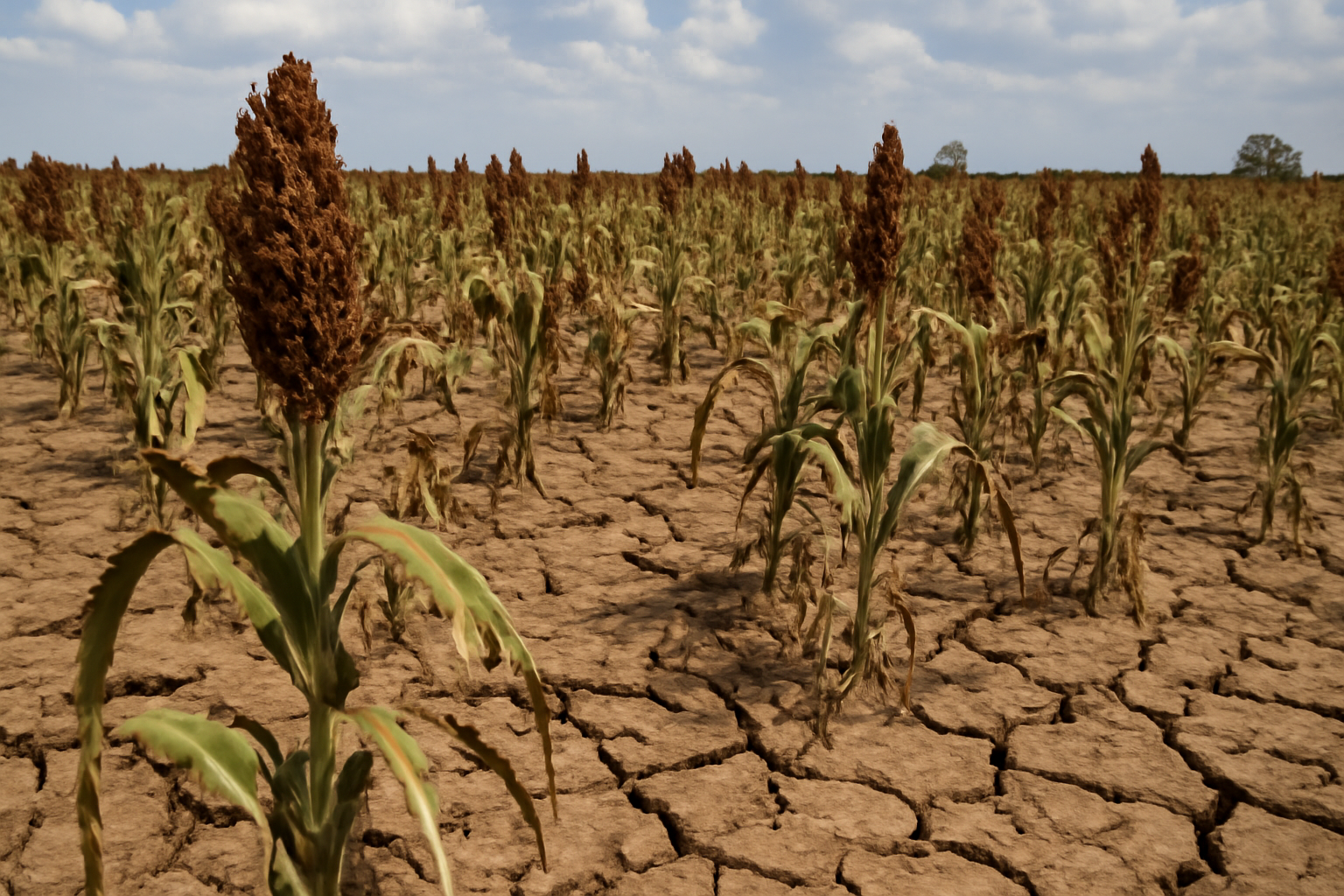
Sudan’s 2026/2027 agricultural season has begun under growing pressure from deficient and irregular rainfall in several of the country’s most important food-producing regions. The UN Food and Agriculture Organization reported that precipitation between June and mid-August 2026 was about 20% below the long-term average in Sennar and 30% below average in Gedaref.
The impact on cultivated land is more severe than the rainfall totals alone suggest. According to the FAO figures cited by Shafaqna, severe dry conditions affected as much as 70% of planted land in Gedaref and 40% in Sennar. Gedaref is Sudan’s largest sorghum-producing region, making any substantial decline there a national supply concern rather than a localized crop problem.
Sorghum losses would reach food and livestock markets
Sorghum is one of Sudan’s principal crops by planted area and total output. It is grown under both rain-fed and irrigated systems and is used to prepare kisra and asida, staple foods across rural areas and much of central, eastern and western Sudan. Crop residues also feed livestock and working animals, linking the harvest directly to pastoral livelihoods as well as household food supplies.
Dryness has also been reported in Darfur, particularly in the north of the region. Sudanese environment and forestry specialist Professor Talaat Dafallah Abdel Majid told Al Arabiya that the rainfall shortage was noticeable and documented, with signs of crop damage already emerging. Groundnut plants were observed wilting in the state. The timing and distribution of rainfall are critical in rain-fed farming: a dry interval during a sensitive growth stage can reduce yields even if rain later resumes.
War and irrigation failures amplify the shock
The weather threat comes on top of a war that has continued since April 2023, damaging production, transport, markets and supply chains. Farmers face higher prices for seed, fertilizer, pesticides, electricity and fuel, alongside shortages of inputs and financing. In the irrigated Gezira and Managil scheme, producers told Al Arabiya.net that some land lacked water while other fields were flooded because of problems with distribution, drainage, equipment and fuel.
Pastoral conditions are also deteriorating. Scarce water and grazing have pushed some Darfur herders away from traditional routes and closer to cultivated areas. Press reports cited livestock concentrations in central, southern and western East Darfur, raising the possibility of greater competition and friction between farmers and herders.
Grain prices leave little room for another poor harvest
The FAO reported that sorghum and millet prices in June 2026 were about 66% and 37% higher, respectively, than their peaks in the previous year. In Omdurman on September 7, airdab prices ranged from 800,000 to 825,000 Sudanese pounds for red millet and from 510,000 to 525,000 pounds for sorghum, while wheat was about 570,000 pounds. The US dollar traded above 7,200 Sudanese pounds on the parallel market.
These prices cannot be attributed to drought alone: war, currency depreciation, transport disruption and production costs are already weakening the market. Nevertheless, a smaller harvest in Gedaref, Sennar or Darfur would further restrict locally produced grain supplies and could push food prices higher. Professor Talaat warned that current measures would not save the entire crop if weak rainfall persisted. The threat is especially serious because Sudan already faces acute food insecurity and a significant risk of famine in 14 hotspots.