Drought puts Italy’s Po Valley rice crop and domestic prices at risk
Severe drought is threatening rice paddies in Italy’s Po Valley, the country’s principal rice-growing region. Lower production could tighten supplies and raise domestic prices in Europe’s leading rice-producing country.
Water shortage threatens the main rice-growing region
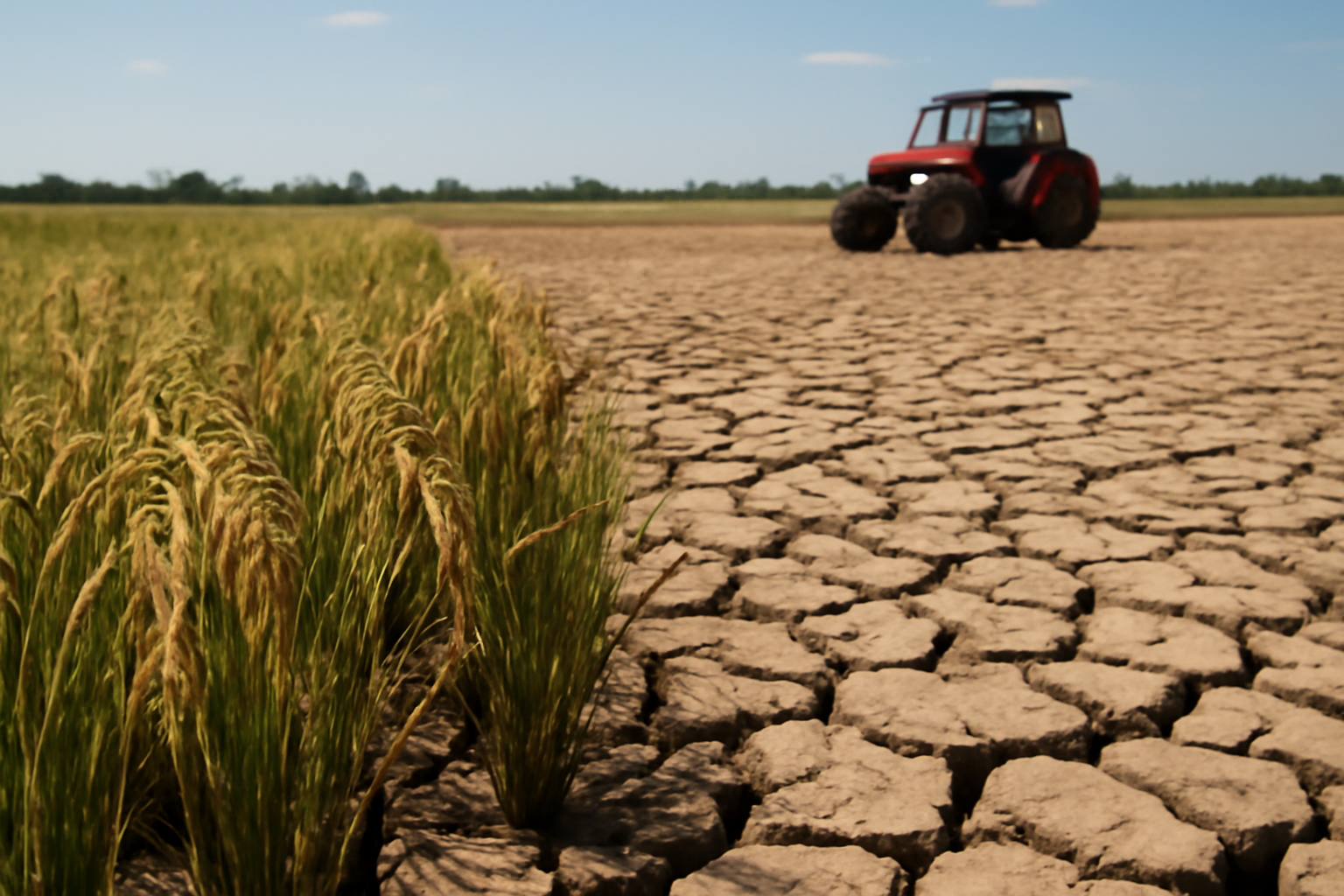
Severe drought is putting Italy’s rice crop at risk in the Po Valley, the country’s principal rice-producing region. Rice paddies depend on reliable access to water, making the crop particularly exposed when reservoirs, lakes and irrigation systems come under pressure. Conditions around Lake Maggiore are among the indicators being watched as farmers assess how much water will be available for the growing season.
The immediate risk is that farms will be unable to supply paddies with sufficient water at the stages when the crop needs it most. Producers may have to adjust planting and irrigation strategies in response. The final effect on output will depend on the duration of the drought, the availability of water during the growing cycle and the measures adopted by farmers and water managers. No quantified production-loss estimate has been provided.
Lower output could tighten Italian supplies
Italy is Europe’s leading rice producer, so a weaker harvest in the Po Valley would affect more than individual farms. Reduced production could limit the volume available to processors and domestic distributors, while making buyers more sensitive to the quality and timing of the crop. The threat is prospective: the drought has created a risk of losses, but the eventual size of the harvest remains uncertain.
For growers, the commercial impact will depend on whether higher prices compensate for reduced yields and additional water-management costs. Rice mills and food manufacturers face a different calculation. A smaller domestic crop could increase competition for available grain and narrow their choice of suppliers. Retail prices would not necessarily move immediately, because they also reflect inventories, processing expenses, contracts and distribution costs, but a prolonged shortage would increase upward pressure.
Market response depends on the duration of the drought
The central issue for the market is whether the water deficit persists long enough to cause material crop damage. If access to irrigation improves during the growing season, some of the production risk could recede. If conditions remain severe, farmers may face lower yields or a reduction in successfully cultivated area. Either outcome would constrain supplies from Italy’s main production zone.
Processors, traders and retailers will therefore watch water availability alongside field conditions rather than relying on early estimates alone. Domestic prices are likely to respond first to clearer evidence about planted area, crop development and expected yields. Until those indicators emerge, the market faces a wide range of possible outcomes. The drought has already increased uncertainty for producers and buyers, but the scale of any supply deficit and price increase cannot yet be established from the available information.