Heat and drought push Germany toward more coal-fired power
German hard-coal generation rose in July as expensive gas, weak hydropower and heat-related constraints elsewhere in Europe increased demand for thermal power. The shift may support coal plant margins and reduce gas burn, but it also raises emissions and exposes consumers to higher wholesale electricity prices.
Coal returns to the generation mix
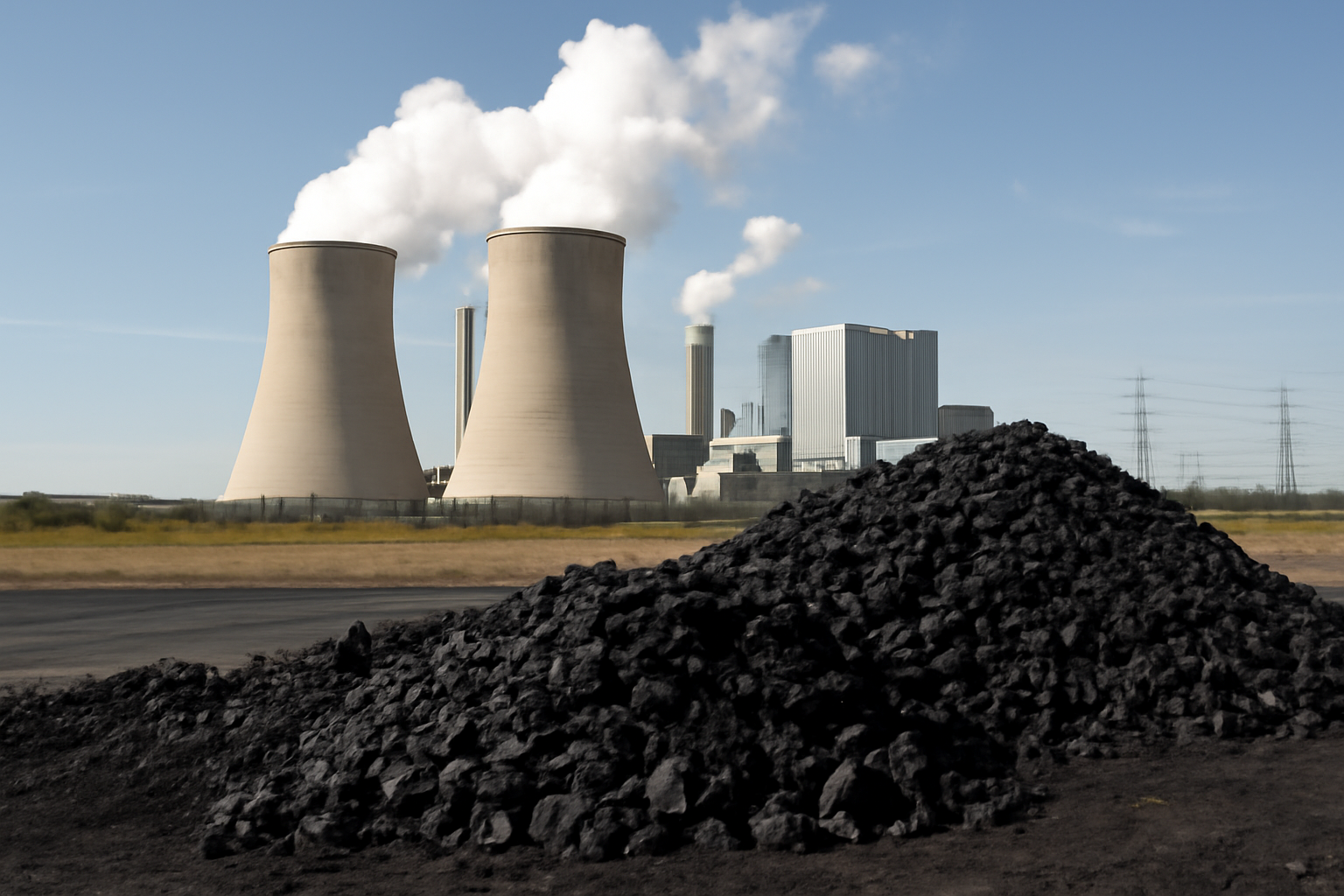
Germany has increased coal-fired electricity generation during a summer marked by heat, drought and high gas prices. Focus reported that coal use had been rising for several weeks as hot weather affected the power system, with higher costs expected to reach consumers. Market data cited by Inercomp show that German hard-coal generation increased by 22% month on month to 1,839 GWh in July.
The immediate economic driver was the widening gap between coal- and gas-fired generation costs. Inercomp said the clean dark spread, a measure of coal-plant profitability after fuel and carbon costs, expanded from about €5/MWh at the end of June to about €28/MWh by the end of July. The clean spark spread for gas plants remained near minus €5/MWh. Gas nevertheless continued to set the marginal electricity price.
Drought tightens the regional power balance
Heat and low river flows reinforced the fuel-price effect. Inercomp attributed higher thermal generation to heat-related reductions in nuclear output and weak run-of-river hydropower. An analysis published by pv magazine found that hydropower production across seven drought-affected European systems was roughly 13 TWh, or one fifth, below the 2019-2025 average between April and July.
The Rhine’s modelled flow at Lobith fell from 81% of the 2019-2025 norm in April to 37% in July, according to the same analysis. Low Rhine water levels restrict barge loading and increase the cost of moving coal, although the data showed no clear direct relationship between river flow and German coal output. Plants appeared able to use inventories and rail transport, meaning the constraint emerged first through logistics costs rather than lost generation.
Gas prices pass through to electricity
Inercomp reported that Germany’s August power contract climbed from €98/MWh at the end of June to €134/MWh on July 22, before closing the month at €130/MWh. The closing level was 72% above the pre-conflict level in February. Of the €32/MWh increase since the end of June, about €31.5/MWh was attributable to higher gas costs, assuming gas-plant efficiency of 55%. The carbon price contributed only about €0.4/MWh to that increase, although at €81 per tonne it represented around €30/MWh of a gas plant’s marginal cost.
The coal rebound does not overturn the longer-term decline projected for fossil generation. The International Energy Agency expects EU coal-fired output to fall by 4% in 2026 and 19% in 2027, taking coal’s share below 10% in 2026 for the first time this century. It forecasts gas-fired generation to decline by more than 1% in 2026 and 12% in 2027. For German utilities and industrial buyers, however, the summer episode shows that drought, fuel logistics and gas availability can temporarily restore coal’s competitiveness while increasing both emissions exposure and electricity-price risk.