Drought-driven maize losses affect more than 70,000 Central American households
More than 70,000 maize-growing households in El Salvador, Guatemala and Honduras reported crop losses during the 2026 primera season. Falling reserves, reduced farm employment and higher maize and egg prices are intensifying food-security pressure across the Central American Dry Corridor.
Most maize growers report losses
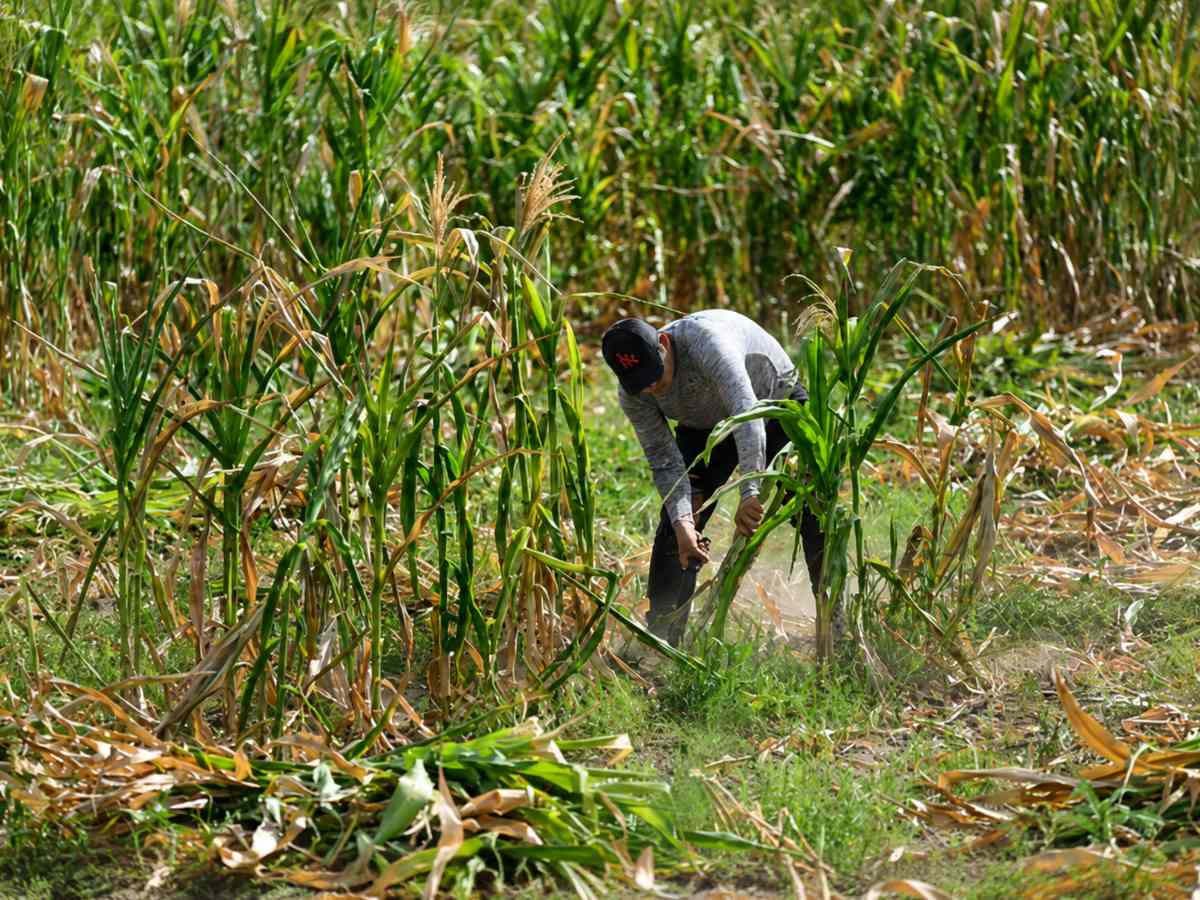
More than 70,000 rural households in the Central American Dry Corridor suffered maize losses during the 2026 primera growing season, according to a report prepared by Oxfam with Action Against Hunger and partner organizations. The affected communities are in El Salvador, Guatemala and Honduras, where subsistence farming, agricultural day labor and backyard livestock are important sources of food and income.
Of approximately 73,000 households that planted maize, more than 70,000 reported losses. Among those affected, 78.6% lost between 75% and 100% of their harvest. Prolonged drought was identified as the main cause by 89% of the surveyed community groups. The report also associated the damage with the impact of El Niño on regional food security and rural economies.
The rapid assessment was conducted between July and August 2026 in 354 communities across 58 municipalities. It documented conditions affecting more than 91,000 rural families through 354 focus groups. Beans and poultry were also hit: 65.4% of affected bean-growing households lost between 75% and 100% of production, while 73.1% of households raising poultry reported losses caused by water shortages, insufficient feed and heat stress.
Food prices rise as household reserves shrink
Family maize inventories are now limited. Elsalvador.com reported that 64.2% of households still holding maize had enough for three weeks or less. This leaves families more dependent on markets precisely as staple-food prices rise. Between July 2025 and July 2026, maize prices increased by 67.2% in Honduras and 32.1% in El Salvador. Guatemala recorded an 11.9% increase.
Egg prices rose by 60.0% in El Salvador and 56.3% in Guatemala over the same period. These increases compound the loss of food previously supplied by household plots and poultry. Water availability has also deteriorated: access through household networks declined in 50.5% of the cases assessed, while community systems registered reductions of as much as 67.3%. The shortages affect consumption, sanitation, crop production and animal care.
Employment provides little protection from the production shock. Nearly 60% of evaluated families, or about 55,000 households, reported fewer agricultural day-labor opportunities. Within that group, 82.5% faced a decline of at least 50% in their usual daily-work income. Lower earnings restrict spending not only on food but also on transport, healthcare and education.
Lower planting intentions threaten the next cycle
Financial pressure is already affecting the postrera season. The report found that the number of households intending to plant maize fell by 62% because families lacked money and inputs. That decline could prolong regional supply pressure beyond the initial drought losses and increase dependence on purchased grain. ContraPunto noted that weaker regional production could also raise import requirements and expose consumers more directly to international price movements.
Humanitarian coverage remains well below reported demand. Close to 58,000 households requested cash-transfer assistance, but international organizations and nongovernmental groups reached 5,100 families, equivalent to 8.8% of demand. Recovery will therefore depend on access to water, seed, other inputs and income before subsequent planting cycles begin.
The assessment also recorded 6,212 migration movements in the three months before the study, of which 20.1% were international. It highlighted additional pressure from people returning or being deported without remittance income. For producers and grain-market participants, the central risk is no longer limited to one damaged crop: depleted stocks, weaker purchasing power and reduced planting capacity may reinforce one another across the Dry Corridor.