Drought and heat threaten Bavaria’s potato, corn and forage crops
Bavaria’s grain harvest is largely complete, but potatoes, corn and grassland remain exposed to persistent heat and drought. Farmers face smaller potato tubers, substantial regional silage corn losses and possible feed shortages during winter.
Late-season crops remain exposed
Bavaria’s grain harvest is mostly complete, but persistent heat and drought are putting potatoes, corn and grassland under mounting pressure. Welt reported that most potato and corn fields still await their autumn harvest, leaving their final yields dependent on rainfall during the remaining growing period. The German Weather Service, or DWD, said crops with high water requirements—including corn, sugar beet and potatoes—were suffering severely from drought in parts of southern Germany and warned of significant damage.
The Bavarian Farmers’ Association, or BBV, said potatoes were showing increasing stress. Continued water shortages could reduce tuber size and cause losses in both yield and quality. No statewide production estimate was provided, but the warning matters for growers and processors because smaller tubers and uneven quality can reduce marketable output even when fields still produce a crop.
Corn losses raise concerns over winter feed
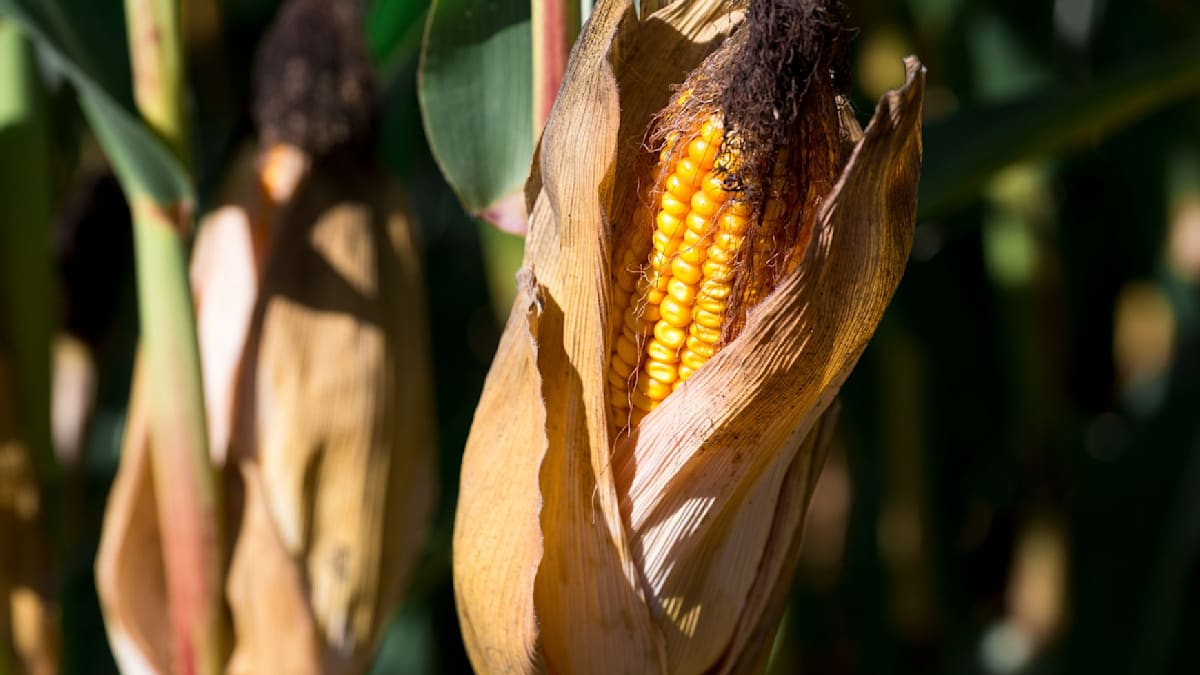
Corn is also displaying drought symptoms across Bavaria, including rolled leaves. North of the Danube, plants are frequently reaching only half their usual height, according to the BBV. Many farmers currently rate their corn stands as poor or very poor. The association described the condition of Bavaria’s most important forage crop as a deeply disappointing result.
The impact extends beyond the corn harvest. Dairy cattle are generally fed corn or grass silage and hay, particularly during winter. Grassland is suffering heavily from heat and lack of water, and fields cannot be cut when grass fails to regrow. Farmers have reported substantial losses, while the DWD said one grassland cutting had already been missed in some areas. If corn stands and grassland deliver too little biomass, feed could become scarce on many livestock farms during the winter.
Lower yields reported in Lower Franconia
Conditions are particularly difficult in Lower Franconia, an ordinarily dry region that repeatedly records very high temperatures. The BBV reported below-average harvest yields overall. Grain harvesting began about three weeks earlier than usual, and the quality of many crops remained generally good despite the difficult conditions. However, winter wheat, winter rapeseed and spring grain recorded pronounced yield losses.
Significant regional losses are also expected for silage corn. Plants have produced little biomass, while cobs contain fewer kernels and have not filled properly. For livestock farmers, this combination reduces both the volume and feeding value available for silage. The immediate requirement identified by the BBV is timely, substantial rainfall for field crops and grassland alike.
Sugar beet outlook adds to crop concerns
Southern German sugar beet growers have separately warned that this year’s harvest could be the lowest in more than three decades. Summer is still an important period for beets to add root mass and sugar, but persistent drought has stopped growth in many locations. Crops are showing clear drought stress even on land that normally has a reliable water supply, while diseases are spreading more easily.
The reports point to uneven effects across Bavaria’s agricultural sector. Much of the grain crop is already secured, although yields for several categories have suffered. Potatoes, corn, sugar beet and grassland remain vulnerable because their output is still developing or depends on renewed growth. Rainfall in the near term will therefore influence potato quality, silage availability, sugar beet performance and the cost of maintaining livestock feed supplies through winter.