Drone strikes inflict 6 billion rubles of losses on Russia’s book industry
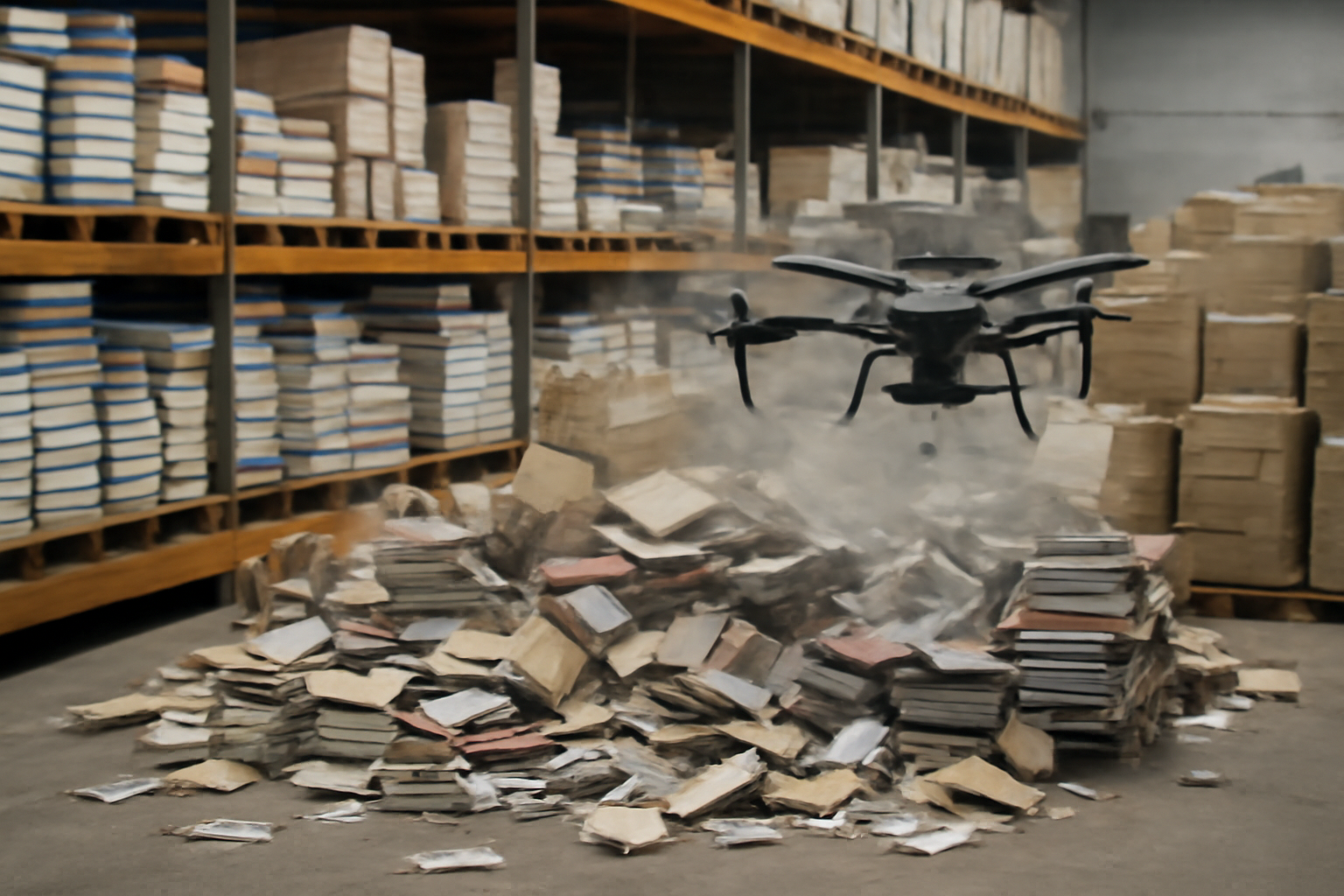
Russia’s book industry has suffered 6 billion rubles in losses after drone strikes hit Wildberries and Ozon warehouses, according to the Ministry of Digital Development. About 15 million books were reportedly destroyed, while Eksmo says the final count could reach 20 million copies.
Warehouse losses reach 6 billion rubles
Russia’s book industry has incurred an estimated 6 billion rubles in losses after drone strikes damaged warehouses operated by the Wildberries and Ozon marketplaces. Vladimir Grigoryev, director of the Department of State Support for Periodicals and the Book Industry at Russia’s Ministry of Digital Development, disclosed the estimate on 3 September at the Book Market of Russia 2026 industry conference, held during the Moscow International Book Fair.
According to Grigoryev, approximately 15 million books stored at marketplace warehouses were destroyed by fire. Eksmo chief executive Evgeny Kapyev said the final total could rise to 20 million copies once publishers and logistics operators complete their assessments. The difference between the two figures shows that the physical and financial impact has yet to be fully established.
Individual publishers are reporting substantial inventory losses. Rosman estimates that 126,000 of its books were destroyed. The publisher has not calculated a final monetary loss because the affected titles were valued at between 150 and 2,000 rubles per copy, making the composition of the destroyed inventory important to the eventual claim.
Online concentration increases publishers’ exposure
The damage affects the industry’s most important commercial distribution channel. Online sales represented 57.5% of turnover from printed books in 2025. Internet sales of printed titles reached 62.1 billion rubles, while Russia’s overall market for printed and electronic books was valued at 150.3 billion rubles.
The entire online channel expanded by 15.9% during 2025, and sales through marketplaces increased by 23%. That growth made Wildberries and Ozon central to publishers’ access to consumers, but it also concentrated large quantities of inventory at a limited number of logistics facilities. Strikes on those sites therefore affect publishers, marketplace sellers and readers simultaneously.
Wildberries warehouses have reportedly faced attacks since 18 July, while attacks on Ozon facilities began on 22 August. Logistics sites were affected in Saint Petersburg, the Moscow region, Crimea, the Tambov and Voronezh regions, and the Stavropol and Krasnodar territories. Publishers have responded by planning print runs more cautiously, and some have reduced the number of new titles they intend to release.
Industry seeks tax and credit relief
The Ministry of Digital Development is considering a preferential value-added tax rate of 5% for one year, compared with the current 10% rate on printed-book sales. Kapyev has warned that this option may benefit only a limited group of large publishers.
Eksmo has proposed a broader package: lowering VAT on printed books, preventing the recovery of VAT previously deducted on destroyed goods, allowing companies to recognize the full cost of those goods as expenses, and providing subsidized loans to replenish working capital. The stakes extend beyond compensation for lost stock. Eksmo estimates that the commercial book market could reach 122 billion rubles in 2026 if marketplaces adopt a less vulnerable logistics model, but fall to 106 billion rubles if the disruption persists. Under its pessimistic scenario, sales from September through December could decline by 20%.