Driscoll’s Mexico highlights deeper integration of North America’s berry supply chain
Driscoll’s Mexican operations illustrate how Mexico, the United States and Canada have become complementary parts of a shared fresh-produce system. The model links Mexican production with regional distribution and consumer markets, while exchange rates, labor costs, climate risks and US trade proceedings test its resilience.
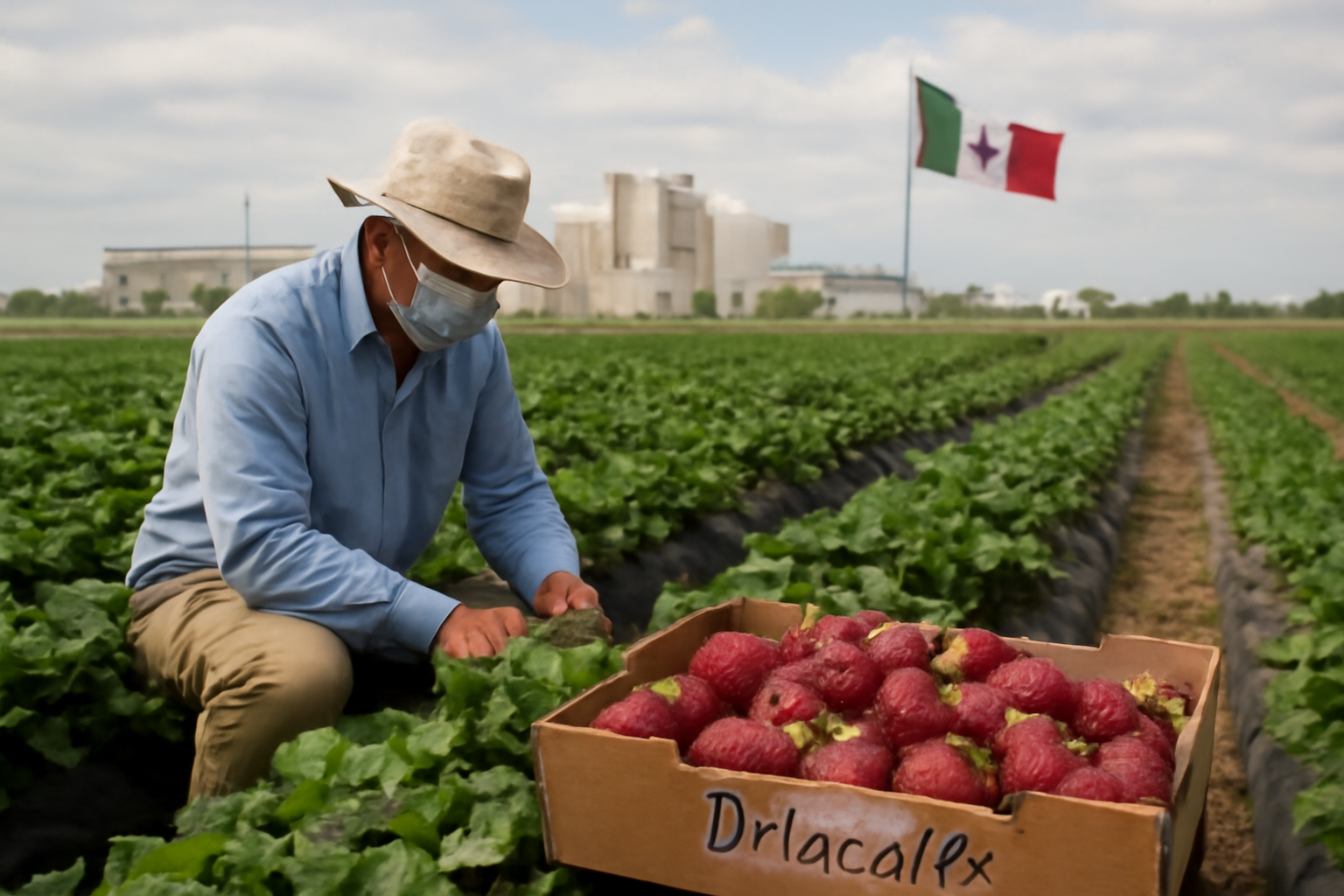
Three markets, one perishable supply chain
North America’s food economy increasingly operates as a shared production and distribution system rather than as three separate national markets. The Mexican operations of Driscoll’s offer a clear example: berry production in Mexico forms part of a regional chain serving consumers across Mexico, the United States and Canada.
Miguel Ángel Curiel, vice president of Driscoll’s Mexico, has described the three countries as complementary components of the same food-supply chain, particularly for perishable products. That complementarity matters for berries because fresh fruit has a limited commercial life. Harvesting, packing, refrigeration, transport and retail delivery must therefore work as a continuous process across borders.
Mexico supplies scale and crop diversity
Mexico’s berry industry covers strawberries, raspberries, blueberries and blackberries, although the four markets have different production and demand dynamics. According to El Economista, the industry ships around 600 million kilograms of fruit and contributed $4 billion to Mexico’s agricultural export economy in the previous season. The publication also reported that berry production generates 500 million pesos a week in wages paid directly to field workers.
Production is concentrated in established growing regions. Michoacán accounts for more than 50% of Mexico’s berry-growing area, while Jalisco produces a crop with a higher total value because of its focus on more profitable raspberries and blueberries, Curiel told El Economista. National planted area was expected to stand between 48,000 and 50,000 hectares after falling by more than 10,000 hectares over four years.
The contraction reflects adjustment rather than a uniform decline across every berry category. Curiel said strawberry demand had remained stable despite frost, water shortages, insufficient rainfall and plant diseases. Raspberry production, by contrast, had passed through an oversupply phase as growers responded to stronger post-pandemic demand and subsequently returned to a more balanced market.
Costs and trade policy test regional integration
The same cross-border structure that expands market access also exposes growers and distributors to policy and financial risks. El Economista reported that a strong Mexican peso has reduced exporters’ local-currency revenue, while higher wages and competition for a largely static agricultural workforce have raised production costs. Drought, plant disease, tariffs and other climate-related disruptions add pressure throughout the chain.
Strawberries have also become the focus of a US trade case. Producers in Florida filed a complaint alleging dumping by Mexican strawberry exporters, including Driscoll’s and Mainland. The process is being considered by the US Department of Commerce and the US International Trade Commission, according to El Economista. Any resulting trade measure would affect more than Mexican farms: it could alter sourcing costs, shipping programs and availability for buyers in the integrated regional market.
For producers and retailers, the central issue is whether North America can preserve the speed and predictability required by fresh food. Mexico provides production capacity and a diverse berry portfolio, while the United States and Canada provide major distribution networks and consumer demand. The performance of the system depends on border procedures, cold-chain continuity and commercial rules that allow fruit to move before its value deteriorates.