Damaged irrigation canals threaten tomato planting in Japan’s top-producing city
Earthquake damage has interrupted irrigation supplies to tomato farms in Yatsushiro, Japan’s leading municipality for winter-spring tomato production. More than 500 damaged points have been identified, while limited testing of the repaired canal network has begun.
Irrigation failure reaches Japan’s leading tomato area
Tomato growers in Yatsushiro, Kumamoto Prefecture, face the possibility of being unable to cultivate their next crop after earthquake damage interrupted the agricultural water supply during a period of extreme heat. According to the Mainichi Shimbun, the disruption comes immediately before growers are due to plant seedlings, making the speed and effectiveness of canal repairs critical to the coming production cycle.
Yatsushiro is Japan’s largest tomato-producing municipality for the winter-spring season. Its crop is grown from October through June and is marketed under the name “Hachibee,” derived from the Yatsushiro Plain where it is produced. Farms depend primarily on water drawn from the Kuma River and carried across the plain through a network of main and smaller irrigation canals.
More than 500 damaged points identified
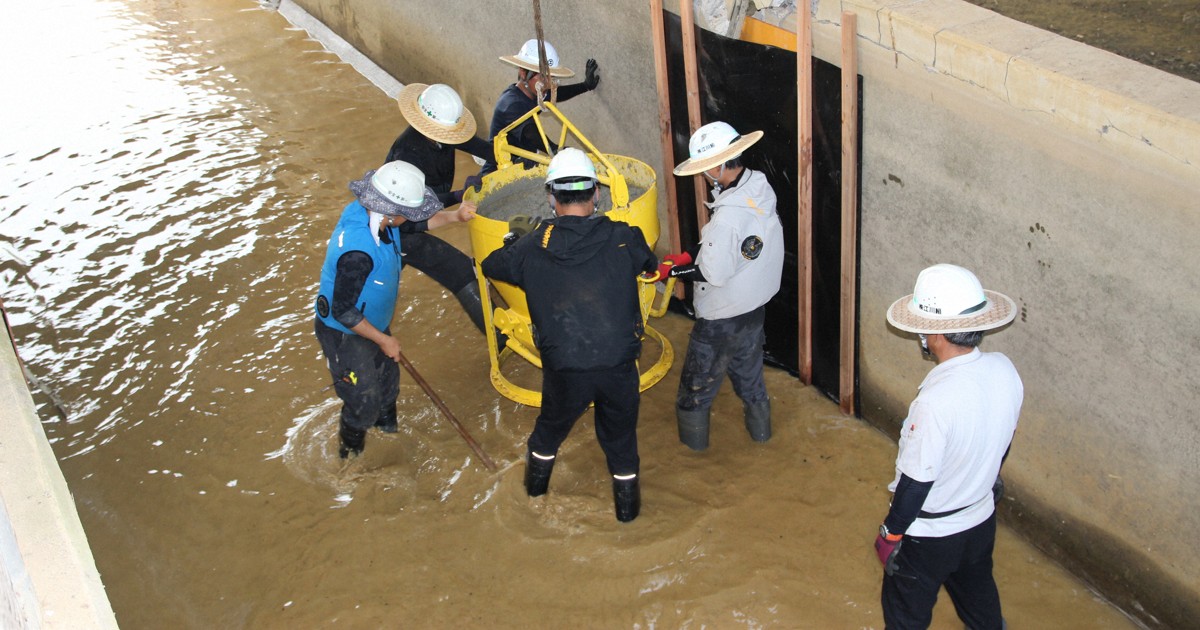
The earthquake damaged canals of different sizes, preventing water from reaching agricultural land. The Yatsushiro Plain Northern Land Improvement District said more than 500 points of damage had been confirmed through visual inspections alone, indicating that the full condition of the network may not yet be known. Emergency repairs are being carried out with concrete and rubber sheets.
The scale of the damage creates a difficult operational problem. Restoring a main canal does not guarantee delivery to individual farms because water must pass through several connected sections before reaching downstream fields. Each repaired point must withstand renewed flow, while damage that was not visible during initial inspections may emerge once the system is pressurized again.
Test flows begin, but farm deliveries remain difficult
Water was introduced experimentally into an upstream main canal from August 6, the Mainichi Shimbun reported. The volume remains limited because officials must check whether emergency repairs are holding. There is also a possibility that the tests will reveal additional leaks. Delivering enough water through the downstream network to individual growers therefore remains difficult.
The timing raises the immediate risk of delayed planting or reduced cultivation in the country’s leading winter-spring tomato area. The available information does not quantify the acreage or production volume exposed, and no estimate of potential crop losses has been reported. The near-term outcome depends on whether repair teams can restore dependable water deliveries before seedlings need to be planted. For growers, the issue is not simply total water availability in the Kuma River but whether the damaged distribution system can move that water reliably to farms during extreme heat. A prolonged interruption would affect producers first and could subsequently reduce the volume available to buyers during Yatsushiro’s October-to-June marketing season.