Dalmia Bharat Sugar approves $132 million integrated sugar project in Tanzania
Dalmia Bharat Sugar has approved its first major international sugar project, an integrated operation in Tanzania backed by more than ₹1,100 crore. The Indian producer will hold 51% of the venture, while Symphony Global LLC will own 49%.
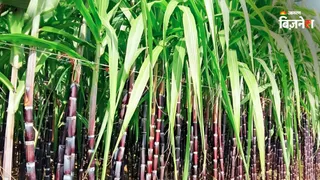
Indian sugar producer enters Tanzania
Dalmia Bharat Sugar has approved an integrated sugar project in Tanzania with planned investment of $132 million, equivalent to more than ₹1,100 crore, according to Jagran. The venture is the Indian sugar producer’s first major international project and represents an expansion of its manufacturing footprint beyond India.
The project will cover 10,000 hectares in Tanzania. It will be developed through Eagle Agrotech Tanzania Ltd, a subsidiary of Eagle Agrotech Holdings Ltd. The disclosed structure places agricultural land, sugar production and the partnership vehicle at the centre of Dalmia Bharat Sugar’s overseas expansion.
Dalmia Bharat Sugar is one of India’s major sugar producers. Its move into Tanzania gives the company a production base in an African market rather than relying solely on capacity in India. For sugar traders and industrial buyers, the project could eventually create an additional origin for supplies, although the source material does not provide production capacity, construction schedules or expected export volumes.
Indian company takes controlling stake
Dalmia Bharat Sugar will own 51% of Eagle Agrotech Tanzania Ltd. The remaining 49% equity stake will be held by Symphony Global LLC, the investment company of UAE businessman Mohammed Ali Rashid Alabbar. The ownership structure gives Dalmia Bharat Sugar control while retaining a substantial Dubai-based investment partner.
The company disclosed the investment through an exchange filing, Jagran reported. The project combines Indian sugar-sector experience with capital linked to the UAE, while locating the physical operation in Tanzania. It therefore connects three commercially relevant markets: India as the home of the controlling producer, the UAE as the base of the partner and Tanzania as the site of cultivation and processing.
No financing mix, commissioning date or breakdown between farming and processing investment was disclosed in the supplied report. The absence of those details limits an assessment of when the project could begin affecting regional sugar availability, import demand or export competition.
Trade impact depends on output and market route
The 10,000-hectare scale makes access to land a central element of the venture. An integrated project may allow the operator to coordinate cultivation and sugar processing within one business, but its commercial impact will depend on yields, factory capacity and the destination of the finished sugar. None of those figures was included in the source material.
If production is directed toward Tanzania, the operation could affect the country’s need for imported sugar. If part of the output is sold abroad, it could add supply to regional trade flows. These remain possible market outcomes rather than announced plans because Dalmia Bharat Sugar has not disclosed target customers or export destinations in the provided filing report.
For importers and exporters, the next material disclosures will be the project timetable, annual crushing and sugar capacity, and the split between domestic sales and exports. Until those details emerge, the clearest trade signal is the commitment of $132 million to establish a controlled, integrated sugar operation outside India.