Dacia warns Romanian output will fall by double digits in 2026 as 1,700 staff leave
Dacia director Mihai Bordeanu said on 4 September that production in Romania will decline by a double-digit percentage in 2026 and could be relocated because of energy costs, with roughly 1,700 employees having left since 2025. An analysis by the Asociația Energia Inteligentă puts Mioveni's cost disadvantage against Renault's Bursa plant at €318–378 per vehicle. A full withdrawal would put €5–5.5 billion of annual exports and 55,000–90,000 jobs at risk.
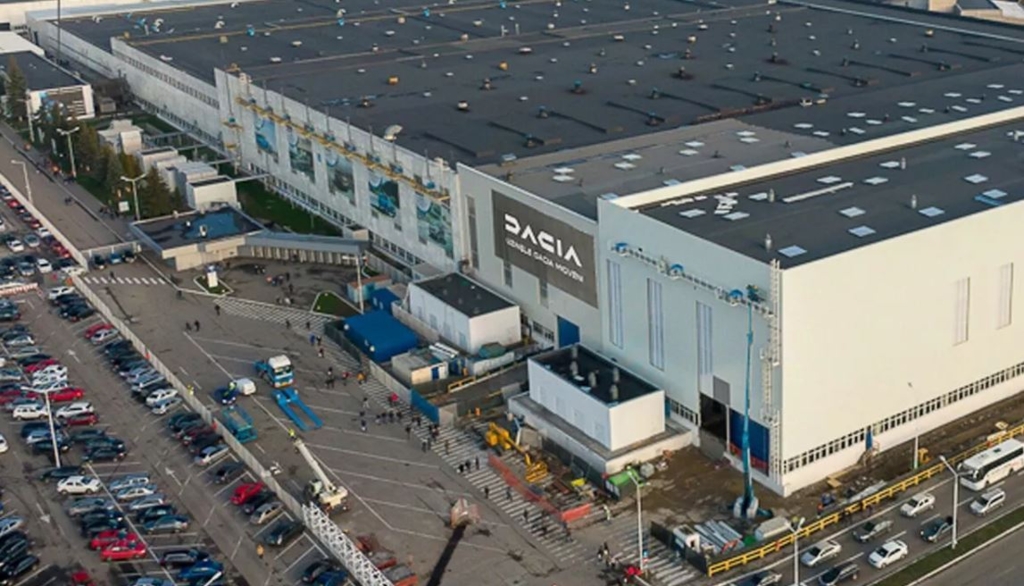
Dacia has warned that vehicle output in Romania will fall by a double-digit percentage in 2026 and that manufacturing could be shifted to other countries because of higher energy costs. Dacia director Mihai Bordeanu made the statement on 4 September, according to ziare.com, adding that roughly 1,700 employees have left the company since the start of 2025.
The remarks were assessed by Dumitru Chisăliță, energy expert and president of the Asociația Energia Inteligentă (AEI), in an analysis published by ziare.com. Chisăliță argues the statements do not automatically amount to a decision to withdraw, but cannot be ignored either. “Any important company tries to obtain the most advantageous conditions from the state in which it operates: lower taxes, cheaper energy, better infrastructure, state aid, flexibility in labour relations and rules that are as predictable as possible,” he said, describing the threat of reduced investment or departure as one of the strongest forms of negotiating pressure available.
The cost gap with Bursa
The current Duster generation entered industrial production at the end of 2023, and the Bigster has been built exclusively at Mioveni since 2025. According to the AEI analysis, the capital already invested, the installed equipment, the local supplier network and the commercial performance of these models make an immediate withdrawal improbable.
Compared with Renault's plant in Bursa, Turkey, Mioveni carries an estimated gross disadvantage of €318–378 per vehicle, driven mainly by differences in labour costs and electricity. Gas and diesel contribute far less. For a car delivered to Germany, Romania's proximity to the European market narrows the net difference to roughly €200–250 per vehicle. The analysis also notes that Romania sits on the lowest rung of the investment-grade category, which can affect financing costs and investor confidence.
AEI puts the probability at about 55% that the current generation stays and the successor is built at least partly in Romania. A negative scenario, involving split production or relocation of the successor, is assessed at about 35%, and an accelerated withdrawal by 2028–2029 at about 10%. The figures are presented as indicative risk assessments, not Renault forecasts.
Signals of a gradual exit
Chisăliță said a carmaker does not necessarily leave through a spectacular announcement and a sudden plant closure. Withdrawal can begin with the removal of a shift, falling orders to suppliers, the transfer of versions abroad, lower investment, the relocation of engineering work and, finally, the failure to allocate the model that must replace the current Duster. The decisive period is 2027–2029, when decisions on the future platform, suppliers and production site would be taken; a physical closure could follow only in 2030–2031, two or three years after the industrial decision. The signals AEI says should be tracked are:
- reduced investment at Mioveni, lower volumes and the elimination of shifts;
- transfer of dies or model versions to Bursa;
- nomination of Turkish suppliers for the next generation;
- reduction of research and engineering activity in Romania;
- no new model after the Bigster, with electrification investment directed exclusively to other plants.
What a full withdrawal would cost
In a complete withdrawal scenario, Romania could lose approximately €5–5.5 billion a year in gross exports, with the trade balance deteriorating by €2.5–3.5 billion. The direct and indirect loss of value added and GDP is estimated at €2.5–4 billion annually, and between 55,000 and 90,000 jobs would become vulnerable, including plant employees, suppliers, hauliers and services dependent on the automotive industry. Between 2029 and 2035, cumulative GDP losses could reach €17–28 billion.
An exit by 2029 would be an abrupt shock, leaving suppliers little time to diversify and pushing thousands of workers onto the labour market at once, with Argeș county facing a severe regional recession. A departure in 2031 would be no less serious in the end but would give Romania two additional years to attract other investment and retrain staff. At household level, a Mioveni family with one member employed at Dacia or a supplier would face the loss of its main income, estimated at 70,000–100,000 lei a year, while a family in Vaslui with no automotive employment would absorb an indirect cost of roughly 800–2,500 lei a year through a weaker leu, higher prices and interest rates and weaker public services.
Policy response
The AEI analysis argues Romania should respond neither with unlimited subsidies nor with hostility towards the company. Instead, the government should request a confidential and documented dialogue with Renault on industrial allocations, and verify each claim rather than negotiate on the basis of public statements.