Cyprus Positions Itself as Egypt's Gas Gateway to Europe as Aphrodite Enters FEED Phase
The Chevron-led consortium developing Cyprus's Aphrodite field in Block 12 announced a production potential of roughly 800 million cubic feet of gas per day and moved the project into its FEED phase. Gas is set to flow via subsea pipeline to Egypt's infrastructure, raising debate over Cyprus's strategic dependence on a single export route.
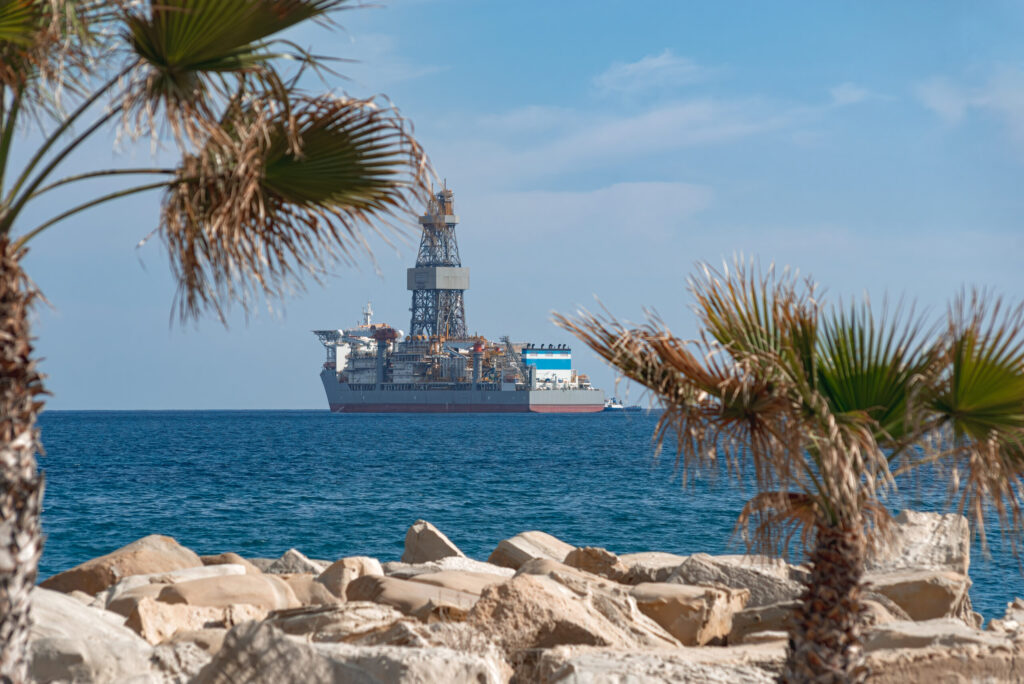
Aphrodite moves into engineering phase
The energy strategy of the Republic of Cyprus is back in focus after fresh developments at the Aphrodite field in Block 12 of the Cypriot exclusive economic zone. According to an analysis published by Huffington Post Greece, the consortium managing the project, led by Chevron, announced on 23 June a production potential of roughly 800 million cubic feet of natural gas per day. The project has now entered its most mature technical stage, the Front-End Engineering Design (FEED) phase, turning the discovery into a concrete investment and geopolitical event.
Under the current plan, development foresees four initial production wells connected to a floating production unit, with the gas carried through a subsea pipeline to Egypt. There, existing Egyptian infrastructure would be used either to serve the domestic Egyptian market or for further commercial handling, including liquefaction for export.
Why the Egyptian route is attractive
The analysis describes the model as technically sound and economically appealing. Egypt already has the infrastructure, the operating experience, an internal market and liquefaction facilities that Cyprus has not yet developed to the same degree. For the companies involved, routing gas through Egypt lowers risk and speeds up commercial exploitation of the field.
The trilateral cooperation between Cyprus, Greece and Egypt has produced positive results, and Cairo has acted in recent years as a significant factor of stability in the Eastern Mediterranean. For importers and buyers in Europe, the practical takeaway is that Cypriot gas would most likely reach the market as Egyptian LNG cargoes rather than as a separate Cypriot export stream.
The dependency question
The commentary warns that infrastructure creates dependencies that last for decades. When a field is designed from the outset with an exclusive or near-exclusive route toward a third country, the producing state narrows its future room for strategic autonomy. Cyprus can earn revenue and record a major energy success, but without parallel alternative infrastructure and routes it would remain tied to decisions and priorities it does not fully control.
Regional balances add further uncertainty. A future warming of relations between Cairo and Ankara could change how Egypt views the energy balance in the region, while Turkey consistently seeks a role as a central energy corridor. The Egyptian route may look safe today, the author argues, but under a different geopolitical environment it could act as a constraint. A further concern is that Cyprus could be confined to the role of raw-material supplier, with infrastructure, services, commercial contracts and negotiating power concentrating in Cairo.
Greece as a second pillar
Against this backdrop, the analysis assigns particular weight to developing Greece's own exploitation program in the Eastern Mediterranean. This assumes Greek deposits are confirmed and become commercially viable, combined with the appropriate transport, processing, storage or export infrastructure. Such a development would position Greece not merely as a country with possible energy resources but as a natural pillar connecting the Greek and Cypriot space with the European market.
For Cyprus, a Greek alternative would strengthen its negotiating position and reduce exposure to future geopolitical shifts, without requiring it to step back from cooperation with Egypt. The author concludes that cooperation with Egypt is useful and necessary at this stage but should not become a one-way street, with the Greek energy dimension serving as a necessary second pillar linking Eastern Mediterranean gas to Europe.