Crude Falls for Sixth Session to Two-Week Low as Saudi Pipeline Route Returns
Crude oil prices declined for a sixth consecutive session to a two-week low after Saudi Arabia restored a key pipeline route. Improved diplomatic signals between the United States and Iran and a rise in US crude inventories added to the supply-side pressure. No volumes, agreement terms or stock figures were specified in the available reporting.
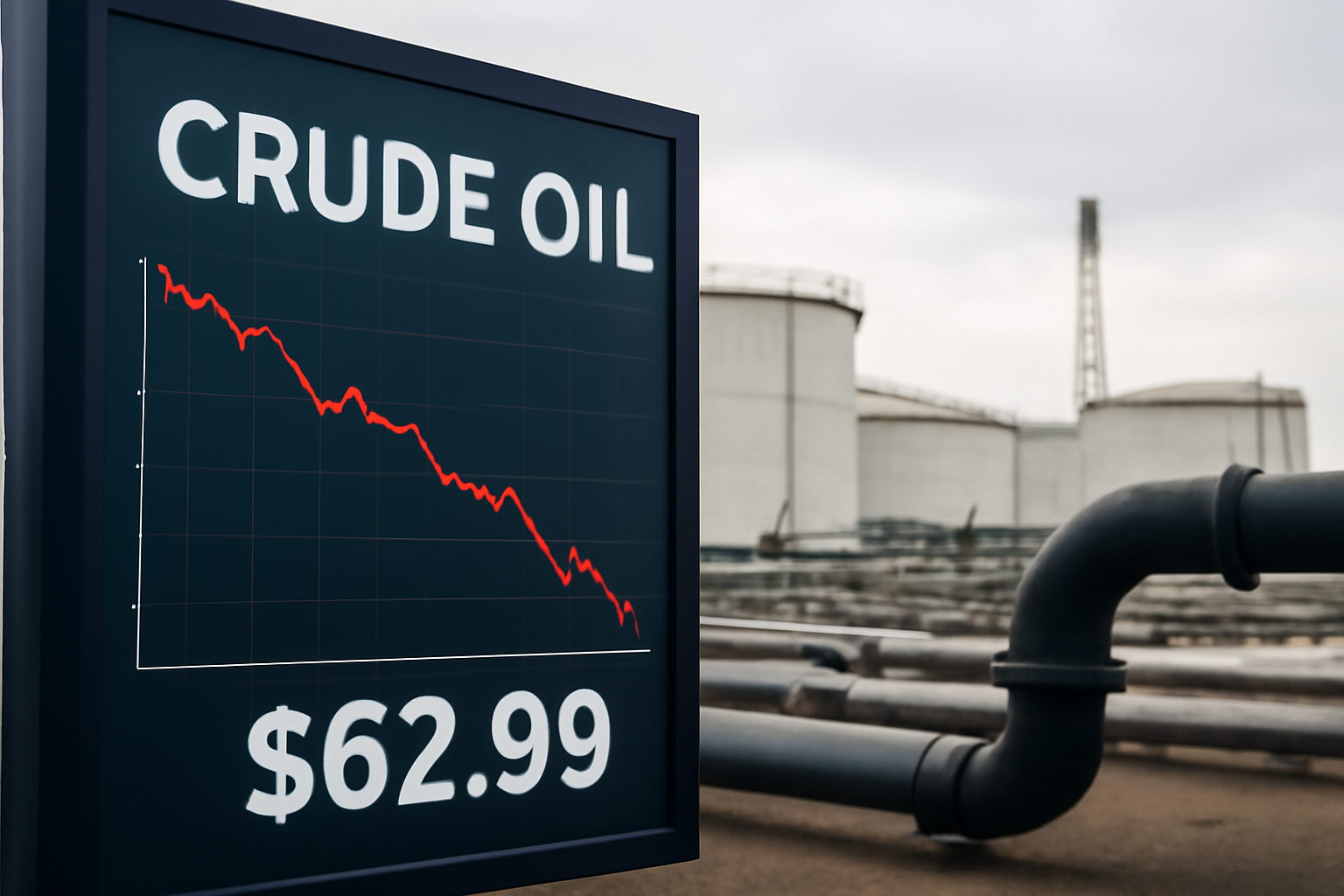
Crude oil prices fell for a sixth consecutive session, sliding to a two-week low, as a cluster of supply-side developments pointed toward easier availability of barrels. Three factors moved at once: Saudi Arabia restored a key pipeline route, diplomatic signals between the United States and Iran turned more constructive, and commercial crude inventories in the United States increased.
None of the three is on its own a structural change in global balances. Together they removed the supply-risk framing that had underpinned prices, and the market repriced. The decline came from the supply side; the reporting behind the move did not tie it to a shift in demand expectations or to a change in producer policy.
Pipeline restoration removes a physical constraint
The pipeline restoration is the most concrete of the three developments. Pipeline availability determines not only how much crude a producer can lift, but where those barrels can be delivered and loaded. When a major line is out of service, oil that exists at the wellhead is not the same thing as oil available at a loading terminal, and the gap between the two is what the market prices as physical risk.
With the route back in operation, that constraint disappears. For refiners and importers the practical effect is a lower probability of rerouting cargoes or paying a premium for prompt replacement barrels. Freight and grade differentials tend to relax first in such cases, ahead of flat price. The volumes involved and the exact length of the interruption were not specified in the available reporting.
Diplomatic signals trim the Iran risk premium
Improved signals between Washington and Tehran work against the sanctions-escalation scenario. Iran-related risk is priced in two layers: the chance that additional Iranian barrels reach the market if restrictions ease, and the chance of disruption to regional shipping if relations deteriorate. Constructive contacts raise the first probability and lower the second. Both point the same way for price.
The qualification matters: signals are not agreements. No settlement, timetable or volume commitment was reported, and a risk premium can be rebuilt as fast as it is released. Positions taken for a durable easing are, for now, positions on tone rather than on a transaction.
Inventory build confirms the softer picture
The increase in United States crude inventories reinforced the same reading. Stock levels are the most direct short-term indicator of whether crude entering the system exceeds what refiners process and exporters ship. A build says the balance was loose in the week measured. Arriving alongside the two Middle East items, it left buyers without a reason to bid aggressively for prompt barrels. The size of the increase was not detailed in the available reporting.
What the move means for the physical market
- Producers: weaker realisations on prompt sales, with the pipeline route no longer a source of expected tightness.
- Refiners and importers: cheaper feedstock and less need to hedge against a physical interruption.
- Traders: time spreads and regional differentials typically adjust before flat price stabilises.
- Exporting governments: revenue pressure if the decline extends beyond a short correction.
Six sessions of losses and a two-week low describe momentum rather than a new equilibrium. All three drivers are reversible: a pipeline that came back can go down again, diplomatic tone can harden, and a single inventory draw can undo the storage signal. What the market has priced out is supply risk that was previously embedded in the price, not the arrival of a surplus.