Croatia weighs daily fuel pricing as diesel hits a record 1.91 euros per litre
The Croatian government has set diesel at a record 1.91 euros per litre and cut diesel excise by a further three cents, leaving it ten cents below the EU minimum. Economy Minister Ante Šušnjar says a switch from weekly to daily price formation is being prepared, while Finance Minister Tomislav Ćorić has ruled out a VAT cut on fuel.
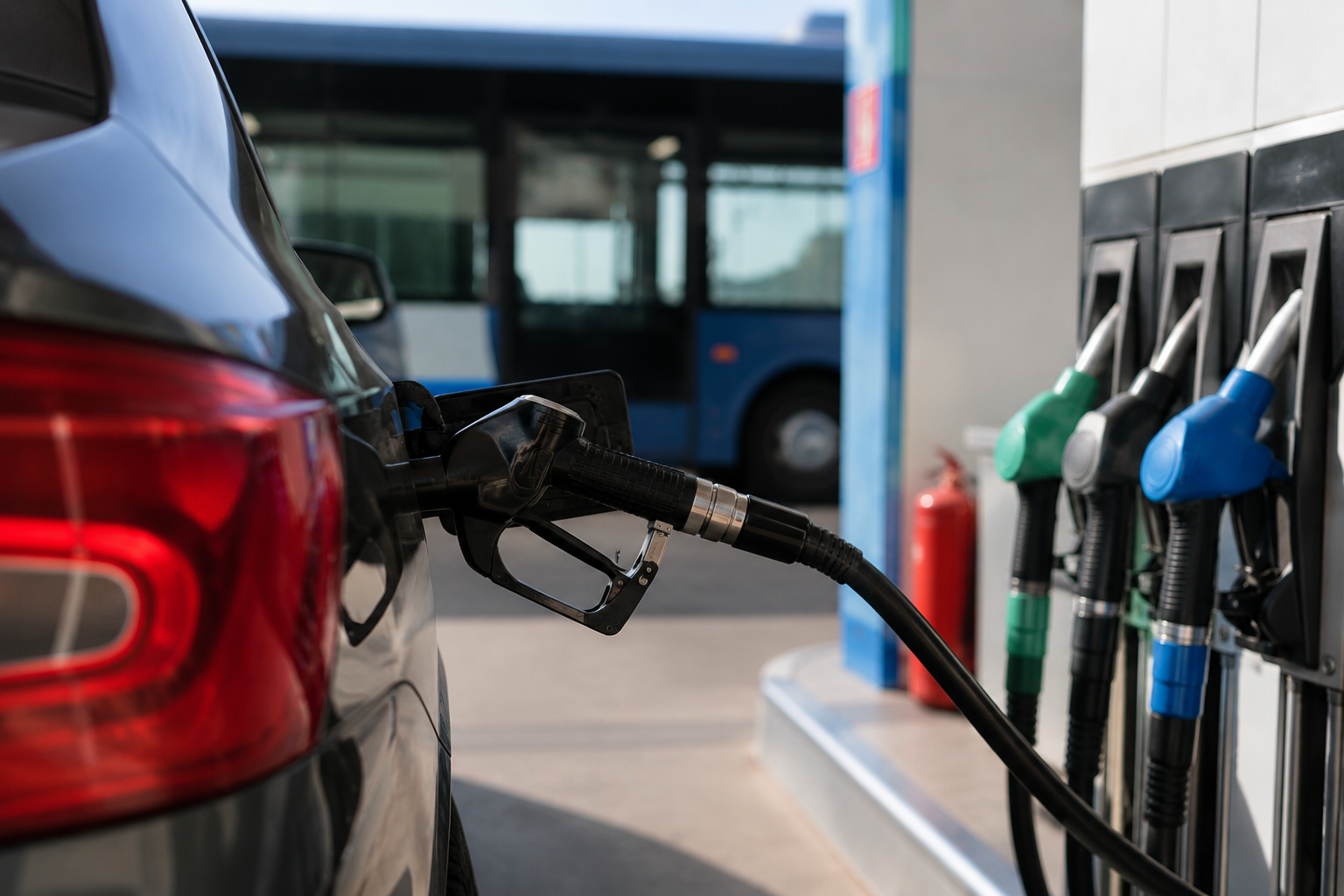
Croatia's government has set new maximum retail fuel prices for the next seven days and is preparing a shift from weekly to daily price formation, Economy Minister Ante Šušnjar said on Monday, as diesel quotations on European exchanges reached historic highs.
Diesel sets a record at 1.91 euros per litre
At its 206th session, held by telephone, the government adopted regulations under which it continues to regulate fuel prices, according to a statement published on vlada.gov.hr. From Tuesday a litre of diesel costs 1.91 euros, six cents more than before and the highest retail diesel price ever recorded in Croatia, dnevno.hr reported.
Petrol rises by one cent to 1.74 euros per litre. The steepest increase applies to blue diesel, the excise-exempt fuel supplied to farmers and fishermen, which goes up by ten cents to 1.50 euros per litre. LPG for tanks rises to 1.41 euros per kilogram and bottled LPG to 1.99 euros per kilogram.
Šušnjar said Croatia still has the most affordable diesel in its immediate neighbourhood. "We are witnessing today the highest diesel price since exchanges have been tracked and since diesel has been sold," the minister said, recalling that in 2010 and 2011 eurodiesel cost around 1.35 euros per litre.
Excise already ten cents below the EU minimum
To soften the increase, the government cut the excise duty on diesel by a further three cents per litre. With that step, and with the consent of the European Commission, Croatian diesel excise now stands a total of ten cents per litre below the minimum prescribed by the European Union directive, according to government data.
Šušnjar said blue diesel carries no excise at all and that suppliers are already recording losses because of the current premium. Counting support from the government's eleventh package of measures, he argued, eurodiesel remains more affordable than its retail price suggests. Economist Marijana Ivanov told Index that the state has ever less room to cushion further increases.
Hormuz and a pipeline attack drive Mediterranean quotes
Marijan Krpan, president of the management board of the Agency for Hydrocarbons, told the HRT programme "U mreži Prvog" that the shortfall stems from the Strait of Hormuz, where the number of ships carrying oil has fallen, and from a Houthi attack on an oil pipeline in Saudi Arabia. Certain volumes of diesel are missing from the world market as a result, he said.
Mediterranean diesel, the benchmark for Croatian price formation, passed 1,650 dollars per tonne last week, a record. Krpan said prices fell by 50 dollars the next day, which translates into 5 to 6 cents at the pump. Croatia consumes almost five times more diesel than petrol, he added.
Economist Ljubo Jurčić attributed part of the rise to speculation, noting that when the Strait of Hormuz was closed oil went to 120 dollars per barrel, then fell back to 110 and to 100, averaging around 100 dollars.
Daily pricing under review, VAT cut ruled out
Speaking during a visit to the FACC Solutions Croatia plant in Jakovlje, Šušnjar said a model is being developed that would build daily movements on energy exchanges into fuel prices. "Given the current movement of prices, we are working out a model to possibly move to daily formation so that shocks are as small as possible," he said. Jurčić called the idea political rhetoric, saying it could help consumers when prices fall but work against them when they rise. Šušnjar warned that excessive intervention in prices can threaten security of supply, adding that the Rijeka refinery is running at full capacity and that state reserves of oil and petroleum products are above the European minimum.
Deputy Prime Minister and Finance Minister Tomislav Ćorić said on Monday that cutting the VAT rate on fuel is not currently under consideration, jutarnji.hr reported. On gas, Dalibor Pudić, president of the Croatian professional gas association, said household prices for May to July have already been formed with an estimated increase of about four euros per megawatt-hour. For an average household consuming 10 megawatt-hours, or roughly 1,000 cubic metres, that is about 40 euros a year, or some 3 euros a month, a rise of 7 to 8 percent.