Cotton Remains Benin’s Leading Export as Quarterly Shipments Fall 24.8%
Benin’s merchandise exports fell 24.8% quarter on quarter in the third quarter of 2025, with raw cotton accounting for 14.8 percentage points of the decline. Exports were also 20.1% lower year on year, according to the national statistics institute INStaD.
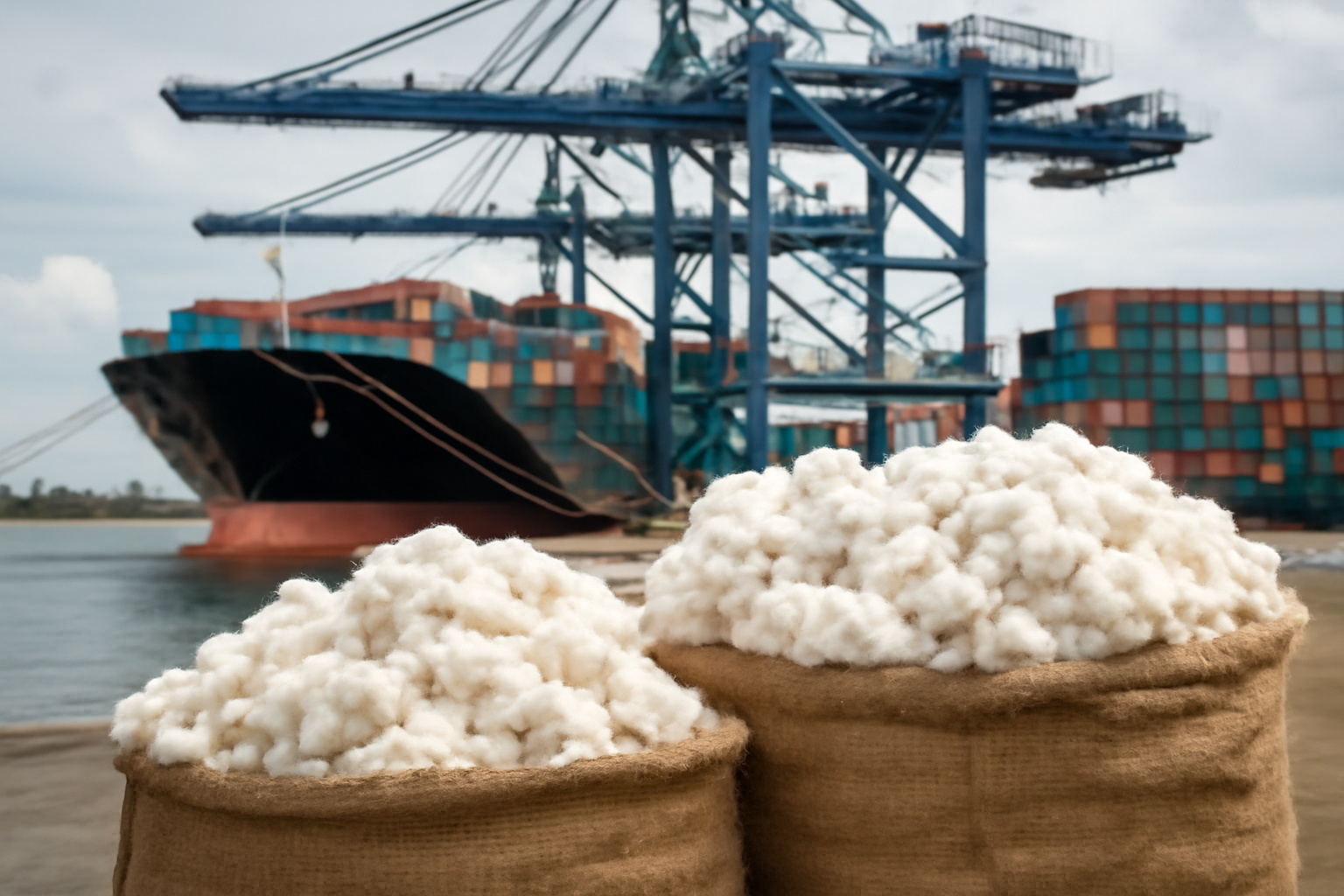
Exports retreat after the second quarter
Benin’s merchandise exports fell 24.8% in the third quarter of 2025 compared with the previous quarter, according to the National Institute of Statistics and Economic Analysis, known as INStaD. The decline interrupted the quarterly flow of goods from a country whose export portfolio remains heavily influenced by agricultural commodities.
The downturn was broad enough to extend beyond seasonal comparisons. INStaD reported that overseas sales were 20.1% lower than in the third quarter of 2024. The figures are provisional quarterly trade statistics covering Benin’s merchandise exchanges with the rest of the world and may be revised in subsequent releases.
Raw cotton drives the quarterly contraction
Raw cotton, excluding linters and neither carded nor combed, remained at the centre of Benin’s export performance. The product contributed 14.8 percentage points to the quarter-on-quarter fall, making it the largest identified source of the contraction. Cotton therefore retained its leading role in the export mix even as weaker shipments pulled the national total lower.
Oilcake and other solid residues contributed another 6.2 percentage points to the quarterly decline. Prepared or preserved fruit and other edible parts of plants accounted for 2.1 percentage points. Together, these categories explain most of the reported fall and underline the importance of agricultural output, processing volumes and shipment timing for Benin’s quarterly trade results.
Annual comparison shows pressure across value chains
The year-on-year breakdown differed from the quarterly comparison. Oilcake and other solid residues made the largest negative contribution, at 8.9 percentage points. Cotton yarn other than sewing thread accounted for 1.8 percentage points, while soybean oil and its fractions contributed 1.4 percentage points to the annual decline. The presence of raw cotton, cotton yarn, oilseed residues and soybean oil in the data shows that weakness affected both primary commodities and processed agricultural products.
For producers, ginners, processors and traders, the figures point to concentrated exposure rather than a change in cotton’s strategic position. A decline in the leading commodity can move the national export total sharply, while weakness in oilcake and soybean oil adds pressure on the oilseed-processing chain. The next quarterly release will show whether the third-quarter retreat reflected shipment schedules and agricultural seasonality or a more persistent reduction in external sales. Until then, INStaD’s data establish two clear facts: cotton remains pivotal to Benin’s merchandise exports, and the third quarter brought a substantial contraction on both quarterly and annual measures.