Côte d’Ivoire Sets 2026/27 Cocoa Farmgate Price at CFA1,200 per Kilogram
Côte d’Ivoire has set its guaranteed cocoa producer price for the 2026/27 season at CFA1,200 per kilogram. The price reflects export contracts sold mainly between March and June 2026, before international cocoa prices recovered sharply.
Guaranteed price follows advance export sales
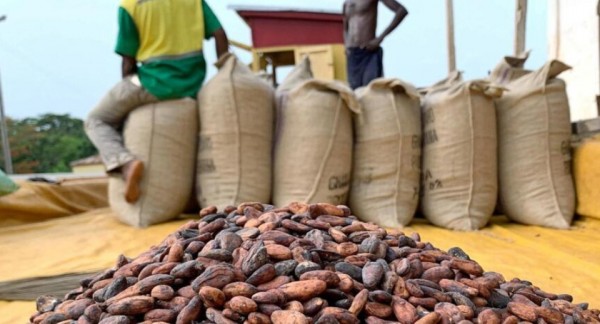
Côte d’Ivoire has opened its 2026/27 cocoa season with a guaranteed producer price of CFA1,200 per kilogram, according to KOACI. The price, announced as the campaign entered its active phase on 1 September 2026, has disappointed some farmers and industry participants who compare it with the more recent recovery in international cocoa prices.
The government and the Coffee-Cocoa Council argue that the farmgate price must be assessed against the market conditions prevailing when export contracts were sold. Côte d’Ivoire markets a substantial share of its expected crop in advance, allowing the authorities to establish a guaranteed price before beans are delivered. This system is intended to provide farmers with predictable income and reduce their direct exposure to international price swings.
Since the sector’s 2012 reform, the stated principle has been to pay producers at least 60% of the international price used when sales to exporters are concluded. KOACI reported that Côte d’Ivoire sold about 1.1 million cocoa export contracts in only four months, from March through June 2026. In previous years, the process generally extended over almost nine months, making the accelerated sales timetable central to the current price debate.
Market recovery came after most contracts were sold
During the March-June selling period, international cocoa prices were reportedly around £2,200-£2,800 per tonne, equivalent to approximately CFA1,680-CFA2,138 per kilogram. The market was undergoing a substantial correction, and the Coffee-Cocoa Council’s average sale price for the period was estimated at about CFA1,940 per kilogram.
Applying the 60% producer-share rule to that average supports a guaranteed price close to CFA1,200 per kilogram. The calculation therefore reflects contract values secured during the forward-selling window, rather than international quotations observed several months later. This distinction limits the authorities’ ability to pass a subsequent market rally directly to farmers during the same campaign.
International cocoa was later trading at around £4,300 per tonne, or approximately CFA3,284 per kilogram, KOACI said. Côte d’Ivoire had already completed most of its contract sales by July 2026, while clearer signs of the recovery emerged from August. The resulting gap between the guaranteed farmgate price and the later world-market quotation has become the main source of dissatisfaction among producers.
Income protection comes with an opportunity cost
The regulated system protects growers when international prices fall after contracts are sold, but it also prevents them from capturing the full benefit of a later increase. Côte d’Ivoire experienced a more liberalized cocoa market between 2000 and 2011, when prices paid to farmers could vary widely by region, town, buyer and intermediary. Regulation was reintroduced from 2012 partly to reduce those disparities and shield producers from market volatility.
Production costs are another important part of the calculation. Studies cited by the Coffee-Cocoa Council put cocoa production costs in Côte d’Ivoire at around CFA1,000 per kilogram. On that benchmark, the CFA1,200 guaranteed price leaves a theoretical margin of CFA200 per kilogram. That margin may provide a buffer, but it remains narrow compared with the difference between the guaranteed price and the later international equivalent.
For exporters and processors, the system links procurement economics to contracts concluded months before physical deliveries. For farmers, it exchanges access to spot-market upside for a minimum known price. Côte d’Ivoire remains the world’s leading cocoa producer, but it does not set international prices, which respond to global production, weather, demand, stocks, speculation and broader economic conditions. The 2026/27 controversy therefore highlights the core trade-off in advance selling: stability when prices fall, and foregone income when they rise after the sales window closes.