Côte d’Ivoire creates Coffee and Cocoa Institute as producer groups seek stock transparency
Côte d’Ivoire is creating the Coffee and Cocoa Institute in Divo to strengthen research, productivity and local processing. Seven agricultural producer organizations support the initiative but want a detailed account of previous-campaign cocoa stock removals, including the operation known as the “100,000 tonnes” program.
A new research institution in Divo
Côte d’Ivoire is establishing the Coffee and Cocoa Institute, known as I2C, in Divo as part of an effort to strengthen two agricultural sectors central to the national economy. According to Intellivoire, the institute is intended to reinforce research, improve farm productivity, increase competitiveness and support more local processing of coffee and cocoa.
The initiative brings research, production performance and processing into the same institutional agenda. For producers, stronger research could help address practical constraints affecting yields and crop quality. For processors and investors, the emphasis on domestic transformation could support the development of more activity beyond the sale of unprocessed agricultural output. The available announcement, however, does not specify the institute’s budget, timetable, governance arrangements or planned processing capacity.
The location in Divo places the institution within one of Côte d’Ivoire’s agricultural areas. Its commercial impact will depend on whether research results reach farms and whether producers, cooperatives and processors can apply them. The institute’s creation therefore marks the start of a longer implementation process rather than an immediate change in available cocoa or coffee volumes.
Producer organizations back I2C but demand answers
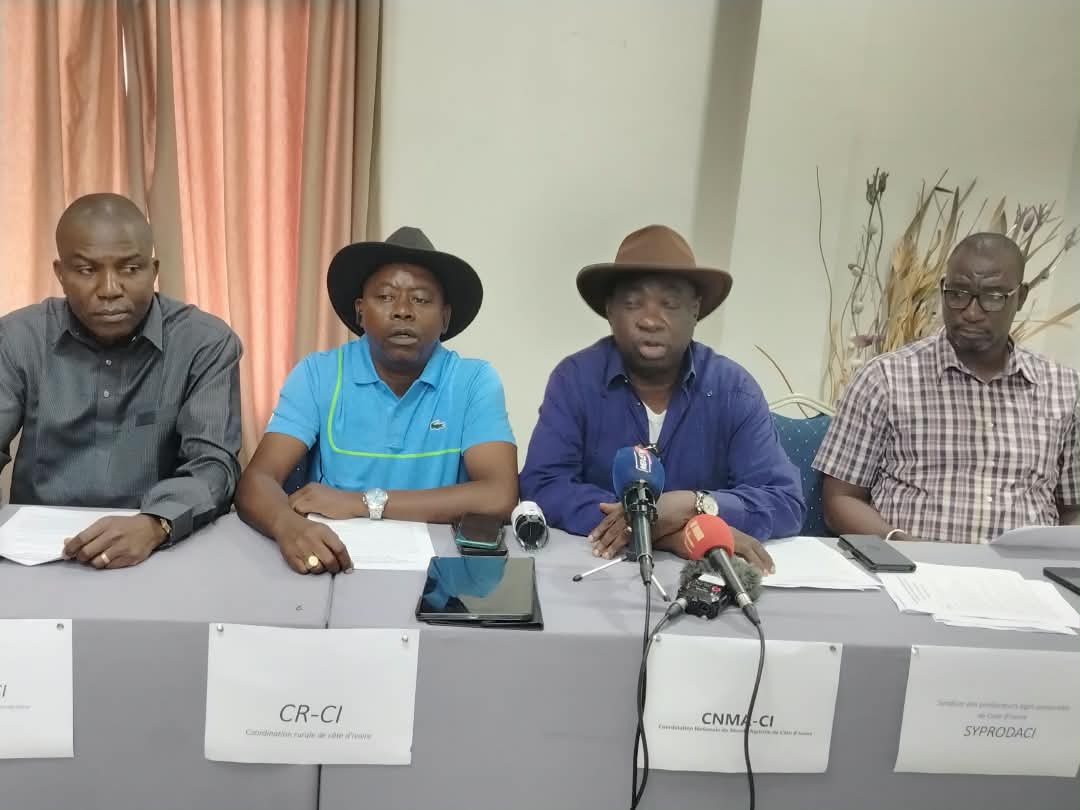
A collective of seven agricultural professional organizations, or OPAs, has publicly supported the institute’s creation while drawing attention to growing dissatisfaction among coffee and cocoa producers. Intellivoire reports that their concerns extend beyond the price set for the new campaign. They also involve problems encountered in marketing and removing part of the stocks carried over from the previous campaign.
The organizations have asked the OIA Café-Cacao interprofessional body and the Coffee and Cocoa Council to explain publicly their respective roles in managing the stock-removal process. Their request focuses in particular on the operation described as the “100,000 tonnes” program. The collective wants a detailed statement covering the volumes handled, the beneficiaries, the allocation criteria and the final amount of residual stock.
The OPAs also want documented clarification of a press report alleging that a trade-union official benefited from the removal of more than 1,200 tonnes of cocoa. According to the collective, such an operation would contradict earlier commitments. The source material does not provide an official response from the organizations concerned or establish the final status of the allegation.
Credibility will shape the institute’s impact
The dispute shows that research policy and day-to-day market governance are closely connected. Productivity gains will have limited value to farmers if harvested cocoa cannot be marketed or collected under rules they regard as clear. Uncertainty over beneficiaries and residual inventories can also make it harder for cooperatives, traders and processors to assess available supply and plan operations.
The seven OPAs argue that producer-awareness campaigns for the new season cannot replace answers about the management of earlier stocks. Their position gives the authorities two parallel tasks: turning I2C into an operational institution capable of delivering useful research, and providing a verifiable account of the stock-removal program. Transparent reporting could ease tensions and give the institute a stronger foundation among the producers it is meant to serve.