Côte d’Ivoire launches cocoa traceability system and expands local processing
Côte d’Ivoire has made producer cards mandatory for cocoa transactions in the 2026-2027 season. The country also plans to raise annual processing capacity from 1.16 million to 1.34 million tonnes as it targets a 50% domestic grinding rate by 2030.
Producer card becomes mandatory
Côte d’Ivoire opened its 2026-2027 cocoa marketing season on September 1, 2026, with a national traceability system covering the movement of beans from farms to export. The Coffee and Cocoa Council, known as the CCC, has made the producer card mandatory for commercial transactions. The chip-equipped card is intended to secure payments and connect each sale to information about the farmer and the supplying plantation.
The system also uses designated bags and seals to trace and certify Ivorian cocoa. Agence Ivoirienne de Presse reported that 600 cooperatives had conducted all their purchases and deliveries through producer cards by September 17. More than 50,000 tonnes of beans passed through the system during the season’s first two weeks. In the week from September 7 to 13 alone, around 26,000 tonnes were purchased from 38,000 producers.
The traceability requirement is designed partly to prepare the sector for the European Union’s deforestation regulation, which Futura reports is due to apply from January 1, 2027. For exporters and processors serving Europe, the system should create a documented chain between registered plots, purchases by cooperatives and export consignments. Its commercial value will depend on consistent data collection and implementation across the country’s large network of farmers and intermediaries.
Farmgate price falls from the 2025 peak
The guaranteed farmgate price for the 2026-2027 season is 1,200 CFA francs per kilogram, unchanged from the March 2026 mid-crop season. It is, however, well below the 2,800 CFA francs set at the start of the 2025-2026 season, when international cocoa prices had been lifted by the 2024-2025 market surge. Agriculture Minister Bruno Nabagné Koné said the new price had to be financially and fiscally sustainable after difficulties in the previous season.
Côte d’Ivoire remains the world’s largest cocoa producer. CCC Director-General Yves Brahima Koné estimated the 2025-2026 harvest at between 2.0 million and 2.1 million tonnes, compared with 1.68 million tonnes in 2024-2025. According to Futura, the sector represented 11.5% of national GDP in 2025 and directly or indirectly employed about 5 million people.
Cocoa accounted for approximately 35% of Ivorian exports in 2024, while raw bean shipments generated $4 billion. These figures explain why the government is pursuing traceability and industrial processing together: the first protects access to regulated markets, while the second seeks to retain more value from the crop inside the country.
Processing capacity heads toward 1.34 million tonnes
Côte d’Ivoire ground 39% of its cocoa crop domestically in 2024-2025 and aims to raise that share to 50% by 2030. Installed annual processing capacity stood at 1.16 million tonnes in September 2026. New plants expected during the current campaign should lift it to 1.34 million tonnes, according to Yves Brahima Koné.
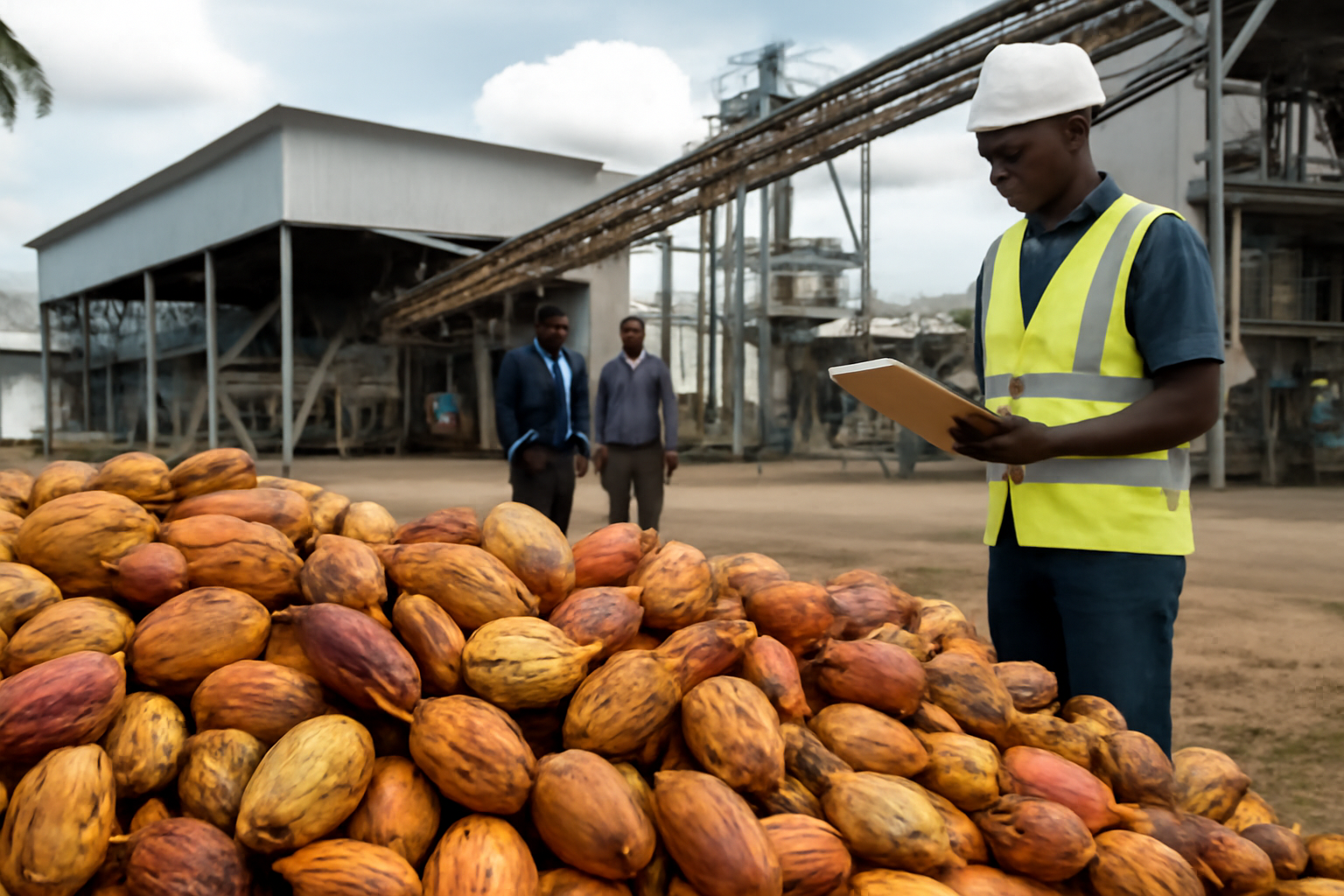
Recent additions include state-owned Transcao CI’s second grinding unit at Akoupé-Zeudji, inaugurated in June 2025 with annual capacity of 50,000 tonnes. Together with its San Pedro operation, the plant raised Transcao’s total capacity to 100,000 tonnes. Cacao SA commissioned a 36,000-tonne facility in Divo in August 2025. Ivory Cocoa Products also secured a €20 million, four-year financing line in September 2026 to support working capital and sustainable bean purchases for its 90,000-tonne San Pedro factory.
The expansion remains concentrated in primary processing, which produces cocoa liquor, mass, butter and cake. Futura reported that Côte d’Ivoire had 52 operators in secondary and tertiary processing in 2024, but only one industrial company, CEMOI Chocolat. Moving beyond grinding into ingredients and finished products such as chocolate, spreads and breakfast powder is therefore the next constraint. For producers, cooperatives and processors, the campaign will test whether traceable supply can support higher plant utilization and more domestic value creation despite the lower guaranteed bean price.