Côte d’Ivoire says cocoa stock buyout is complete as growers demand audit
Côte d’Ivoire’s cocoa regulator says it has completed the purchase of 100,000 tonnes of stranded beans using 280 billion CFA francs. Grower organizations dispute the operation’s transparency and are seeking an independent audit as the next cocoa campaign approaches.
Regulator declares 100,000-tonne program complete
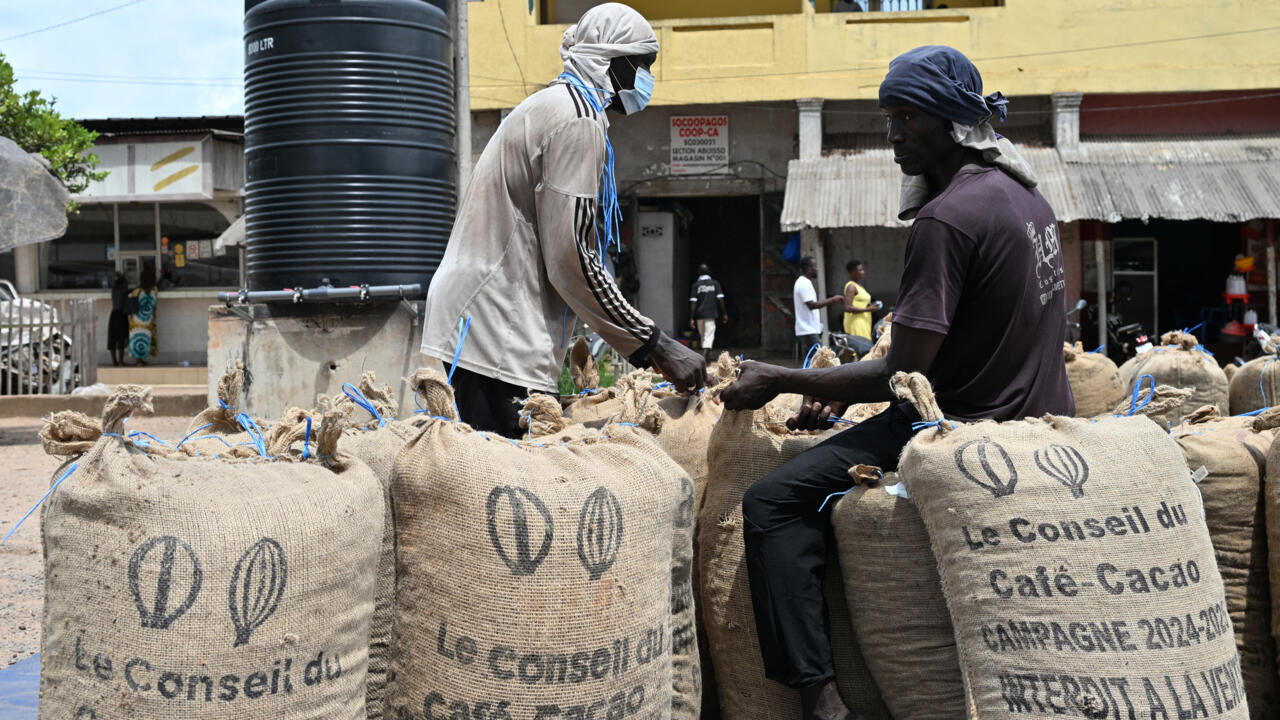
Côte d’Ivoire’s Coffee and Cocoa Council, or CCC, says it has completed a state-backed operation to purchase 100,000 tonnes of cocoa that had become stranded during a severe disruption to the domestic market. The announcement has not settled the dispute with grower organizations, which maintain that thousands of tonnes of beans remain in cooperative warehouses and question how the program was carried out.
In a statement reported by RFI, the CCC said on Wednesday, August 5, that the repurchase program had reached its target and was finished. The regulator said 280 billion CFA francs, equivalent to about €426 million, had been released and made available to execute the operation. The beans were to be purchased at the state-set producer price of 2,800 CFA francs per kilogram.
The matching totals imply that the entire allocation corresponds to buying 100,000 tonnes at 2,800 CFA francs per kilogram. However, producer organizations have repeatedly complained about delays and a lack of transparency. In their latest demands, presented during the previous week, they called for an independent audit of the public funds deployed to clear the accumulated stocks.
Export slowdown left beans and trucks stranded
The intervention followed a crisis at the beginning of the year, when slower exports caused cocoa to accumulate in warehouses. Hundreds of trucks were blocked at the entrance to the port of Abidjan and prevented from unloading bags because they lacked the required document. Further upstream, producers and cooperatives struggled to sell and move their cocoa.
The disruption affected a sector that accounts for 14% of Côte d’Ivoire’s gross domestic product and supports 5 million people, according to RFI. With beans unable to move through the supply chain, some participants who depend on cocoa were left without income. The government consequently committed to purchasing blocked stocks to relieve congestion in the market.
The difficulties emerged after global cocoa prices, which had reached peaks in late 2024, began falling sharply in mid-2025. At the same time, Côte d’Ivoire’s administered cocoa price reached a record 2,800 CFA francs per kilogram in October. The divergence between weaker international prices and the fixed domestic price contributed to pressure within the marketing and export system.
Trust remains unresolved before new campaign
Seven cocoa-sector union federations said in the week before the CCC’s announcement that thousands of tonnes were still stored at cooperatives. Their account conflicts with the regulator’s position that its commitment was fully met. The CCC responded to the criticism by referring to the conduct of what it described as ill-intentioned individuals, while offering no independent verification in the material reported by RFI.
Tensions between the regulator and sector representatives predate the conclusion of the purchasing program. In February, the CCC filed defamation complaints against two union representatives who had warned about the risk that cocoa would remain unsold. The legal dispute and current audit demand underscore a wider credibility problem between public authorities and organizations representing growers.
The next cocoa campaign is expected to begin on September 1, one month earlier than usual. An early launch may help Côte d’Ivoire move into the new season after a difficult year, but the unresolved question is whether all stranded stocks have actually been cleared. For producers, cooperatives, exporters and processors, an independently verified account of volumes purchased and payments made would clarify both the remaining physical supply and the financial position of market participants.