Côte d'Ivoire's cashew industry runs at full capacity but needs to move up the value chain
Côte d'Ivoire's cashew processing industry is running at full capacity, and the nut now ranks as the third-largest export earner in the country's agricultural sector, behind cocoa and natural rubber. To keep more revenue at home, the sector needs to expand processing and move up the value chain rather than export raw nuts.
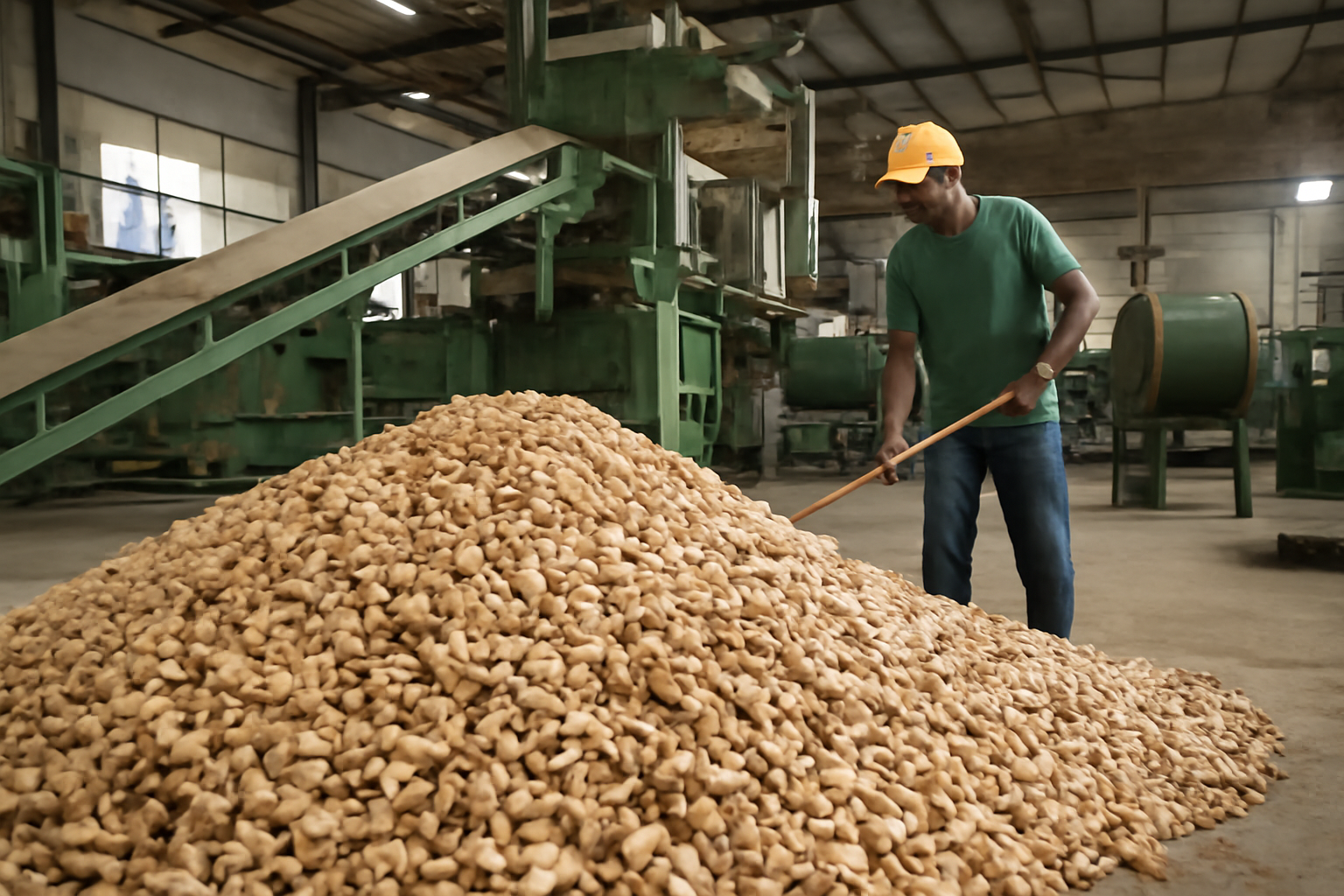
Cashew now the third pillar of Ivorian agricultural exports
The cashew nut has become the third-largest source of export earnings for Côte d'Ivoire's agricultural sector, ranking behind only cocoa and natural rubber. For a country long defined by its cocoa crop, the rise of cashew marks a broadening of the export base and gives buyers in Asia and Europe another major West African origin to track. It also confirms that the nut has moved from a minor cash crop to one of the economy's core foreign-exchange earners.
Local processing plants are currently running at full capacity. That is a sign the industrial base built around the nut has matured beyond the simple collection and shipment of the raw product, and it shows demand for Ivorian output—raw and processed alike—remains firm.
From raw nut to finished kernel
The central question facing the sector is no longer whether it can produce, but how much of the value it can keep at home. Raw cashew nuts and processed kernels sit at very different points on the price curve: the raw nut is a low-margin commodity, while shelled, graded and packaged kernels command a substantial premium in consumer markets. Every tonne processed domestically rather than shipped out raw is revenue and jobs retained inside Côte d'Ivoire.
Historically, much of the world's raw cashew has been shelled in Asia, leaving producing countries with the lower-value end of the chain. That is the backdrop to the push to move up the value chain. With processing capacity already fully engaged, the next phase depends on expanding and upgrading it—so a larger share of the harvest is transformed locally rather than sent abroad for shelling.
What it means for the trade
- Buyers of raw nuts face a producer that increasingly wants to process at origin, which over time could tighten the supply of unprocessed cargo.
- Importers of finished kernels gain a potential new large-scale supplier competing with established processing hubs.
- The crop's ranking behind cocoa and rubber points to diversification within Ivorian agriculture and less reliance on a single flagship product.
For now the picture is straightforward: an industry working at the limit of its current capacity, and a national ambition to capture more of the margin that still flows to processors elsewhere. How quickly Côte d'Ivoire can add and modernise capacity will decide whether the cashew boom becomes lasting industrial value or stays, for the most part, an export of raw material.