Corn Ethanol Expansion Reshapes Brazil’s Domestic Maize Market
Brazil’s corn ethanol industry is creating recurring demand near major production areas and giving farmers more alternatives to export channels. In Mato Grosso, internal corn consumption is projected to rise to 27.04 million tonnes in 2026/27 as exports and ending stocks decline.
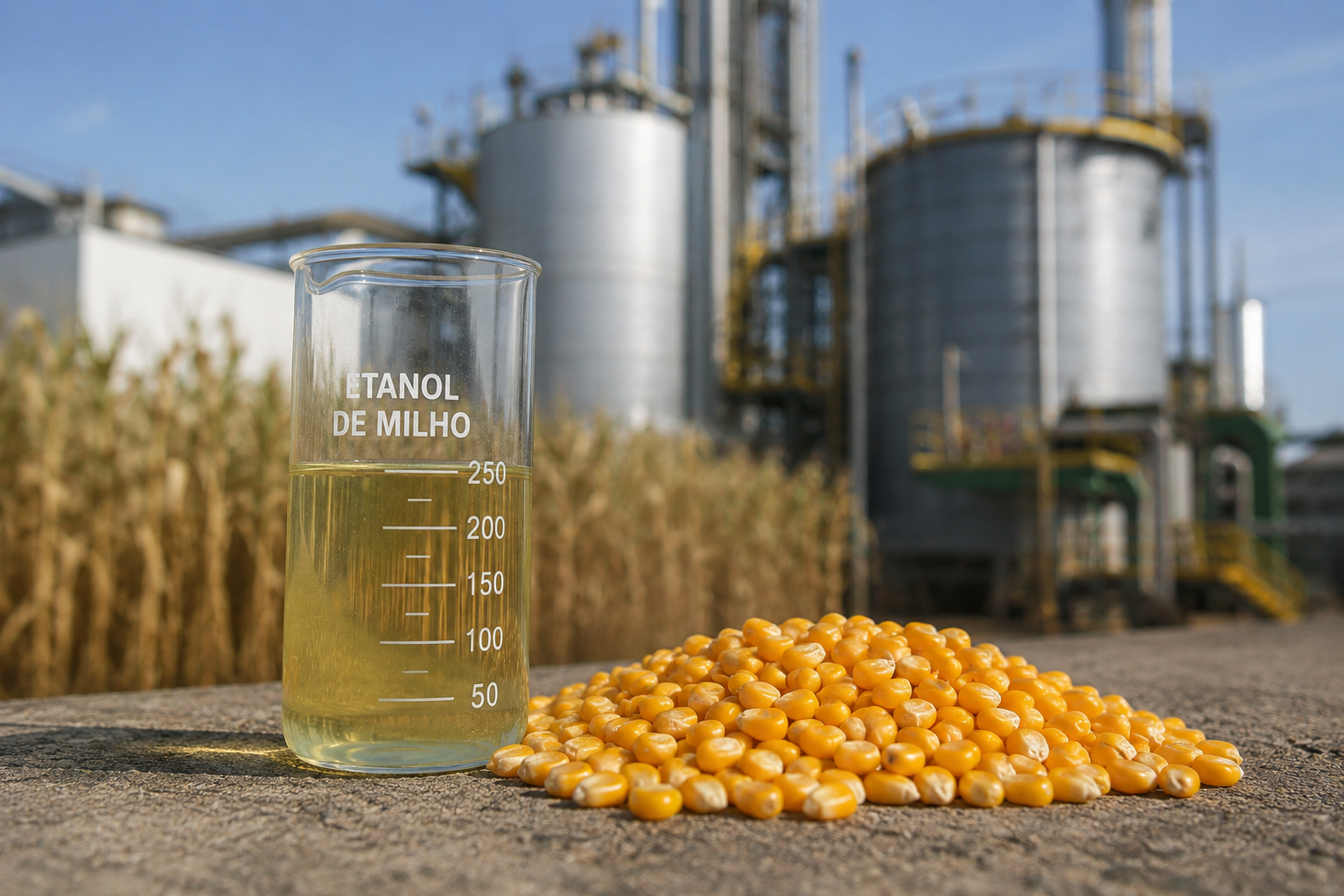
Processing demand moves closer to Brazil’s corn farms
The expansion of corn ethanol production is changing how maize is marketed in Brazil’s principal growing regions. New plants and additions to installed capacity are processing larger volumes close to farms, creating recurring industrial demand and giving producers more alternatives to selling grain into export channels.
According to data from Brazil’s National Agency of Petroleum, Natural Gas and Biofuels compiled in an analysis by Cepea, the quantity of corn processed by Brazilian plants increased from 1.3 million tonnes in the 2017/18 season to 22.4 million tonnes in 2025/26. Conab estimates that corn ethanol output will reach 11.91 billion liters in 2026/27, representing annual growth of 17%.
Further expansion is expected. The National Union of Corn Ethanol projects production of 16.63 billion liters in 2033/34. At current conversion yields, Cepea calculates that output at this level could require approximately 38 million tonnes of corn.
Mato Grosso balances higher consumption and lower exports
Mato Grosso, Brazil’s leading corn-producing region, illustrates the shift most clearly. The Mato Grosso Institute of Agricultural Economics, or Imea, projects that internal corn consumption in the state will rise by 16.23% to 27.04 million tonnes in 2026/27. Exports are forecast to fall by 27.39% to 17.50 million tonnes.
Imea associates the increase in domestic absorption with the opening of corn ethanol plants and capacity expansions at existing facilities. With more grain consumed within the state and a smaller surplus available for external markets, ending stocks are projected to decline by 55.77% from the previous season to 290,000 tonnes.
Carlos Fávaro, a farmer, former agriculture minister and senator for Mato Grosso, told Notícias Agrícolas that the industry was creating a permanent buyer close to production areas. He said this reduces dependence on exports of unprocessed corn and the associated logistics costs. Fávaro nevertheless distinguished a structural floor for demand from a guaranteed price floor, noting that quotations remain subject to wider market conditions.
The national increase in domestic corn use is also supported by animal feed production. In an earlier interview with Notícias Agrícolas, Céleres Consultoria analyst Enilson Nogueira said feed and ethanol were the principal drivers of consumption growth. He estimated that ethanol alone could add almost 5 million tonnes to annual corn demand.
More buyers intensify regional competition
The effects are emerging beyond Mato Grosso. Gabriel Balta, technical coordinator at Aprosoja MS, told Notícias Agrícolas that ethanol plants in Mato Grosso do Sul were already competing with grain traders for local supplies. He said plants were prevailing in that competition because they were offering substantially higher prices.
Proximity matters in a country where moving grain from inland production regions to export terminals can be costly. Local processing can reduce producers’ relative exposure to port logistics and provide another outlet during periods of abundant supply. However, ethanol plants do not determine corn prices on their own. Domestic availability, the size of Brazilian and international harvests, exports, exchange rates and global benchmarks continue to influence quotations.
Exports therefore remain essential to balancing Brazil’s large corn crop. The emerging change is that a growing share can be absorbed industrially within production regions, reducing reliance on overseas buyers at the margin. If the projected fall in Mato Grosso exports materializes alongside sharply lower stocks, international customers may face less readily available supply from the state even as Brazil retains a major presence in global corn trade.
Distillers’ grains link fuel and livestock markets
Corn ethanol processing also produces distillers’ dried grains, or DDGs, which are primarily used in animal feed. This coproduct connects the grain, livestock and energy industries and provides an additional source of value from each tonne processed.
Lucas Beber, president of Aprosoja Brasil, identified biofuels as a strategic opportunity to increase consumption while producers face pressure on profitability. Speaking at the Mais Milho Forum organized by Abramilho, he linked the sector’s growth to demand for lower-carbon fuels and argued that domestic processing allows Brazil to add value to agricultural output.
As additional plants and capacity expansions come into operation, the recurring need for feedstock could make regional corn demand more predictable. The principal benefit for growers is not assurance of a particular price, but a broader buyer base and a more permanent domestic outlet alongside feed users, grain traders and exporters.